BY NYC Energy Code Team
ON 11 Jul 2026
What Is a QEWI NYC? Everything Building Owners Should Know About FISP Inspections
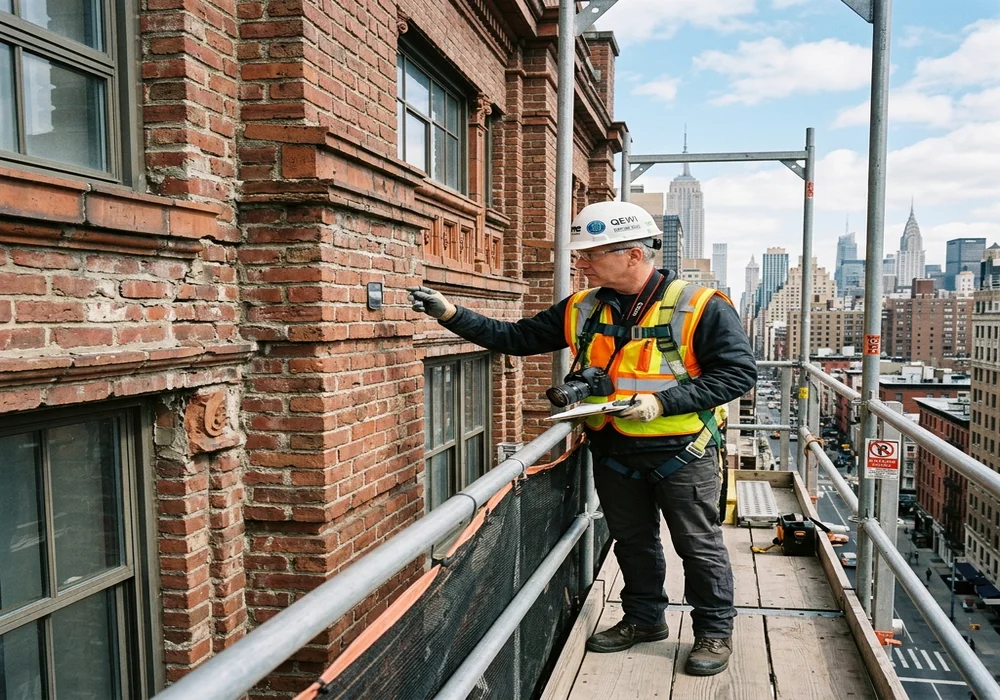
If your building in New York City is more than six stories tall, you have probably heard the term QEWI during discussions about facade inspections, FISP reports, or exterior wall compliance.
For many building owners, however, the title is unfamiliar.
Who is a QEWI? What do they actually do? Why can't any engineer or contractor simply inspect the building? And why does selecting the right professional matter so much?
The answers become important because the QEWI plays one of the central roles in the Facade Inspection and Safety Program (FISP). Their inspection and report help determine the condition of your building's exterior walls, identify maintenance needs, classify facade conditions, and support the required filing with the New York City Department of Buildings (DOB).
Understanding what is a QEWI NYC helps owners prepare for FISP inspections, organize building records, budget for repairs, and make informed decisions throughout the compliance process.
What Does QEWI Mean?
QEWI stands for Qualified Exterior Wall Inspector.
A QEWI is a professional who is qualified to perform exterior wall inspections and prepare the reports required under New York City's Facade Inspection and Safety Program (FISP).
For building owners, the QEWI is much more than someone who signs paperwork. They evaluate the condition of the building's exterior wall system, document their findings, classify observed conditions, and prepare the technical report that becomes part of the building's compliance record. Their work often influences repair planning, maintenance schedules, budgeting decisions, and future inspection priorities.
Why NYC Requires QEWIs
Buildings taller than six stories experience years of exposure to rain, snow, wind, sunlight, temperature changes, moisture, and normal aging. These conditions gradually affect exterior wall materials.
The purpose of FISP is to identify deterioration before it creates serious safety concerns. Qualified Exterior Wall Inspectors help provide the technical evaluations necessary to support that goal.
Why the QEWI Is So Important
Many owners think the QEWI's role ends when the inspection report is submitted. In reality, their work often influences the entire compliance process.
The QEWI helps:
- Evaluate facade conditions.
- Classify observed issues.
- Recommend repairs.
- Document building conditions.
- Support required FISP filings.
- Explain inspection findings.
- Assist owners in understanding maintenance priorities.
The report they prepare becomes one of the building's most important facade compliance documents.
The QEWI Does More Than Complete Paperwork
One common misconception is that the QEWI simply visits the building, completes a checklist, and signs a report. The actual process is considerably more involved.
Depending on the building, the QEWI may:
1. Historical Review
Review previous facade inspection reports, drawings, and building permits to understand the historical context and construction details.
2. Physical & Close-up Examination
Perform close-up inspections of exterior walls, scaffolds, balconies, parapets, and window openings to identify cracks, leaks, or loose elements.
3. Classification & Report Compilation
Analyze facade deterioration, categorize building safety conditions, and compile the final FISP report with detailed photographic evidence.

Why Choosing the Right QEWI Matters
Not every inspection experience is the same. The quality of communication, organization, documentation, and planning often varies between professionals. A carefully prepared report helps owners understand which conditions require immediate attention, which repairs can be planned, which areas require monitoring, and what documentation should be maintained. A report that is difficult to understand may create unnecessary confusion later.
A Good QEWI Helps Owners Make Better Decisions
One of the most valuable contributions a QEWI provides is clarity. Building owners are not expected to be facade experts. Instead, they rely on technical professionals to explain inspection findings in practical terms. A good QEWI helps owners understand current building conditions, inspection classifications, maintenance priorities, repair sequencing, and long-term planning. This information supports better budgeting and project management.
Understanding FISP Classifications
During the inspection process, the QEWI evaluates observed facade conditions. These findings contribute to classifications that help determine the building's compliance status.
Depending on inspection findings, owners may receive classifications such as:
- Safe: The facade is structurally sound and requires no repairs during the compliance cycle.
- Safe With a Repair and Maintenance Program (SWARMP): The facade has minor issues that must be repaired within a specified timeframe to prevent them from becoming unsafe.
- Unsafe: The facade has structural defects that represent a public hazard. Temporary protection (sidewalk shed) must be installed, and repairs must be completed immediately.
The QEWI should explain what these findings mean for the building.
Communication & Technical Knowledge
Owners often receive lengthy technical reports. Without explanation, these reports can be difficult to interpret. Strong communication helps owners understand what was observed, why it matters, which repairs should be prioritized, and how future inspections may be affected. Technical expertise and clear communication work together.
Questions Every Owner Should Ask Before Hiring a QEWI
Selecting a QEWI should involve more than comparing fees. Owners should understand how the inspection process will be managed. Useful questions include:
How much experience do you have with FISP inspections?
Experience often improves project organization and speed of DOB approval.
What is your inspection approach?
Different buildings require different inspection strategies. Owners should understand how the evaluation will be conducted.
What building access will be required?
Knowing access requirements helps owners coordinate tenants, management staff, and contractors.
What timeline should we expect?
Owners should understand the inspection scheduling, report preparation, filing timelines, and expected project duration. Planning becomes easier with realistic expectations.
How will inspection findings be explained?
A well-written report is valuable. A report that owners can actually understand is even more useful.
What information from previous cycles should we provide?
Historical documentation often improves the inspection process. Owners should ask which records will help the QEWI evaluate recurring conditions.
Why Previous Reports & Records Matter
Every inspection builds upon earlier observations. Previous reports help identify areas previously repaired, recurring deterioration, maintenance history, monitoring recommendations, and long-term facade trends. Buildings often develop recurring issues in similar locations. Historical documentation supports better decision-making.
A QEWI reviewing organized documentation can understand previous repairs more quickly, identify recurring issues, verify completed maintenance, and prepare more efficient inspections. Scattered records frequently require additional research and clarification.
Building Records Owners Should Prepare
Organized documentation saves time. Before the inspection, gather:
- Previous FISP reports & filing confirmations
- Facade repair records & invoices
- Contractor agreements & warranties
- Sidewalk shed lease agreements & permit records
- Building elevation photographs & architectural drawings
- Engineering correspondence and DOB notices
What Happens During and After the Inspection?
Every building presents different conditions, but inspections generally involve evaluating accessible exterior wall components and documenting observed conditions. Depending on the property, this may include reviewing masonry, concrete, exterior finishes, balconies, parapets, cornices, appurtenances, and other facade elements included within the inspection scope. The exact methodology depends on the building and applicable FISP requirements.
Once field work has been completed, the QEWI prepares the inspection report. The report generally includes building information, inspection observations, condition classifications, recommended actions, and supporting documentation. Owners should review the report carefully and discuss any questions before assuming they fully understand its implications.
The inspection report often becomes the starting point for long-term maintenance planning. Depending on findings, owners may begin budget planning, contractor coordination, access planning, repair scheduling, and capital improvement discussions. The earlier this planning begins, the more flexibility owners usually have.
Common Mistakes vs. Best Practices
Several mistakes appear repeatedly during FISP cycles. These include hiring solely based on price, waiting until filing deadlines, losing previous reports, failing to organize building records, not asking questions about inspection findings, ignoring recurring maintenance issues, and assuming the inspection ends the compliance process. Better preparation produces smoother projects.
Owners can improve the inspection process by scheduling inspections early, organizing historical records, reviewing previous reports, coordinating building access, asking detailed questions, budgeting for maintenance, keeping digital document backups, and monitoring repair progress after inspections. These habits support better facade management.
QEWI Selection Checklist
Before hiring a QEWI, confirm the following checklist items:
- ✔ Relevant FISP inspection experience confirmed
- ✔ Clear and detailed inspection process explained
- ✔ Building access requirements and scheduling discussed
- ✔ Detailed project timeline provided
- ✔ Communication style and follow-up expectations understood
- ✔ Previous reports and building files requested
- ✔ Documentation expectations and owner inputs explained
- ✔ Repair planning & compliance oversight approach discussed
- ✔ DOB filing process and final sign-off timelines understood
- ✔ All owner questions answered clearly and professionally
Using a structured checklist makes it easier to compare professionals and choose the right partner for your building.
Why Good Communication Saves Money
One overlooked benefit of selecting the right QEWI is better communication. When owners clearly understand inspection findings, repair priorities, maintenance timelines, and filing requirements, they are less likely to delay important decisions or misunderstand compliance obligations. Good communication often leads to better project planning and avoids costly administrative delays.
Bottom Line
A QEWI is much more than the person who prepares your FISP report. They help transform technical facade observations into practical maintenance decisions, compliance planning, and long-term building management. The right QEWI provides technical expertise, organized documentation, clear communication, and guidance that helps owners move from inspection through repair planning and final compliance. Choosing carefully is one of the most important decisions owners make during any FISP cycle.
Conclusion
Understanding what is a QEWI NYC is essential for owners of buildings subject to the Facade Inspection and Safety Program. A Qualified Exterior Wall Inspector plays a central role in evaluating facade conditions, preparing technical reports, classifying building conditions, and supporting the required filing process. Their work also helps owners understand which repairs require immediate attention, which maintenance projects can be planned over time, and how to organize records for future inspection cycles.
Rather than selecting a QEWI based only on cost, owners should consider experience, communication, responsiveness, inspection methodology, and familiarity with FISP requirements. A well-qualified professional can help transform a complex facade inspection into a clear and manageable compliance process.
Frequently Asked Questions
What is a QEWI?
A QEWI is a Qualified Exterior Wall Inspector, a professional responsible for performing facade inspections and preparing reports required under New York City's Facade Inspection and Safety Program (FISP).
Why does my building need a QEWI?
Buildings subject to FISP require inspections performed by a qualified professional. The QEWI evaluates exterior wall conditions, prepares the inspection report, and supports the required compliance process.
What should owners ask before hiring a QEWI?
Owners should ask about FISP experience, inspection methods, expected timelines, building access requirements, communication style, report preparation, and what documentation from previous inspection cycles will be needed.
What records should owners prepare?
Gather previous FISP reports, repair records, maintenance history, sidewalk shed documentation, permits, contractor closeout records, photographs, engineering correspondence, and prior filing confirmations.
Does the QEWI only perform the inspection?
No. The QEWI also prepares the technical report, explains inspection findings, classifies facade conditions, and provides information that helps owners plan repairs and future maintenance.
Where can owners review facade compliance records?
Owners can begin by checking the DOB NOW Public Portal and the Building Information System (BIS). Depending on the property's history, additional information may also be available through NYC Open Data and prior engineering records.
You may also
like