Learn how energy modeling errors can increase compliance risk and how to avoid them.
BY NYC Energy Code Team
ON 12 August 2026
Energy Modeling vs Energy Audit: What's the Difference and When Do You Need Each?
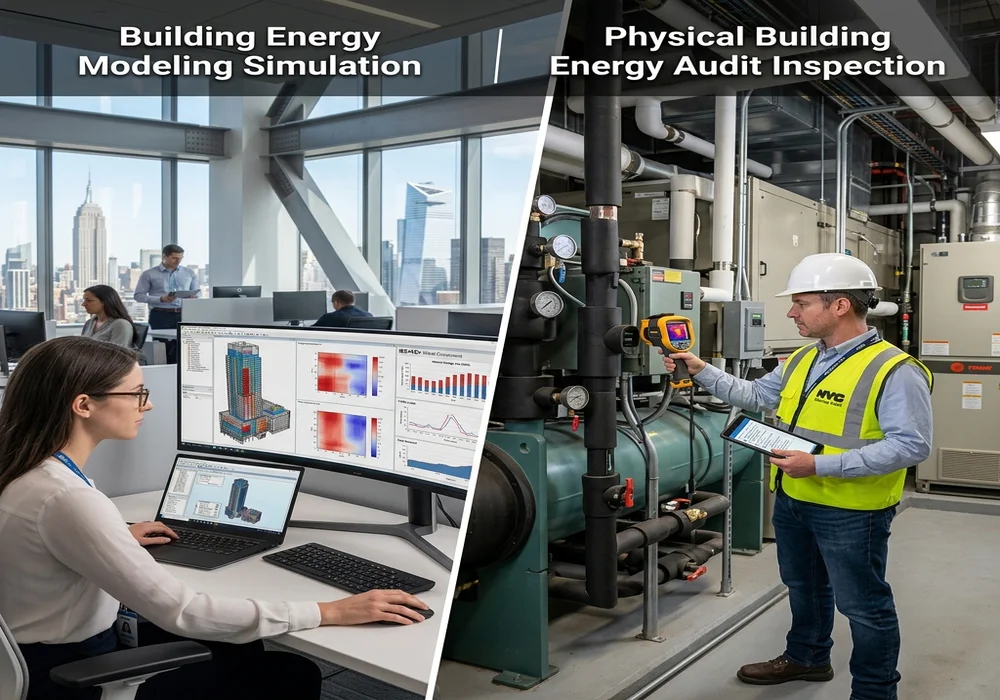
If you're planning an energy upgrade, renovation, or compliance project, you may hear two terms thrown around: energy modeling and energy audit.
They sound similar. They aren't.
An energy audit looks at how an existing building actually uses energy and identifies opportunities to improve performance. Energy modeling, on the other hand, uses a computer-based simulation to estimate how a building or proposed design will perform under different conditions.
In simple terms:
An energy audit asks: "What's happening in this building right now?"
Energy modeling asks: "How is this building expected to perform under a particular design or set of assumptions?"
That difference matters, especially for NYC building owners dealing with energy codes, Local Law 87, major renovations, or energy-efficiency projects.
What Is an Energy Audit?
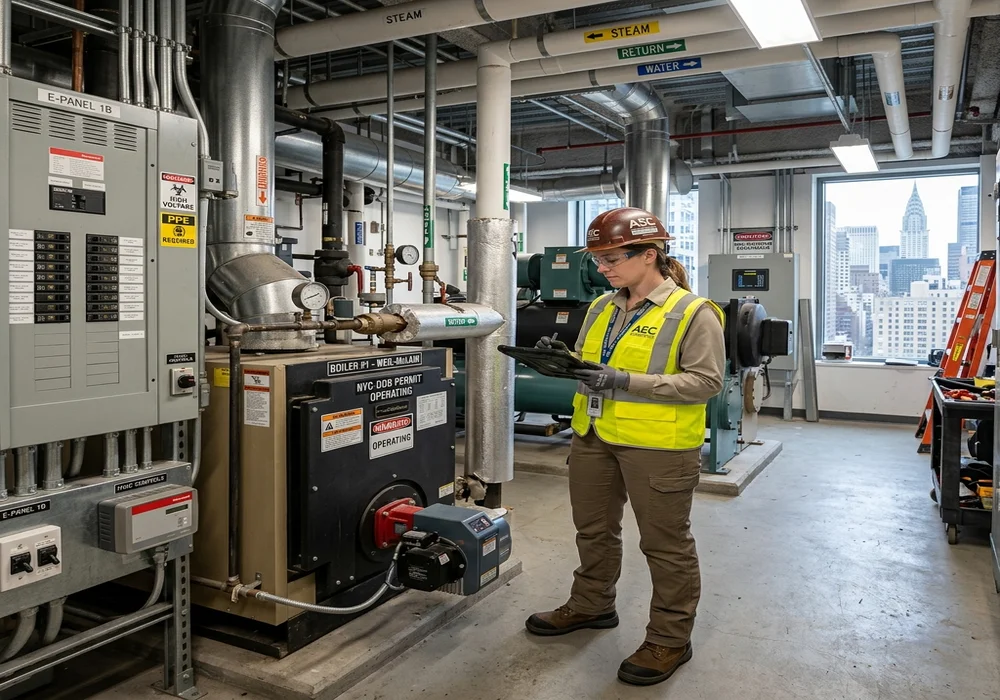
An energy audit is a detailed review of a building's existing energy use.
The auditor examines how the building consumes energy and looks for opportunities to reduce consumption without negatively affecting building operations.
Depending on the project, the process can include reviewing:
- Utility bills
- HVAC systems
- Boilers and heating equipment
- Cooling systems
- Lighting
- Building controls
- Building envelope
- Operating schedules
- Equipment condition
- Energy consumption patterns
The goal is practical: find where energy is being wasted and determine what can be improved.
NYC's Local Law 87 specifically defines an energy audit as a survey and analysis of energy use intended to identify opportunities to reduce energy consumption.
What Is Energy Modeling?
Energy modeling is different.
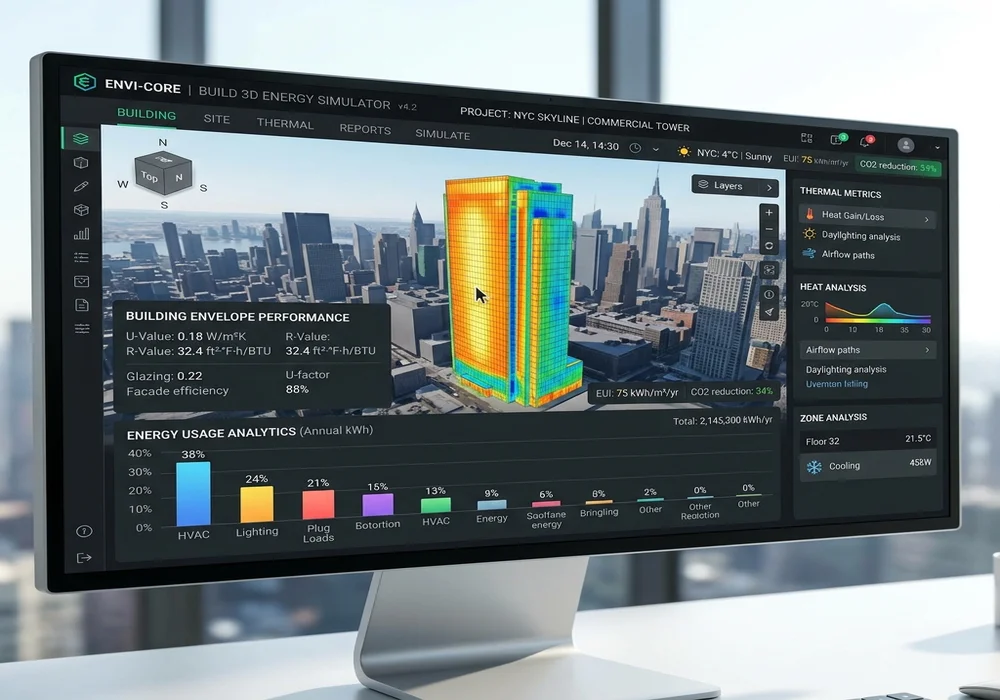
Instead of primarily looking backward at actual energy use, a model creates a digital representation of a building and estimates how it will perform.
A model can account for factors such as:
- Building size
- Orientation
- Windows
- Insulation
- HVAC systems
- Lighting
- Occupancy
- Operating schedules
- Weather conditions
- Equipment efficiency
Professionals can then compare different design approaches.
For example, an owner planning a renovation might want to know whether upgrading insulation, changing window specifications, improving HVAC efficiency, or combining several measures will produce the best energy performance. That's where modeling becomes useful.
Energy Audit vs Energy Modeling: The Simple Difference
Here's the easiest way to remember it:
| Energy Audit | Energy Modeling |
|---|---|
| Examines an existing building | Simulates building performance |
| Uses real building data | Uses design and performance assumptions |
| Finds energy-saving opportunities | Predicts energy performance |
| Often involves site investigation | Uses specialized software |
| Useful for retrofit planning | Useful for design and code compliance |
| Looks at what is happening | Tests what could happen |
Neither approach automatically replaces the other. In many projects, they work better together.
When Do You Need an Energy Audit?
An energy audit is particularly useful when you own or manage an existing building and want to understand where energy is going.
Common situations include:
1. You have unusually high utility bills
If energy costs keep increasing without an obvious reason, an audit can help identify inefficient equipment or operating problems.
2. Your building has old equipment
Older boilers, chillers, HVAC systems, pumps, and controls may consume more energy than modern systems.
3. You're planning a retrofit
Before spending heavily on new equipment, an audit can help identify which improvements are likely to have the greatest impact.
4. You're preparing for LL87
For buildings covered by NYC Local Law 87, an energy audit and retro-commissioning are part of the required compliance process. Covered buildings generally submit an Energy Efficiency Report every ten years.
When Do You Need Energy Modeling?
Energy modeling is especially useful when you're making design decisions.
For example, you may be:
- Constructing a new building
- Adding significant floor area
- Replacing major building systems
- Renovating the building envelope
- Comparing HVAC options
- Evaluating energy-efficiency strategies
- Demonstrating energy-code compliance
NYC Energy Code Alert: NYC's Energy Conservation Code allows certain projects to use performance-based approaches involving energy analysis and modeling. The city's current 2025 NYCECC began enforcement for applicable completed applications filed on or after March 30, 2026. That makes modeling particularly relevant for current NYC design and renovation work.
Energy Modeling for NYC Energy Code Compliance
This is where the distinction becomes especially important for architects, engineers, developers, and building owners.
NYC requires most new buildings and many alterations to comply with the New York City Energy Conservation Code (NYCECC).
For certain projects, energy analysis can be used to demonstrate compliance.
The city's energy-code forms guidance explains that projects using the performance-based approach must provide modeling input and output information and identify the software used for the energy analysis. So if you're dealing with a design or construction project, energy modeling may become part of the compliance documentation—not simply an optional sustainability exercise.
Can an Energy Audit Replace Energy Modeling?
Usually, no. They answer different questions.
Imagine you're renovating a 100,000-square-foot office building.
An energy audit might reveal that:
- The HVAC system is inefficient.
- Some controls are poorly configured.
- Lighting operates longer than necessary.
- Certain areas have excessive heating or cooling.
- Equipment maintenance is affecting performance.
That's useful information. But suppose you want to compare three proposed HVAC designs. The audit alone won't tell you exactly how each future design is expected to perform. A model can help compare those scenarios.
Can Energy Modeling Replace an Energy Audit?
Again, not necessarily.
A model is only as good as its assumptions and inputs.
If the existing building has inaccurate equipment information, incorrect operating schedules, or poor-quality utility data, the model may not accurately represent reality. An energy audit provides an opportunity to investigate the actual building. That's particularly important for older properties where drawings may not match current conditions.
The Best Approach: Use Both When Appropriate
For larger retrofit projects, using both tools can provide a much stronger decision-making process.
A practical sequence could look like this:
1. Audit the existing building
Understand how it currently operates.
2. Identify problems and opportunities
Find inefficient systems and potential energy-saving measures.
3. Develop retrofit options
Create several possible upgrade strategies.
4. Model the proposed options
Estimate how each strategy could affect energy performance.
5. Compare costs and benefits
Consider installation cost, energy savings, maintenance, and operational impact.
6. Select the appropriate strategy
Move forward with the option that best fits the building and owner's goals.
This approach reduces the risk of spending money on upgrades without understanding their likely impact.
What About Local Law 87?
NYC building owners should be careful not to confuse LL87's energy audit requirements with general energy modeling requirements.
Local Law 87 applies to certain larger buildings, including buildings over 50,000 gross square feet, as well as certain groups of buildings that meet the applicable combined-size thresholds.
Covered owners must complete the required energy audit and retro-commissioning work and submit an Energy Efficiency Report (EER) according to the applicable schedule.
The audit focuses on existing building performance. Retro-commissioning goes a step further by checking whether existing base-building energy systems are operating as intended and efficiently. That is different from using an energy model to evaluate a proposed design.
What Happens During an Energy Audit?
A typical audit may involve several stages:
1. Document Review
The professional reviews available information such as utility data, equipment lists, building drawings, maintenance records, and operating schedules.
2. Site Investigation
The auditor examines actual building systems and conditions.
3. Energy Analysis
Energy consumption is analyzed to identify major uses and potential inefficiencies.
4. Energy Conservation Measures
The auditor identifies potential improvements such as HVAC upgrades, lighting improvements, controls optimization, insulation improvements, and equipment replacement.
5. Recommendations
The owner receives information that can be used to prioritize future improvements.
What Happens During Energy Modeling?
Modeling takes a different path. A professional typically:
- Collects building design information.
- Builds a digital representation of the building.
- Inputs systems and operating assumptions.
- Runs simulations.
- Tests different scenarios.
- Compares predicted performance.
- Produces documentation or reports.
The output depends on the purpose of the model. A model created for code compliance isn't necessarily the same as one created to evaluate a deep energy retrofit.
Which One Should a Building Owner Choose?
It depends on what you're trying to solve.
Choose an energy audit when:
- You own an existing building.
- Utility costs are high.
- Equipment is aging.
- You want to identify energy-saving opportunities.
- You're preparing for LL87.
- You need a better understanding of current building performance.
Consider energy modeling when:
- You're designing a new building.
- You're planning a major renovation.
- You're comparing different design strategies.
- You're evaluating building-envelope improvements.
- Your project requires performance-based energy-code analysis.
- You want to estimate the impact of proposed systems.
You may need both when:
- You're planning a major retrofit.
- The building is large and energy-intensive.
- You want to compare multiple upgrade packages.
- Compliance and long-term energy savings are both priorities.
Don't Confuse Modeling With Actual Performance
This is one of the most important points.
An energy model is a prediction, not a guarantee.
A building can perform differently from the model because:
- Occupancy changes.
- Equipment operates differently than designed.
- Controls aren't configured correctly.
- Maintenance is poor.
- Operating schedules change.
- Construction differs from the original design.
That's why commissioning and ongoing energy monitoring still matter after construction.
What NYC Building Owners Should Do
If you're unsure whether your property needs an audit, modeling, or both, start with the project itself. Ask:
Is this an existing-building performance problem?
If
yes, an energy audit may be the logical starting point.
Are we designing or comparing future building
systems?
If yes, energy modeling may be more appropriate.
Is the building covered by LL87?
If yes, review the
applicable audit, retro-commissioning, and EER requirements.
Is this a new construction or alteration project?
If
yes, review which version of the NYCECC applies and whether energy modeling is part
of the selected compliance approach. NYC notes that the 2025 NYCECC applies to
completed applications filed on or after March 30, 2026, subject to the city's
transition rules.
Final Takeaway
Energy modeling and energy audits aren't competing versions of the same service. They're tools for different stages of building management.
Energy audits investigate existing performance.
Energy modeling evaluates expected or proposed performance.
For an existing NYC building with high energy costs, an audit can reveal where the
problems are. For a new construction or major renovation project, modeling can help
compare design strategies and demonstrate energy-code compliance where
applicable.
For larger retrofit projects, using both can make the decision process much
stronger: audit the building you have, model the building you want, and then
choose upgrades based on evidence rather than guesswork.
Frequently Asked Questions
Is an energy audit the same as energy modeling?
No. An energy audit evaluates actual energy use and existing building conditions. Energy modeling uses software to simulate expected building performance under specified assumptions.
Does Local Law 87 require energy modeling?
LL87 requires covered buildings to undergo an energy audit and retro-commissioning and submit an Energy Efficiency Report. Modeling may be relevant in certain circumstances, but it should not be treated as a substitute for the required LL87 process.
When should I get an energy audit?
An audit is useful when you want to understand current energy performance, identify energy-saving opportunities, plan a retrofit, or satisfy applicable LL87 requirements.
When is energy modeling useful?
Energy modeling is particularly useful for new construction, major renovations, design comparisons, energy-code compliance, and evaluating the expected performance of proposed building systems.
Can energy modeling predict my exact future utility bill?
No. Modeling provides an estimate based on assumptions about weather, occupancy, equipment, schedules, and other variables. Actual performance can differ.
Does NYC require energy modeling for every building project?
No. Requirements depend on the project, applicable energy code, and compliance method. NYC's current energy-code requirements should be reviewed based on when and how the project application is filed.
Should an existing building owner start with an audit or a model?
If the main question is "Why is this building using so much energy?", an audit is usually the more logical starting point. If the question is "Which proposed upgrade will perform better?", modeling may be more useful.
Can an energy audit help with Local Law 97 planning?
Yes. An audit can identify energy conservation measures and operational improvements that may help an owner plan broader energy and emissions reductions. However, LL97 compliance should be evaluated separately against the requirements and emissions limits applicable to the building.