Learn how often LL87 energy audits are required, which NYC buildings must comply, filing deadlines...
BY NYC Energy Code Team
ON
23 July 2026
What Happens During an Energy Audit? A Walkthrough for First-Timers
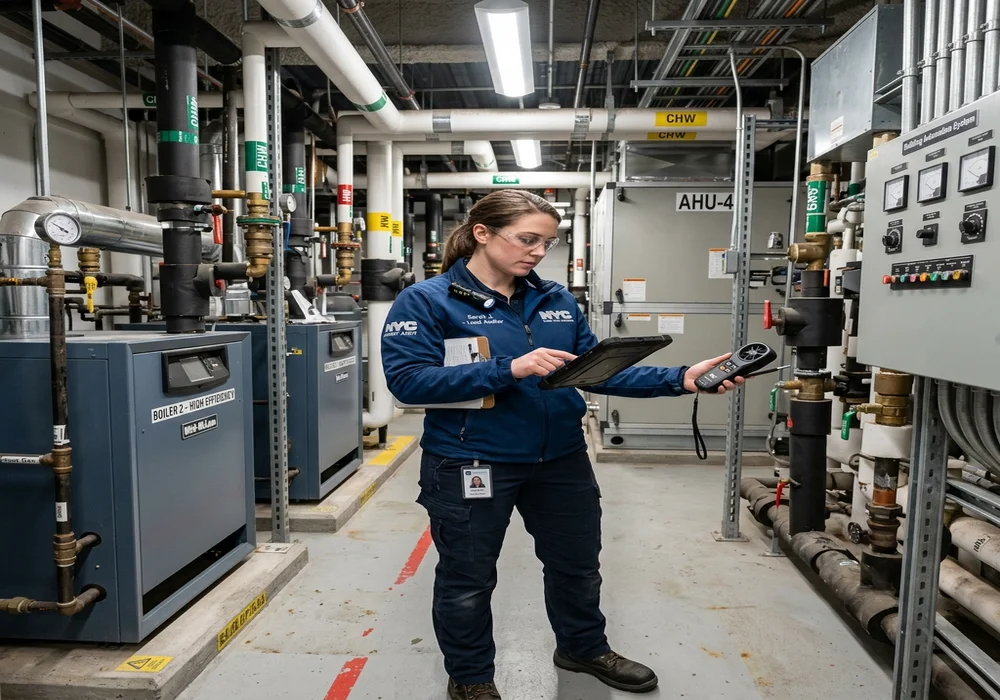
If you've never been through an energy audit, it's normal to wonder what actually happens. Will inspectors tear into walls? Does it interrupt daily operations? How long does it take?
The good news is that an energy audit is primarily a detailed assessment of how your building uses energy. The goal isn't to disrupt your business—it's to identify ways to improve efficiency, lower utility costs, and support compliance with NYC energy regulations such as Local Law 87.
Here's what you can expect from start to finish.
Step 1: Reviewing Building Information
Before visiting the property, the energy auditor gathers important information about the building, including:
- Utility bills: Analyzing historical electric, gas, fuel oil, and steam utility statements.
- Building size & layout: Reviewing gross square footage, floor plans, and space utilization.
- Occupancy details: Understanding operating hours, tenant density, and schedule variations.
- Equipment inventory: Cataloging mechanical assets, nameplates, and system specifications.
- Previous maintenance records: Inspecting service logs, filter changes, and equipment repair history.
Reviewing this information helps the auditor understand how the building currently consumes energy and establishes an accurate performance baseline.
Step 2: On-Site Building Inspection
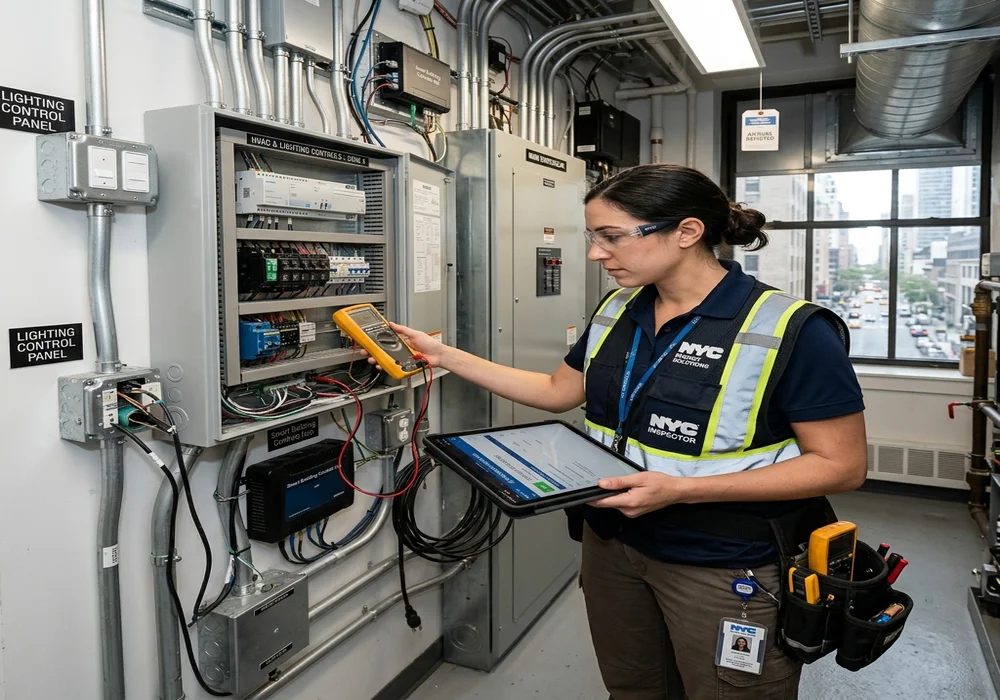
The auditor then performs a walkthrough of the property, inspecting major systems such as:
Heating & Cooling (HVAC)
Evaluating chillers, boilers, air handling units, heat pumps, and ductwork efficiency.
Lighting Systems
Inspecting interior fixtures, exterior lighting, occupancy sensors, and daylight controls.
Boilers & Mechanical Equipment
Checking burner performance, steam traps, pumps, and domestic hot water systems.
Electrical Systems
Assessing main distribution panels, motor starters, transformers, and power factor equipment.
Building Insulation
Inspecting pipe insulation, roof thermal resistance, exterior walls, and mechanical room lagging.
Windows & Doors
Evaluating fenestration seals, double glazing, weatherstripping, and entrance vestibules.
The inspection is mostly visual and non-invasive, meaning normal building operations can usually continue without interruption.
Step 3: Evaluating Energy Performance
After collecting data, the auditor analyzes how efficiently the building operates.
They look for issues such as:
Key Inefficiencies Auditors Look For
- Equipment running longer than necessary: Fans, pumps, or boilers operating during unoccupied hours.
- Excessive electricity use: Unnecessary peak demand spikes and inefficient motor loads.
- Poor lighting efficiency: Outdated fluorescent or halogen fixtures lacking smart controls.
- Air leaks: Uncontrolled air infiltration around building envelope openings and dampers.
- Aging mechanical systems: Outdated boilers and chillers operating past expected service life.
- Inefficient control settings: Sub-optimal setpoints, broken sensors, or bypassed BMS schedules.
Even small inefficiencies can add up to significant energy costs over time.
Step 4: Identifying Improvement Opportunities
The audit doesn't just highlight problems—it also provides actionable recommendations for improvement.
Common suggestions include:
High-Impact Energy Improvement Measures
- Switching to LED lighting: Replacing legacy fixtures with energy-efficient LEDs and occupancy sensors.
- Upgrading HVAC equipment: Installing high-efficiency heat pumps, variable frequency drives (VFDs), and modern chillers.
- Installing smart building controls: Automating setback schedules, web-based thermostats, and smart BMS integration.
- Improving insulation: Retrofitting roof insulation, sealing mechanical piping, and upgrading envelope thermal barriers.
- Repairing air leaks: Sealing duct leakage, caulking window perimeters, and replacing worn door sweeps.
- Optimizing equipment schedules: Aligning HVAC operation strictly with actual tenant occupancy hours.
Many of these improvements can reduce utility bills while improving overall building performance.
Step 5: Receiving the Energy Audit Report
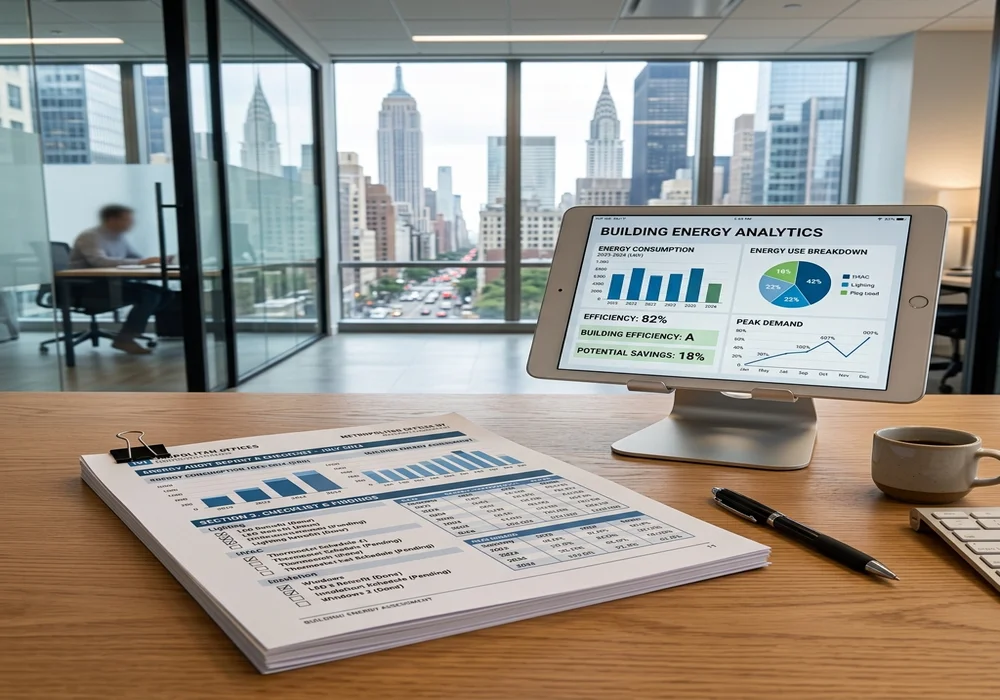
Once the inspection and analysis are complete, you'll receive a detailed report outlining:
- Current energy usage: Complete breakdown of electricity, gas, steam, and oil consumption patterns.
- Areas of inefficiency: Clear pinpointing of energy waste and mechanical system deficiencies.
- Recommended upgrades: Comprehensive list of Energy Conservation Measures (ECMs).
- Estimated energy savings: Projected kWh/Therms reduction and annual utility dollar savings.
- Priority improvements: Simple payback period analysis highlighting quick wins versus capital projects.
For buildings covered under NYC Local Law 87, this report becomes part of the required Energy Efficiency Report (EER) compliance documentation submitted to the Department of Buildings.
How Long Does an Energy Audit Take?
The length of an energy audit depends on the size and complexity of the building.
Smaller properties may only require a few hours for the on-site walkthrough, while larger commercial complexes or multi-family residential towers can take several days to inspect and analyze thoroughly.
The final report is typically delivered within a few weeks after all collected utility and field data has been reviewed and verified by licensed engineering professionals.
Tips for a Smooth Energy Audit
Preparing in advance can make the process much easier and ensure accurate results. Consider these best practices:
1. Gather Recent Utility Bills
Compile at least 24 to 36 months of continuous utility statements (electric, gas, oil, steam).
2. Organize Maintenance Records
Assemble equipment service logs, boiler inspection certificates, and warranty documents.
3. Provide Access to Mechanical Rooms
Ensure keys, keycards, or escort personnel are ready for boiler rooms, chiller plants, and electrical closets.
4. Ensure Equipment Is Accessible
Clear pathways around air handlers, roof access hatches, and electrical distribution panels.
5. Inform Building Staff About Scheduled Visit
Notify facility engineers, superintendents, and security staff about auditor arrival and walkthrough scope.
6. Ask Questions During the Walkthrough
Engage with the engineering team during inspection to better understand your building's operational nuances.
A well-prepared building often leads to a faster, smoother, and more accurate audit.
Conclusion
For first-time building owners or managers, an energy audit may sound intimidating, but it's simply a structured evaluation of how efficiently your building uses energy. From reviewing utility data to inspecting HVAC systems, lighting, insulation, and building controls, every step is designed to uncover opportunities for better performance.
Whether you're preparing for Local Law 87 compliance or simply looking to reduce operating costs, an energy audit provides valuable insights that can lead to long-term savings and smarter building management.
Frequently Asked Questions
An energy audit evaluates how a building uses energy and identifies
opportunities to improve efficiency and reduce operating costs.
In most cases, no. The inspection is largely visual and designed to minimize
disruption to normal building operations.
Auditors typically examine HVAC systems, lighting, electrical equipment,
insulation, windows, boilers, and building controls.
The timeline depends on the size of the property. Smaller buildings may take
a few hours, while larger facilities can require several days.
Yes. You'll receive a detailed report outlining energy usage, identified
issues, recommended improvements, and estimated cost savings.
No. While energy audits are required for certain buildings under Local Law
87, they are also valuable for reducing utility costs, improving building
performance, and planning future energy-efficiency upgrades.