Learn why your tax block number determines your compliance year and what NYC owners must prepare before 2026.
BY NYC Energy Code Team
ON
22 July 2026
LL87 Energy Audits: How Often Do You Really Need One?
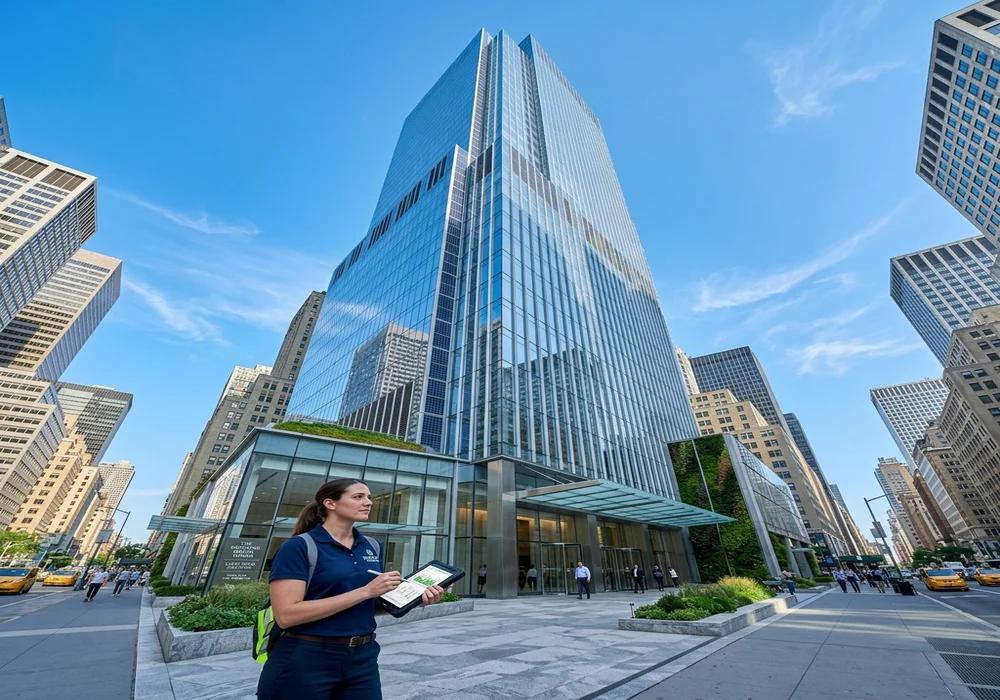
If you own or manage a large building in New York City, you've probably heard about Local Law 87 (LL87). One of the most common questions building owners ask is, "How often do I actually need an energy audit?"
The short answer is once every 10 years for covered buildings. However, knowing the timeline is only part of the story. Planning ahead, understanding your filing year, and preparing the required documentation are just as important as the audit itself.
In this guide, we'll explain how often LL87 energy audits are required, which buildings are affected, and why starting early can save time, money, and unnecessary stress.
What Is Local Law 87?
Local Law 87 is part of New York City's Greener, Greater Buildings Plan. It requires certain large buildings to complete three core requirements:
- An Energy Audit (EA) to evaluate building performance and energy efficiency opportunities.
- Retro-Commissioning (RCx) of building systems to optimize existing equipment and operational workflows.
- An Energy Efficiency Report (EER) submitted directly to the NYC Department of Buildings (DOB).
Unlike Local Law 84, which focuses on annual benchmarking, LL87 takes a deeper look at how efficiently a building operates and identifies tangible opportunities to reduce energy consumption.
How Often Is an LL87 Energy Audit Required?
For most covered buildings, an LL87 Energy Audit is required once every 10 years.
How Your Compliance Year Is Set
Your compliance year is determined by your building's tax block number, not the year you purchased the property or completed renovations. Because the filing schedule is strictly based on block numbers, neighboring buildings may have different compliance years even if they look identical.
Knowing your assigned filing year early gives you enough time to schedule inspections, gather documentation, and prepare the required report before deadlines approach.
Which Buildings Must Comply?
LL87 generally applies to many larger NYC buildings that meet specific square footage thresholds (typically single buildings equal to or greater than 50,000 gross square feet, or two or more buildings on the same tax lot that together exceed 100,000 gross square feet).
Coverage depends on factors such as:
- Building size: Gross square footage of individual buildings or tax lots.
- Property classification: Mixed-use, commercial, institutional, or residential occupancy.
- Ownership structure: Private, municipal, or joint-venture ownership.
- NYC Department of Buildings regulations: Specific exemptions and DOB compliance lists.
Building owners should verify whether their property is covered with an energy consultant rather than assuming compliance requirements apply.
Why You Shouldn't Wait Until the Deadline
Although an audit is only required every decade, waiting until the final months before your filing deadline can create unnecessary challenges.
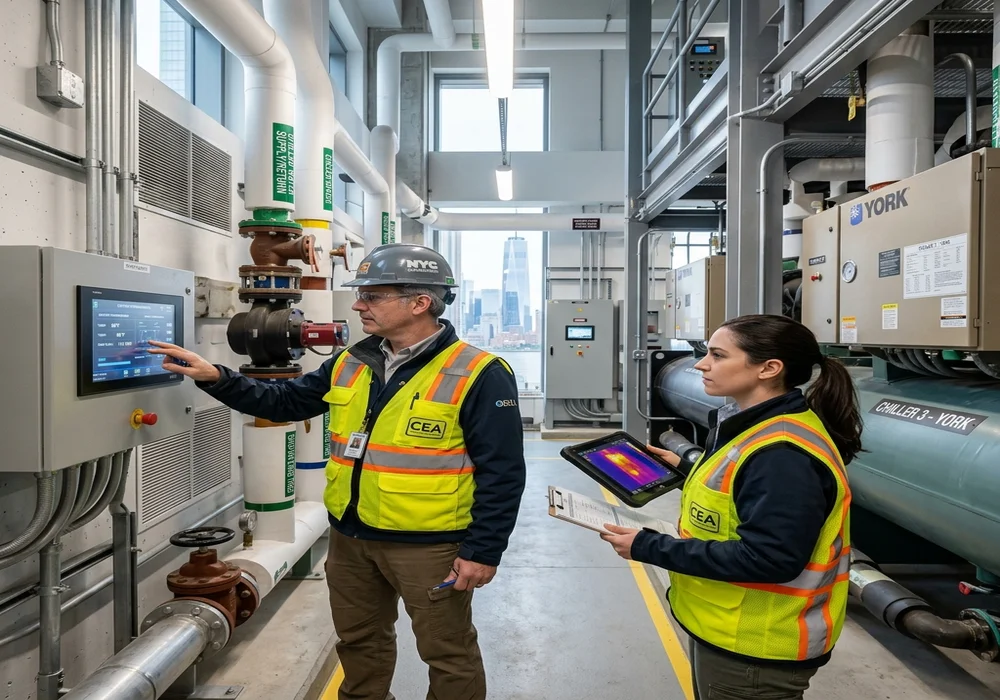
Comprehensive LL87 energy audits involve reviewing multiple complex building systems, including:
HVAC Equipment
Boilers, chillers, cooling towers, and air distribution units.
Lighting Systems
Interior fixtures, exterior facade lighting, and occupancy sensors.
Building Controls
BMS platforms, thermostats, and automated setback schedules.
Building Envelope & Mechanicals
Insulation, windows, doors, motors, and domestic hot water systems.
Scheduling qualified professionals, collecting documentation, and completing mandatory retro-commissioning measures all take time. Starting early allows owners to address potential equipment issues before reports are due.

Benefits of an LL87 Energy Audit
Many owners view LL87 as just another compliance requirement, but it can also provide valuable operational insights.
A professional energy audit may help identify:
- Inefficient equipment: Sub-optimal motors, failing steam traps, or poorly tuned boilers.
- High energy consumption: Unexplained spikes in electricity or natural gas usage.
- Opportunities for cost savings: Low-cost or no-cost operational adjustments.
- Aging building systems: Clear roadmaps for capital replacement before system failure occurs.
- Recommended efficiency upgrades: Actionable strategies to prepare for Local Law 97 carbon emission caps.
These improvements can lower utility bills while supporting future compliance with other NYC energy laws.
Common Mistakes Building Owners Make
Many LL87 compliance problems result from simple planning mistakes, including:
5 Frequent Pitfalls to Avoid
- Waiting until the filing deadline: Rushing at the last minute leads to higher costs and risk of missing the DOB submission window.
- Misunderstanding the tax block schedule: Assuming the audit is tied to ownership transfer dates rather than DOB block rules.
- Assuming previous audits remain valid: Failing to submit an updated report every 10 years.
- Keeping incomplete documentation: Lacking utility records, maintenance logs, or equipment cut sheets.
- Failing to complete retro-commissioning requirements: Omitting required RCx repairs before filing the EER.
A proactive approach makes the entire process much smoother and protects building owners from DOB violation notices.
Best Practices for LL87 Compliance
To stay ahead of your filing deadline and maximize ROI from your audit:
1. Confirm Your Building's Compliance Year
Look up your building's borough, block, and lot (BBL) number to pinpoint your exact submission year.
2. Schedule Your Energy Audit Well in Advance
Engage certified energy auditors 12 to 18 months prior to your deadline to allow ample time for field work.
3. Organize Building Records and Utility Information
Gather 24 to 36 months of utility bills, equipment manuals, and past service contracts.
4. Work with Qualified Energy Professionals
Partner with experienced NYC-licensed PE engineers or Registered Architects specializing in LL87 filings.
5. Maintain Digital Copies of Reports and Filings
Store all proof of compliance, EER filings, and audit summaries in a centralized digital archive.
6. Review Recommendations for Future Energy Improvements
Incorporate energy conservation measures (ECMs) into your capital planning budget.
Treating LL87 as part of your long-term building management strategy—not just a once-every-decade requirement—can improve efficiency and reduce future compliance risks.
Conclusion
Although LL87 Energy Audits are generally required only once every 10 years, preparation should begin well before your assigned filing year. Understanding your building's compliance schedule, organizing documentation, and completing both the energy audit and retro-commissioning process on time helps ensure a smoother filing experience.
More importantly, an LL87 audit provides valuable information about how your building performs and where energy savings may be possible. By planning early and acting on recommended improvements, building owners can reduce operating costs while preparing for future sustainability requirements.
Frequently Asked Questions
Most covered NYC buildings must complete an LL87 Energy Audit once every 10
years according to their assigned tax block schedule.
Your filing year is generally based on your building's tax block number. The
last digit of your block number corresponds to the last digit of your
compliance reporting year.
No. Covered buildings must complete an Energy Audit (EA), perform
Retro-Commissioning (RCx) of building systems, and submit a formal Energy
Efficiency Report (EER) to the NYC DOB.
It's not recommended. Scheduling early gives you time to complete
inspections, gather documentation, perform retro-commissioning repairs, and
address any issues before DOB submission deadlines.
Yes. Energy audits often identify inefficient equipment, operational waste,
and cost-effective retrofits that directly lower ongoing utility expenses.
LL84 requires annual energy benchmarking using Energy Star Portfolio
Manager, while LL87 requires an in-depth energy audit and
retro-commissioning approximately once every 10 years.