Compare TPO, EPDM, PVC, and modified bitumen roofing assemblies for commercial energy efficiency and durability.
BY NYC Energy Code Team
ON
14 September 2026
Window Replacement vs Window Film: A Cost-Benefit Breakdown
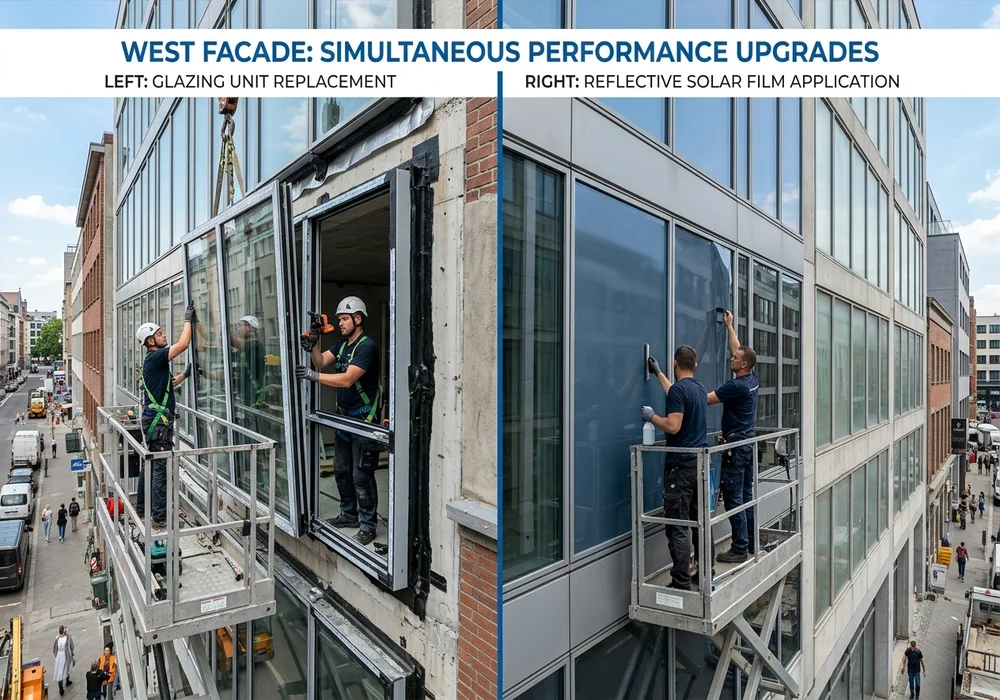
Windows can have a major influence on a commercial building's energy performance. They affect heat transfer, solar gain, glare, daylight, and occupant comfort.
When existing windows are underperforming, building owners generally have two broad options: replace the windows entirely or improve the existing glazing with window film.
These solutions are very different in cost, complexity, durability, and performance. The better choice depends on the condition of the existing windows, the building's energy goals, the facade, and the owner's budget.
Strategic Facade Considerations
Neither option is universally superior for every commercial property. Window film provides a rapid, high-ROI solar-control retrofit for sound windows, whereas full window replacement resolves systemic air infiltration, thermal bridging, and structural degradation across older building envelopes.
What Is Window Film?
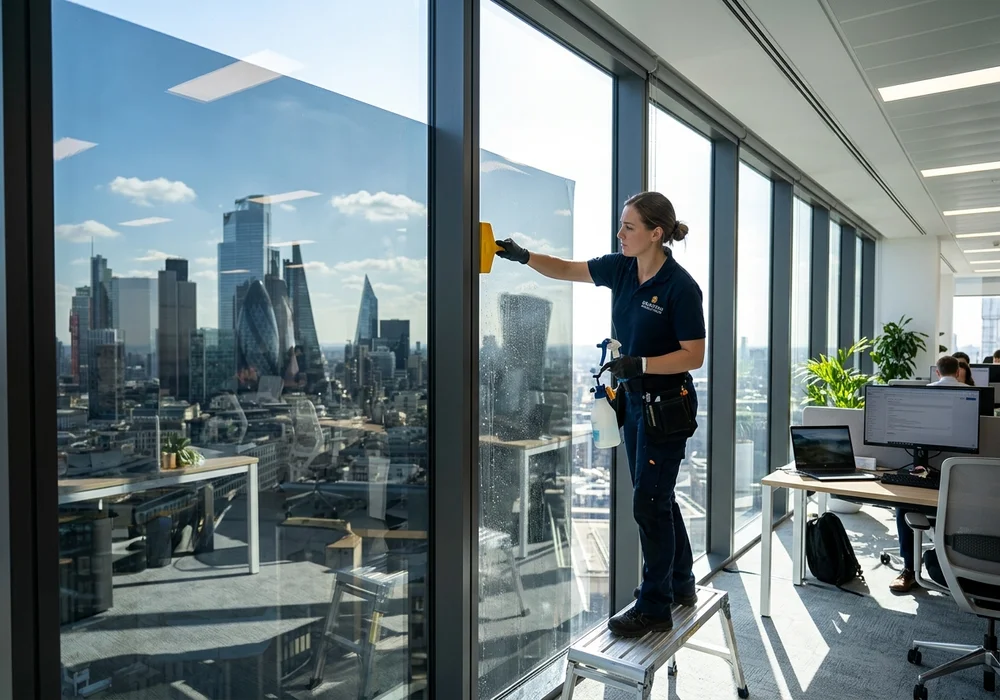
Window film is a thin polyester or ceramic material applied directly to the existing glass surface.
Depending on the product, film can be engineered to:
- Reduce solar heat gain and perimeter cooling loads
- Reduce harsh direct glare on workstations and tenant computer screens
- Filter up to 99% of harmful ultraviolet (UV) radiation
- Improve perimeter occupant thermal comfort during peak sun hours
- Provide architectural privacy or one-way daytime visibility
- Enhance or modernize the external appearance of the building glazing
Because the existing window frame, sash, and glass remain in place, installation is generally less disruptive and completed far faster than full window replacement.
What Is Window Replacement?
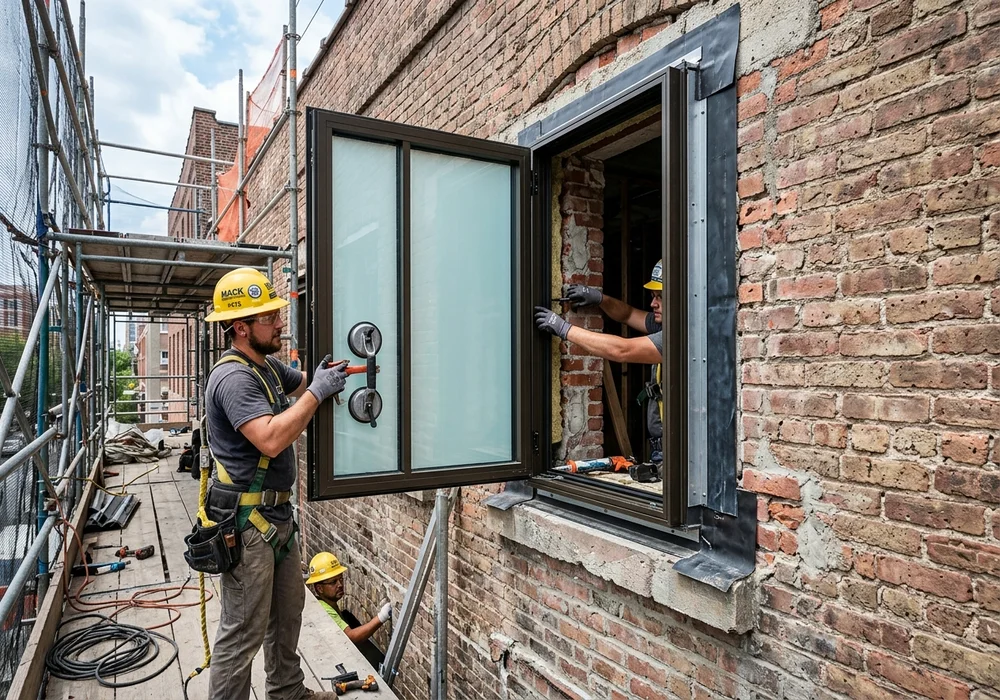
Window replacement involves removing some or all of the existing window assembly and installing a brand-new, factory-sealed architectural window product.
A comprehensive replacement project can dramatically improve:
- Thermal performance via low-E insulating glass units (IGUs) and gas fills
- Air leakage and perimeter draft reduction through new weatherstripping
- Solar heat control tailored across specific building elevations
- Glazing structural integrity, safety glass, and acoustic attenuation
- Window operation, balances, hardware, and ventilation control
- Weather resistance against driving rain and water infiltration
- Overall occupant satisfaction and long-term asset market value
Modern high-performance windows can offer substantially different thermal and solar characteristics from older single-pane or outdated double-pane assemblies.
Cost Comparison: Film vs. Replacement
One of the most consequential differences between the two options is the initial capital investment required.
| Evaluation Factor | Window Film | Window Replacement |
|---|---|---|
| Initial Cost | Generally lower (typically $8–$18 per sq. ft. installed) | Substantially higher (typically $75–$250+ per sq. ft. installed) |
| Installation Time | Fast; hours or days per floor with minimal downtime | Extended; weeks to months requiring scaffolding/rigging |
| Existing Frame | Completely retained in its current condition | Removed, replaced, or thermally retrofitted |
| Construction Disruption | Minimal; interior application with little dust or noise | High; requires perimeter access, scaffolding, and tenant coordination |
| Thermal Improvement | Moderate solar heat reduction; minimal winter U-factor gain | Substantial; comprehensive insulation and draft sealing |
| Expected Lifespan | 10 to 15+ years depending on solar exposure | 25 to 40+ years for high-quality commercial frames |
| Maintenance Needs | Non-abrasive cleaning protocols | Routine perimeter sealant, sash balances, and gasket checks |
Actual costs vary significantly based on window type, building height, access requirements, product specifications, prevailing wage labor, and total project scope.
Energy Performance: Which Is Better?
There is no single universal answer because each technology addresses different physics of heat transfer.
Window film excels at rejecting solar heat gain, particularly on facades receiving intense direct sunlight. This can sharply reduce summer peak cooling loads and eliminate uncomfortable hot spots near exterior perimeter offices.
Window replacement addresses a much broader spectrum of building envelope deficiencies, including:
- Convective and conductive heat loss through the center-of-glass
- Perimeter air leakage and cold winter drafts around unsealed sashes
- Thermal bridging through uninsulated aluminum framing
- Direct solar heat gain through tailored Low-E coatings
- Winter condensation on interior glass and frame surfaces
- Proper sash alignment and operational safety
This makes window replacement far more comprehensive, especially when the existing windows are aging, single-glazed, or structurally degraded.
When Window Film Makes More Sense
Window film can be extraordinarily attractive when existing window frames, sashes, and perimeter seals are fundamentally sound, but intense solar exposure or harsh glare creates tenant discomfort and high cooling bills.
For example, in an urban commercial office setting:
Strong afternoon sun
Harsh workspace glare
Higher chiller & cooling demand
Uncomfortable perimeter offices
A suitable solar-control or ceramic film can reject a high percentage of solar infrared radiation without the heavy capital expenditure and disruptive construction logistics of replacing entire window units.
Film is also ideal when building owners desire a fast payback period (often 2 to 5 years) while keeping existing tenants undisturbed.
When Window Replacement Makes More Sense
Full replacement becomes essential when the existing window assemblies suffer from multiple physical, thermal, and operational failures.
Tell-tale indicators that replacement is required include:
- Persistent perimeter air drafts and excessive infiltration during winter months
- Failed insulated glass units (IGUs) marked by internal fogging or condensation between panes
- Water leaks and moisture infiltration damaging interior finishes or exterior masonry
- Warped, rotted, or corroded frames that no longer close or lock securely
- Single-pane glazing in cold climate zones with high winter heating demand
- Severe condensation causing mold growth on sills and interior walls
- Brittle gaskets, broken balances, and obsolete hardware that cannot be repaired
In these situations, applying film to the glass may reduce glare or solar gain, but it will do nothing to stop air leakage, water damage, or heat loss through failed frames.
Understanding Solar Heat Gain (SHGC)
Solar heat gain is a critical consideration for commercial properties in high-density urban settings. The amount of solar radiation penetrating through a window is governed by its solar heat gain coefficient (SHGC), expressed as a rating between 0 and 1.
A lower SHGC indicates that the window assembly admits less solar heat. Window film can modify the solar properties of existing clear glass, lowering its SHGC from approximately 0.70 down to 0.30 or lower. Replacement windows can be specified with multi-layer spectrally selective Low-E coatings to achieve identical or superior SHGC ratings straight from the manufacturer.
Because solar exposure varies drastically around a building, solutions must be evaluated by facade orientation:
West-facing windows
Intense low-angle afternoon sun
Extreme cooling & glare penalties
A film or glazing specification optimized for west-facing or south-facing exposures may differ entirely from requirements on north-facing facades.
Thermal Performance and U-Factor
Solar control is only one half of the energy performance equation. In climates with distinct heating seasons, conductive heat loss through windows is equally vital.
The U-factor quantifies the rate of heat transfer through the complete window assembly. A lower U-factor signifies superior insulating capabilities. Standard architectural solar film has minimal impact on conductive U-factor (although specialized low-e insulating films can provide modest improvements). Film cannot compensate for the absence of an insulated thermal break or argon-filled double-glazing.
Full window replacement delivers comprehensive U-factor reductions across glass, edge spacers, and thermally broken frames. This makes replacement far more impactful in buildings facing major winter heating penalties and carbon caps.
Occupant Comfort and Glare Mitigation
Energy dollar savings are rarely the only driver for window projects. Tenant comfort and workspace productivity are frequently the deciding factors in commercial real estate leasing.
Window upgrades directly alleviate several occupant complaints:
- Direct visual glare causing eye strain on computer monitors
- Uncomfortable radiant heat radiating from sunny window panes onto perimeter desks
- Cold radiant drafts and convective downdrafts chilling workers in winter
- Fading of carpets, furniture, and interior woodwork from ultraviolet radiation
Addressing these issues improves tenant retention and allows usable office floor space right up to the window line.
Impact on Central HVAC Systems
Modifying window performance cascades directly into central HVAC plant efficiency and operational scheduling.
When solar-control film is applied to unshaded glazing, the cooling chain reaction is immediate:
Reduced solar gain
Lower peak chiller tonnage
Reduced HVAC runtime & electric demand
By contrast, full window replacement alters both seasonal cooling and baseline heating loads simultaneously:
Solar control + Thermal insulation + Air draft sealing
Smaller heating & cooling equipment sizing
These envelope improvements should always be evaluated through calibrated energy modeling before downsizing or replacing central boilers, chillers, or heat pumps.
Window Film vs. Replacement: Practical Decision Framework
Building owners and facility engineers can use this simple framework to guide their project planning:
Select Window Film When:
- Existing window frames and seals are structurally sound and watertight
- Primary tenant complaints revolve around glare, solar heat, or UV fading
- Available capital budget is limited or requires a rapid payback period
- Tenant disruption, scaffolding, and exterior street staging must be avoided
- A quick energy efficiency retrofit is needed to meet short-term targets
Choose Window Replacement When:
- Window frames are corroded, warped, structurally compromised, or rotting
- Air infiltration drafts and perimeter water leaks are evident
- Insulating glass units have failed with permanent fogging between panes
- Winter heating costs and envelope conductive heat loss are severe
- The property is already undertaking a major facade or FISP restoration project
Example Cost-Benefit Comparison Scenario
Consider a 12-story commercial office building in New York City with 25,000 square feet of older double-pane windows on aluminum frames.
Comparative Project Scenario
Option A: Architectural Solar Film Retrofit
Capital Cost: ~$250,000–$350,000. Installation duration: 3 weeks without scaffolding. Results: 50% solar heat rejection on south and west exposures, lower peak chiller electric demand, and immediate glare resolution. Estimated payback: 3 to 5 years.
Option B: Full Commercial Window Replacement
Capital Cost: ~$2,500,000–$4,000,000. Installation duration: 6 to 9 months with exterior sidewalk sheds and swing-stage rigging. Results: State-of-the-art thermal envelope, zero air infiltration, sound dampening, 30+ year service life, and significant carbon emission reductions under NYC Local Law 97.
If the primary operational issue is summer solar heat gain and perimeter glare, film represents an unbeatable short-term return. However, if the building suffers from drafts, water leaks, and Local Law 97 heating emissions, replacement is the only durable long-term asset solution.
Coordination with Long-Term Capital Plans
Window decisions should never be made in a vacuum. Property owners should align window investments with other planned building capital projects:
- FISP Facade Repairs: If sidewalk sheds and swing stages will already be erected for Local Law 11 facade maintenance, the incremental cost of replacing windows drops significantly.
- HVAC Upgrades & Electrification: Reducing window thermal loads prior to sizing new heat pump systems prevents costly equipment oversizing.
- Historic Preservation: Landmark buildings in historic districts require Landmarks Preservation Commission (LPC) approval for exterior window frame changes, whereas non-reflective interior window film often does not trigger review.
- Tenant Lease Renewals: Window film can be installed quickly during brief tenant turnover windows without interrupting lease commencement dates.
Common Mistakes to Avoid
Applying Film to Deteriorated Windows: Installing film over failing seals, warped frames, or leaking perimeters wastes capital without resolving building envelope integrity.
Replacing Windows Without Solar Analysis: Purchasing ultra-insulated windows with an unsuitable SHGC can leave south- and west-facing offices sweltering from uncontrolled solar heat gain.
Focusing Strictly on First Cost: The lowest upfront expense may carry high ongoing maintenance, shorter lifespans, or missed energy incentives.
Ignoring Glass-to-Film Thermal Stress: Applying dark, highly absorbent films to certain annealed or tinted insulated glass units can induce thermal stress cracks. A professional film-to-glass compatibility check is required.
Neglecting Historic Guidelines: In NYC landmark properties, altering window profiles or visible tint can result in stop-work orders and violations.
Window Assessment Checklist
Conduct a thorough physical inspection of existing frames, sashes, and perimeter caulk.
Identify active air infiltration drafts, water leaks, or condensation between glass panes.
Evaluate facade solar exposure, orientation, and perimeter tenant glare complaints.
Review existing window U-factor, solar heat gain coefficient (SHGC), and visible transmittance (VT).
Analyze impact on cooling peak electric demand and winter boiler heating loads.
Obtain competitive contractor bids for architectural film and commercial window replacement.
Calculate estimated simple payback and return on investment (ROI) for both options.
Assess installation disruption, staging needs, scaffolding permits, and tenant downtime.
Verify film warranty and ensure glass-film thermal compatibility with glazing manufacturers.
Coordinate with upcoming FISP facade repairs, HVAC electrification, and Local Law 97 deadlines.
Conclusion
The choice between window replacement vs. window film depends largely on the condition of the existing windows and the owner's performance goals.
Window film is a practical, lower-disruption strategy when the primary concerns are solar heat gain and glare. Full window replacement offers a broader, permanent improvement when the existing assemblies have poor thermal performance, air leakage, water infiltration, or physical deterioration.
For commercial property owners, the best decision is rarely based on upfront cost alone. Consider energy performance, occupant comfort, HVAC impacts, installation disruption, maintenance, building condition, and long-term capital plans together.
A professional facade and energy assessment can help determine whether a targeted film retrofit or a full window replacement delivers the superior return for your property.
Frequently Asked Questions
Generally, yes. Window film typically requires less material, labor, and construction work than replacing an entire window assembly. Actual costs depend on the project scope and access requirements.
It can, particularly when it reduces solar heat entering the building and therefore lowers cooling demand. The effect depends on the film, glazing, building orientation, and operating conditions.
Its primary benefit is generally solar and light control rather than transforming the insulating performance of the complete window assembly. Window replacement can address glazing, frames, and air leakage more comprehensively.
Replacement becomes more attractive when windows have significant air leakage, failed glazing, water infiltration, deteriorated frames, poor operation, or inadequate thermal performance.
Film can sometimes be applied to existing or replacement glazing, but compatibility and warranty requirements should be checked with the window and film manufacturers before installation.
It depends on the building. Film may offer a faster and lower-cost solution for glare and solar heat, while replacement may provide greater long-term benefits when the existing windows are significantly underperforming.