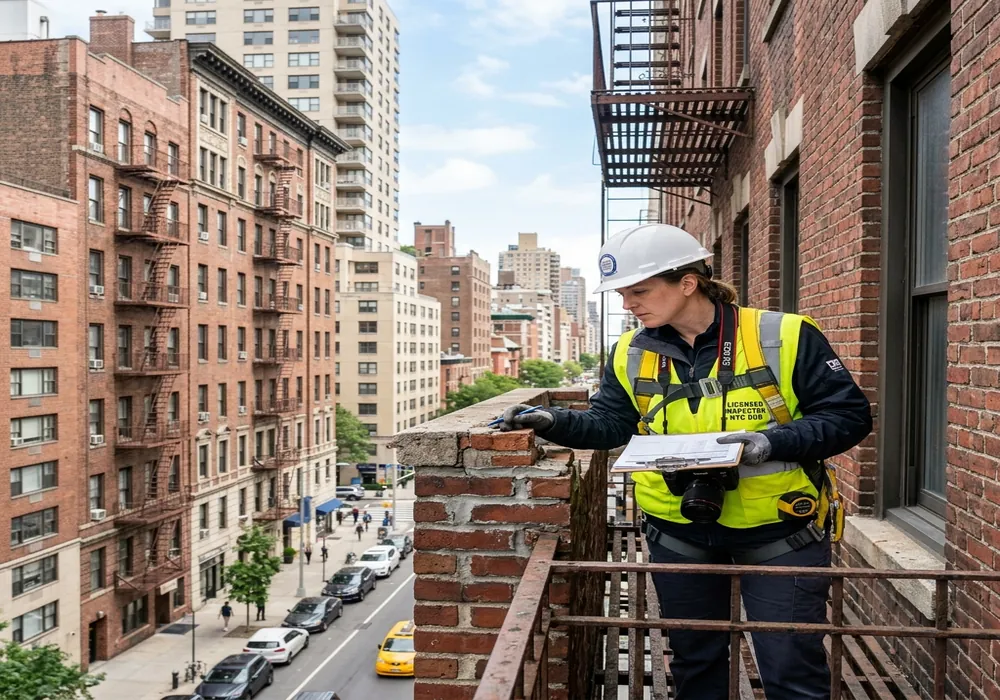
If you own or manage a building in New York City that's taller than six stories, you've probably heard of the Façade Inspection & Safety Program (FISP)—formerly known as Local Law 11.
While many owners know inspections are required, they often aren't sure what the rules actually involve. Understanding FISP can help you avoid compliance issues, protect pedestrians, and maintain your building's exterior before small defects become expensive repairs.
Here's a simple guide to what every NYC building owner should know.
The Façade Inspection & Safety Program (FISP) is administered by the New York City Department of Buildings to improve public safety by ensuring that exterior walls and attached building elements remain in safe condition. The program requires periodic inspections and technical reports for qualifying buildings.
In general, FISP applies to:
Property owners are responsible for determining whether their building falls under FISP requirements and meeting the applicable filing deadlines.
Covered buildings must undergo a critical exterior wall inspection every five years.
Inspection and filing deadlines are organized into filing cycles and sub-cycles, based on the building's block number, so not every property files in the same year. Reports are submitted electronically through DOB NOW: Safety.
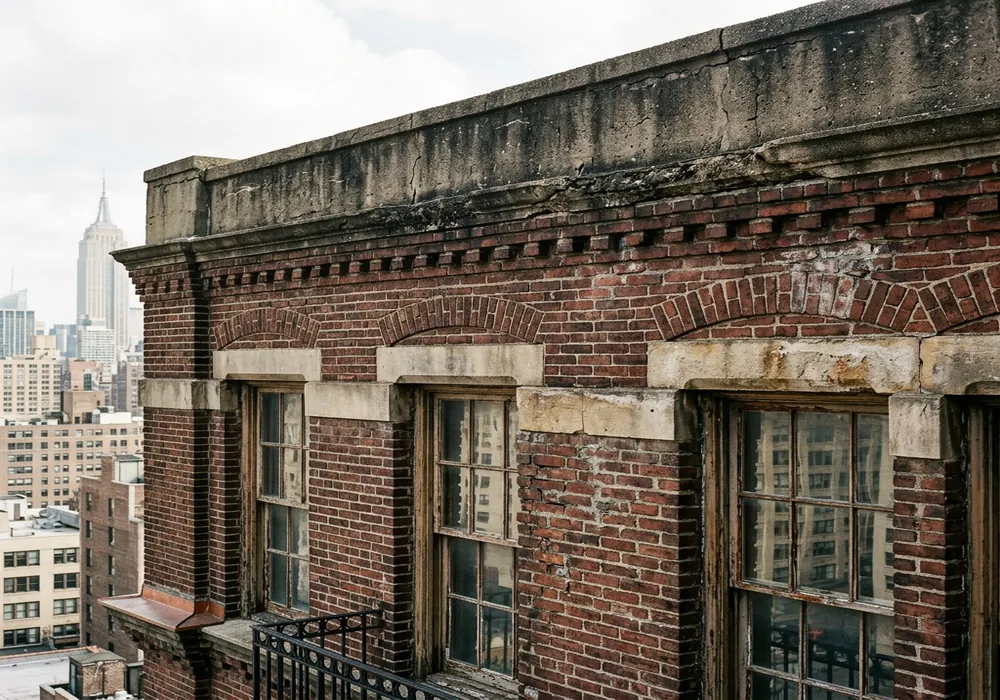
A FISP inspection must be performed by a Qualified Exterior Wall Inspector (QEWI).
A QEWI is a New York State licensed Professional Engineer or Registered Architect who has met the NYC Department of Buildings' qualification requirements and is approved to file FISP reports.
During the inspection, the QEWI evaluates the building's exterior walls and related components, including:
The inspection is designed to identify deterioration that could create hazards for pedestrians or occupants.
Mandatory Hands-On Examination: NYC DOB rules mandate physical hands-on close-up inspections (at least one scaffold drop or industrial rope access drop per street-facing elevation) to accurately detect distress that cannot be seen from street level.
After completing the inspection, the QEWI assigns one of three classifications:
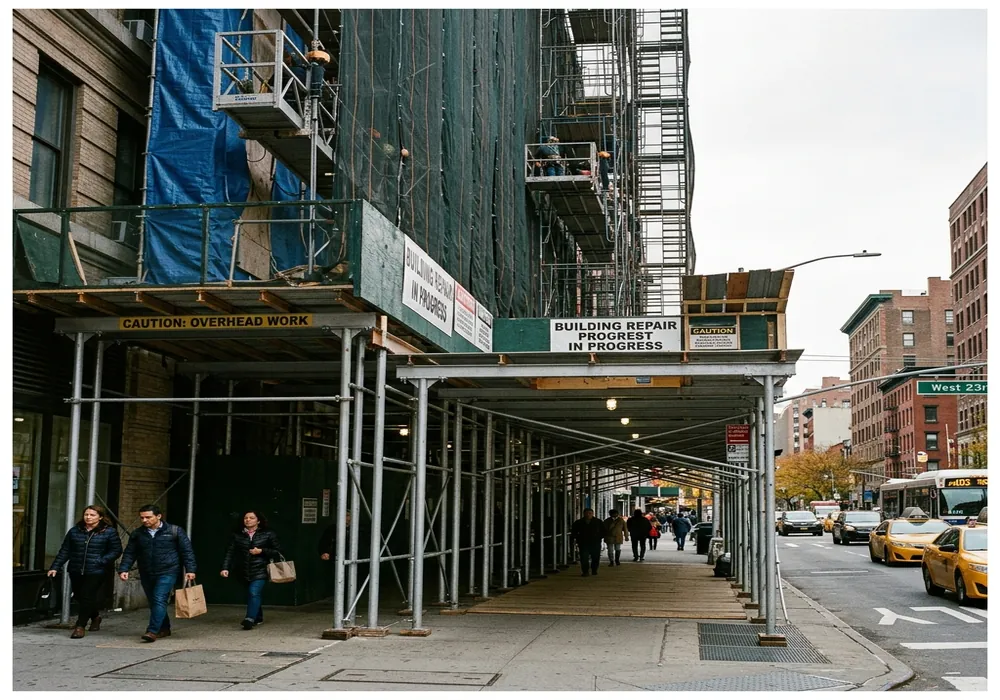
If a façade is classified as Unsafe, the building owner must:
The Department generally requires unsafe conditions to be repaired within 90 days of filing unless an approved extension applies.
To simplify FISP compliance:
Preventive maintenance often reduces long-term repair costs.
Proactive Compliance Strategy: Addressing minor SWARMP items promptly during off-cycle years prevents them from escalating into full Unsafe conditions in subsequent 5-year cycles, protecting both your budget and property reputation.
NYC's Façade Inspection & Safety Program exists to protect both buildings and the public by identifying exterior wall problems before they become dangerous. For owners of buildings taller than six stories, understanding FISP requirements is an essential part of responsible property management.
By scheduling inspections on time, working with a qualified QEWI, and addressing issues promptly, building owners can remain compliant, improve building safety, and avoid unnecessary complications during future inspection cycles.
FISP (Façade Inspection & Safety Program) is NYC's program requiring periodic inspections of exterior walls for buildings taller than six stories.
Most covered buildings must complete a façade inspection and file a technical report every five years.
Only a Qualified Exterior Wall Inspector (QEWI), approved by the NYC Department of Buildings, may perform and file FISP inspections.
Buildings are classified as Safe, Safe With a Repair and Maintenance Program (SWARMP), or Unsafe, depending on the condition of the façade.
Owners must protect the public, complete required repairs, and file an amended report once unsafe conditions have been corrected.
Yes. FISP is the current name for the program that many people still refer to as Local Law 11.