Learn actionable maintenance strategies to protect your building envelope and reduce energy loss.
BY NYC Energy Code Team
ON
29 August 2026
Roof Membrane Types and Their Impact on Energy Performance
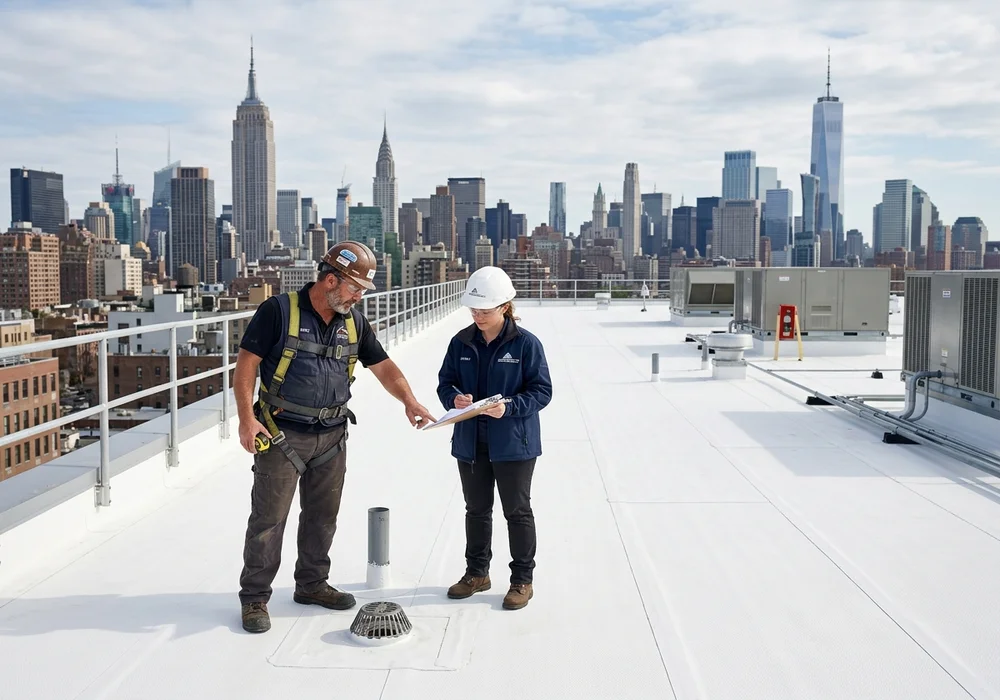
A commercial building's roof does far more than keep rainwater out of tenant spaces.
In New York City, the roof is the building's primary thermal barrier against solar radiation and extreme seasonal temperature swings. The choice of roof membrane directly dictates indoor thermal comfort, peak HVAC cooling demand, top-floor tenant retention, and long-term operating energy expenditure.
When evaluating a low-slope roof replacement, owners and facility managers regularly encounter four core membrane systems: TPO, PVC, EPDM, and Modified Bitumen.
The Critical Principle
There is no single "best" roofing material for every property. Energy performance depends on the entire roof assembly: the interaction between membrane solar reflectance, continuous insulation R-value, drainage slope, vapor retarders, and building HVAC systems.
The 4 Major Commercial Roof Membrane Types
1. Thermoplastic Polyolefin (TPO)
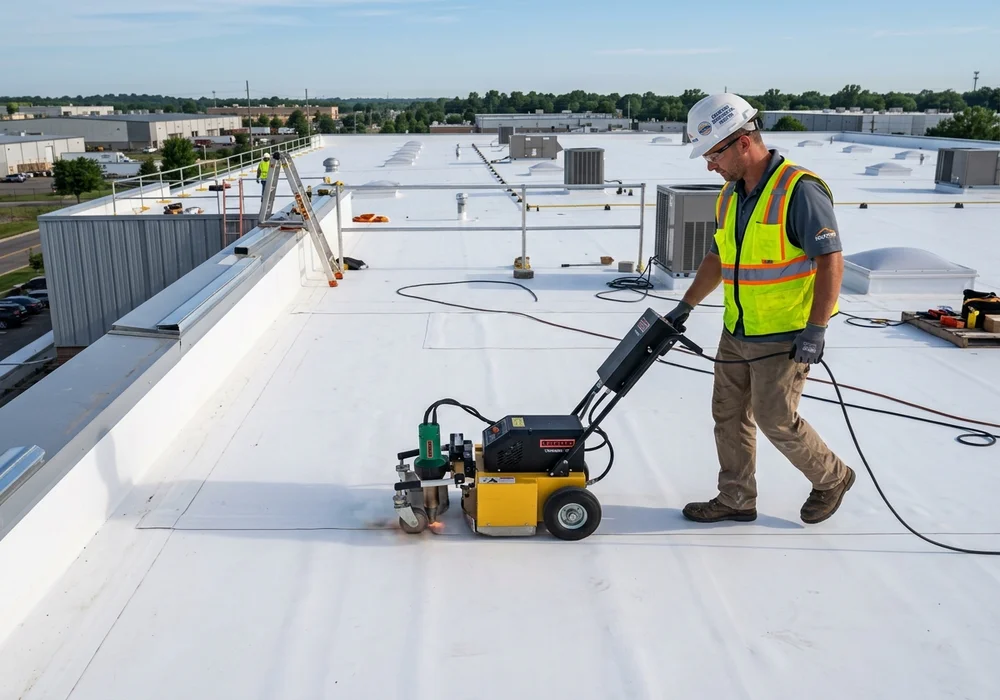
TPO is the fastest-growing commercial single-ply roofing system in North America. Formulated from ethylene propylene rubber blended with polypropylene, TPO sheets are heat-welded at the seams with automated hot-air robots to create monolithic, watertight bonds.
- Energy Profile: Brilliant white formulations deliver a Solar Reflectance Index (SRI) exceeding 100, reflecting over 80% of solar radiation.
- Best For: Commercial offices, retail centers, and residential high-rises prioritizing summer cooling load reduction.
2. Polyvinyl Chloride (PVC)
PVC is a proven single-ply membrane reinforced with polyester scrim. Like TPO, PVC features hot-air welded seams that are actually stronger than the membrane itself.
- Energy & Chemical Profile: High solar reflectivity paired with exceptional chemical resistance.
- Best For: Buildings with commercial kitchens, restaurants, grease exhaust hoods, or chemical laboratory vents where fats and oils would degrade standard rubber.
3. Ethylene Propylene Diene Monomer (EPDM)
Commonly called "rubber roofing," EPDM has protected low-slope buildings for over 50 years. It offers unmatched elongation (over 300%) and superior resistance to hail impact and thermal shock.
- Energy Profile: Traditional black EPDM absorbs substantial solar heat. White-coated or white-faced EPDM options are available for higher reflectivity.
- Best For: Properties requiring long-term durability in complex roof footprints with heavy freeze-thaw cycles.
4. Modified Bitumen (Mod-Bit)
The modern evolution of traditional built-up asphalt roofing (BUR). Multi-ply polymer-modified asphalt sheets are installed via torch application, cold adhesive, or self-adhering membranes.
- Energy Profile: Factory mineral-surfaced cap sheets or applied white elastomeric silicone coatings deliver high reflectivity.
- Best For: Heavy-traffic roofs with substantial rooftop mechanical equipment and frequent technician foot traffic.
Reflective "Cool Roofs": Surface Temperature Dynamics
During a 90°F NYC summer afternoon, a traditional dark roof surface absorbs solar radiation, skyrocketing to 160°F to 180°F.
In contrast, a high-reflectance white TPO or PVC cool roof maintains a surface temperature within 10°F to 15°F of ambient air (around 105°F). This 60°F temperature reduction delivers three critical energy benefits:
- Lower Conductive Heat Gain: Dramatically less heat transfers downward through the roof deck into top-floor tenant units.
- Cooler HVAC Air Intake: Rooftop air handling units (AHUs) draw significantly cooler ambient intake air, boosting chiller refrigeration cycle efficiency.
- Extended Membrane Lifespan: Lower surface temperatures slow thermal aging, chemical polymer breakdown, and seam fatigue.
Why Continuous Insulation Matters More Than the Membrane
A common mistake is installing a premium reflective membrane over substandard insulation.
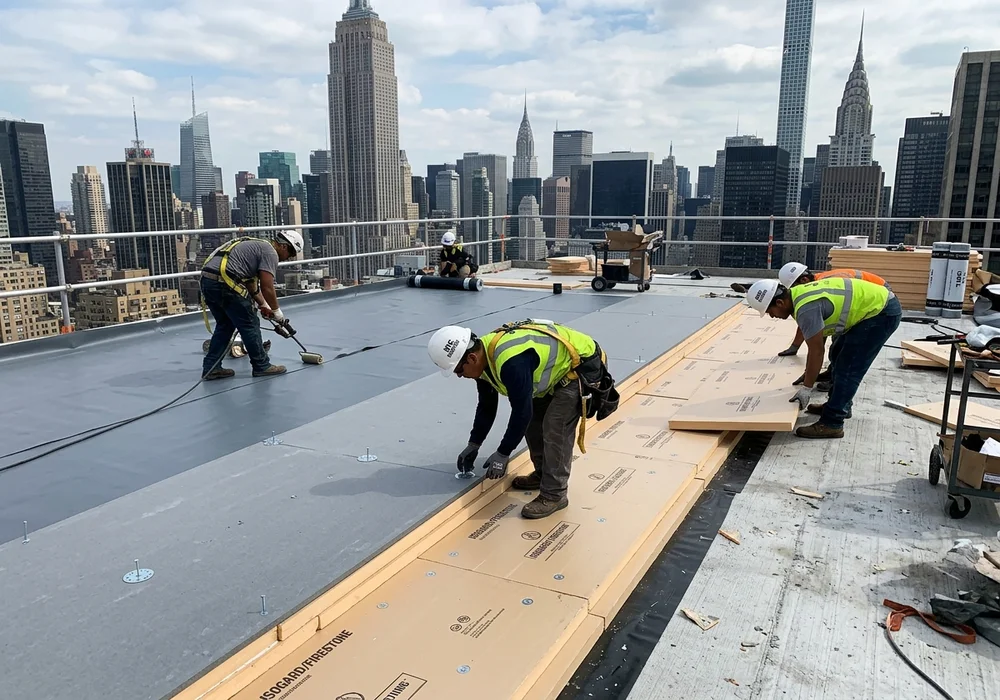
Under the NYC Energy Conservation Code (NYCECC), commercial roof replacements above the deck must achieve at least R-30 continuous insulation (typically two staggered layers of 2.6-inch polyisocyanurate rigid foam board):
The Complete Roof Assembly Anatomy
Structural Deck → Vapor Retarder → Layer 1 Polyiso (Staggered Joints) → Layer 2 Polyiso → High-Density Gypsum Cover Board → Single-Ply Membrane
Crucial Timing: Replace the Roof Before Adding Solar PV
Commercial rooftop solar systems operate for 25 to 30 years.
If you install solar panels over a 15-year-old roof membrane with 5 years of life remaining, you will face massive future deconstruction costs: decommissioning the solar racking, removing electrical inverters, storing panels, reroofing, and recommissioning the array.
Smart Capital Coordination
Always coordinate roof replacement and solar feasibility simultaneously. Furthermore, pairing a highly reflective white membrane with bifacial solar panels allows the underside of the panels to capture reflected albedo light, boosting clean energy generation by 5% to 15%.
12-Point Roof Replacement Checklist for NYC Owners
Existing Moisture Survey: Have you conducted an infrared thermographic scan to check for trapped wet insulation?
Energy Code Compliance: Does the specification meet NYC's mandatory R-30+ continuous polyiso insulation requirement?
Cover Board Inclusion: Is a high-density gypsum or polyiso cover board specified to protect against hail and technician foot traffic?
Drainage & Tapered Polyiso: Are positive 1/4" per foot tapered slopes designed to eliminate standing ponding water?
Final Takeaway
Your roof is one of the most powerful levers for whole-building energy decarbonization.
By selecting the right membrane chemistry (TPO, PVC, EPDM, or Mod-Bit) and pairing it with robust continuous insulation, proper cover boards, and leak-free detailing, NYC property owners can slash summer cooling demand, avoid Local Law 97 penalties, and secure 25+ years of reliable asset protection.
Engage an experienced building envelope consultant to design a comprehensive roof assembly tailored specifically to your building's mechanical configuration and long-term capital strategy.
Frequently Asked Questions
There is no single universally most efficient membrane. Light-colored, highly reflective TPO and PVC single-ply membranes excel at reducing summer solar heat gain, but total building energy efficiency depends heavily on the continuous insulation R-value beneath the membrane.
White TPO reflects approximately 80% of solar radiation, significantly reducing peak cooling loads compared to traditional black EPDM (which reflects only ~10%). However, a well-insulated EPDM assembly can still perform excellently in winter-dominated heating climates.
Yes. Highly reflective cool roofs can reduce rooftop surface temperatures by 50°F to 60°F during summer heatwaves, lowering top-floor air conditioning demand and relieving strain on rooftop chiller condenser fans.
Yes. Continuous polyisocyanurate (polyiso) rigid board insulation controls heat conduction year-round during both freezing winter months and scorching summer days, whereas the membrane primarily controls solar radiation reflectance and weatherproofing.
Yes. If the underlying asphalt roof substrate is structurally sound and free of trapped moisture, applying a high-solids white silicone or acrylic elastomeric coating can restore reflectivity and extend service life by 10 to 15 years.
Yes. If a commercial roof has fewer than 10 to 15 years of remaining useful life, replacing the roof membrane and upgrading insulation prior to installing solar avoids having to dismantle and reinstall solar arrays later at massive expense.
Yes. Upgrading to high R-value continuous roof insulation combined with a reflective cool roof membrane reduces total annual MMBtu heating and cooling consumption, directly decreasing building carbon emissions under LL97.
PVC roofing is the preferred choice for buildings with restaurant grease hoods, kitchen exhaust fans, or industrial chemicals, as PVC inherently resists animal fats, grease degradation, and harsh chemicals better than TPO or EPDM.
With proper bi-annual maintenance and drainage design, single-ply TPO/PVC systems last 20–30 years, EPDM rubber lasts 25–35 years, and multi-ply modified bitumen systems typically last 20–25 years.
Evaluate the complete roof assembly: membrane mil thickness (60-mil vs 80-mil), total polyiso insulation R-value (R-30+ continuous), high-density cover board inclusion, manufacturer NDL (No Dollar Limit) warranty terms, and flashing detailing.