BY NYC Energy Code Team
ON
31 October 2026
Elevator Inspection Rules in NYC: Who Files What and When
NYC Elevator Inspections: Why Owners Need to Track More Than One Deadline
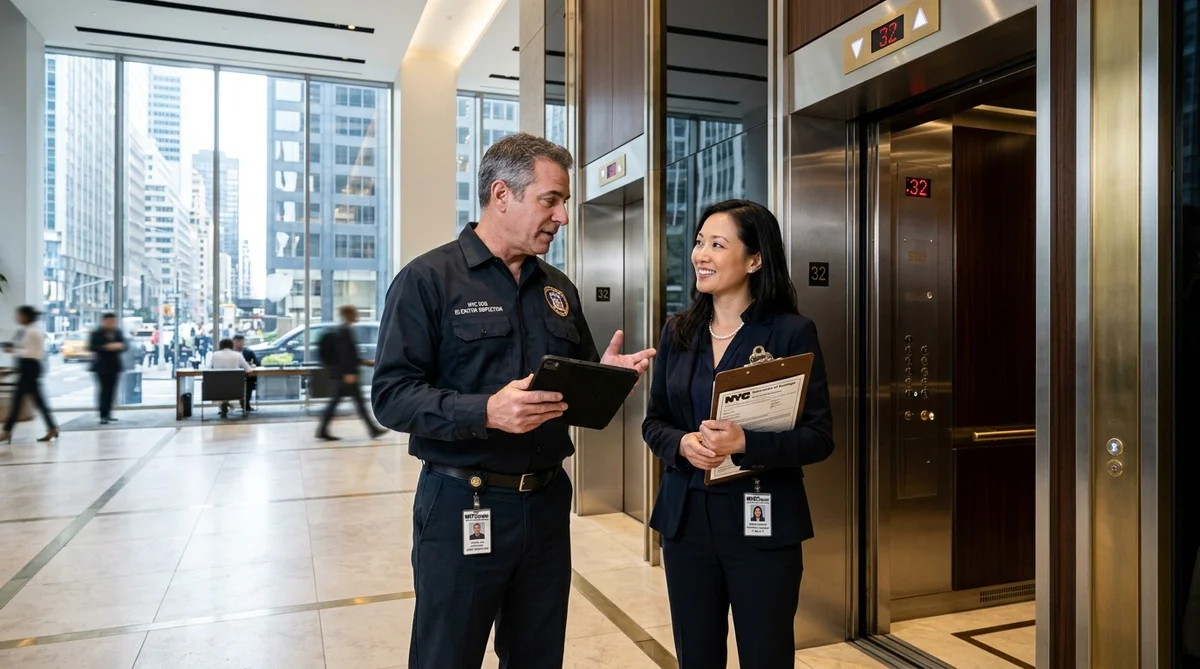
An elevator in a commercial building or multifamily property may operate thousands of times each month without any obvious problem. But behind that daily operation is a separate compliance schedule involving inspections, safety tests, maintenance records, defect corrections, and filings with the New York City Department of Buildings (DOB).
The challenge for property owners is that elevator compliance does not involve just one annual inspection. NYC requires different types of inspections and category tests, each with its own purpose, frequency, and reporting deadline.
For example, a building may complete its annual Category 1 safety test but still have an outstanding periodic inspection report. Another owner may complete the required test on time but receive a violation because the report was never submitted to DOB.
The owner is ultimately responsible for ensuring that required inspections, tests, corrections, and filings are completed. An elevator contractor or approved inspection agency may handle much of the technical work, but outsourcing the process does not remove the owner's responsibility to monitor compliance.
This guide explains how NYC elevator inspection rules work, which agency performs each task, which forms are involved, and when building owners need to act.
Owner Responsibility vs. Agency Contracting
In NYC, the building owner is legally responsible for timely filings and defect remedies under Title 28 of the Administrative Code. While your elevator maintenance vendor or third-party agency performs the physical testing, the owner must sign, track, and ensure acceptance within DOB NOW: Safety.
1. What Types of Elevator Inspections Does NYC Require?
NYC's elevator safety framework includes periodic inspections and separate category tests. For most regulated building elevators, owners need to account for both the annual periodic inspection and the annual Category 1 test.
Additional category testing applies according to the elevator type and its testing cycle.
| Inspection or Test | What It Checks | Frequency |
|---|---|---|
| Periodic inspection | General visual and operational condition of the elevator and associated components | Annually |
| Category 1 (CAT1) | No-load safety testing | Annually |
| Category 3 (CAT3) | Testing involving unexposed portions of water-hydraulic elevator systems and applicable pressure vessels | Every 3 years |
| Category 5 (CAT5) | Rated-load and speed testing | Every 5 years |
CAT3 testing is specifically relevant to water-hydraulic elevators and is relatively uncommon in NYC.
The periodic inspection and CAT1 test are separate requirements. Owners should not assume that completing one automatically satisfies the other.
DOB also carries out inspections, investigations, and re-inspections as part of its enforcement and safety responsibilities. Some department-arranged inspections are unannounced, so owners and building staff must provide appropriate access. Sources: NYC DOB — Elevator Compliance and NYC Building Code §28-304.6.1.
2. CAT1, CAT3, and CAT5: Understanding the Testing Requirements
Each category test serves a different safety purpose. Understanding the differences helps owners schedule the right work rather than treating every elevator inspection as the same procedure.
Category 1 (Annual)
CAT1: Annual No-Load Safety Test
Category 1 is performed once during each calendar year, between January 1 and December 31.
The test evaluates the elevator's safety operation without applying its rated passenger or equipment load. Depending on the elevator, the inspection addresses safety devices, suspension components, alarms, communication equipment, emergency lighting, machine-room conditions, pits, and hoistways.
For CAT1 testing, owners should coordinate with an approved elevator inspection agency and ensure that the required report is submitted within the filing period. The annual CAT1 test must also be scheduled with the required interval from the previous test. NYC Building Code provisions establish a minimum six-month interval between Category 1 tests.
Category 3 (3-Year Cycle)
CAT3: Three-Year Water-Hydraulic Testing
CAT3 applies to water-hydraulic elevators and is not a routine requirement for every elevator in NYC.
The test is performed within three years of the month in which the applicable Certificate of Compliance was issued for a new elevator, or within three years of the month of the most recent CAT3 test for an existing elevator. Because water-hydraulic installations are relatively uncommon, owners should verify the device's technical classification and testing history before determining whether CAT3 applies.
Category 5 (5-Year Cycle)
CAT5: Five-Year Rated-Load and Speed Test
Category 5 is a more extensive test that evaluates elevator safety under rated-load and speed conditions. Unlike CAT1, which is a no-load test, CAT5 involves testing at the elevator's rated load and speed.
The testing cycle is generally every five years, calculated from the month of the original applicable Certificate of Compliance or the most recent CAT5 test. Owners should maintain the previous test date and schedule the next one before the five-year anniversary rather than waiting for a DOB reminder. Reference: NYC 1 RCNY §103-02 — Elevator Inspections and Tests.
3. Who Is Responsible for What? Owner vs Elevator Agency vs DOB
One of the biggest sources of confusion is assuming that the elevator maintenance company handles every regulatory obligation. In reality, different parties have different responsibilities.
| Party | Main Responsibilities |
|---|---|
| Building owner | Ensure required inspections and testing take place, hire approved agencies, provide access, sign required reports, correct defects, and monitor DOB filings |
| Approved elevator inspection agency | Perform required inspections and tests, prepare technical reports, and submit the relevant filings |
| Witnessing inspection agency | Provide independent witnessing where required for the applicable category test |
| Elevator maintenance agency | Maintain, repair, and service the elevator under the required maintenance arrangements |
| Registered design professional or licensed Elevator Director | Prepare or submit required elevator permit applications for installations and major upgrades, as applicable |
| NYC DOB | Regulate elevator compliance, process filings, conduct inspections and investigations, and issue violations and penalties |
There is an important independence requirement: the agency performing the owner's periodic inspection cannot be affiliated with the agency maintaining the elevator.
This is intended to provide independent inspection oversight rather than having the maintenance provider solely evaluate its own work.
The owner must also ensure that the applicable inspection and test reports contain the required signatures. Periodic inspection reports require the performing agency director's signature and the building owner's signature. Category test reports require the performing inspector and agency director, the witnessing agency director where required, and the building owner's signature. Reference: NYC Administrative Code §28-304.6.5.
4. Elevator Inspection Filing Deadlines: Who Submits What and When?
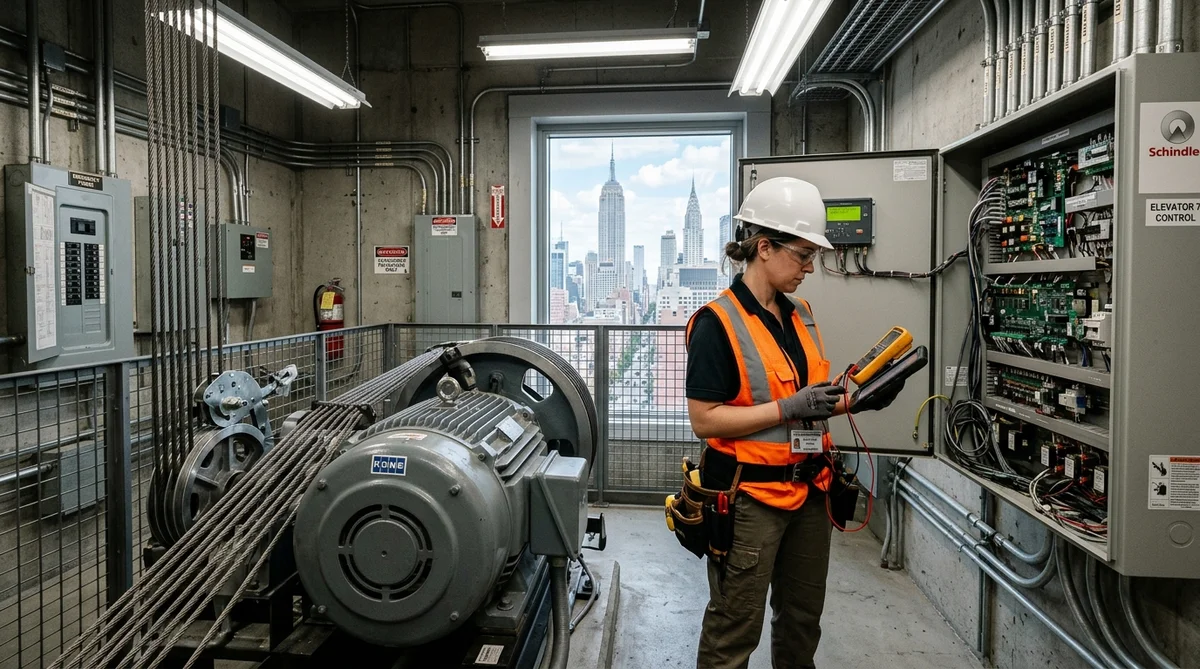
Completing an inspection is only part of the process. The report must also reach DOB within the applicable deadline. Under the current 1 RCNY §103-02 filing rules, the deadlines are:
| Filing Type | Inspection Frequency | Submission Deadline |
|---|---|---|
| Periodic inspection report | Annually | Within 14 days after inspection |
| CAT1 test report | Annually | Within 21 days after test |
| CAT3 test report | Every 3 years when applicable | Within 21 days after test |
| CAT5 test report | Every 5 years | Within 21 days after test |
| Affirmation of Correction (AOC) | When defects are identified | Within 14 days after the defects are corrected |
There are also calendar-cycle cutoff rules. DOB's current Elevator Compliance guidance states that periodic inspection filings cannot be submitted after January 14 of the following year and CAT1 filings cannot be submitted after January 21 of the following year.
For CAT5, the five-year cycle must be respected, including the applicable month-of-anniversary deadline. Owners should maintain their own calendar even when the inspection agency handles the electronic filing.
Important deadline clarification: Some older DOB FAQ pages and legacy form instructions still display 60-day report-filing and 120-day correction language. The current dedicated Elevator Compliance page and current 1 RCNY §103-02 state the 14-day periodic, 21-day category-test, 90-day correction, and 14-day AOC requirements described above. For an actual filing, confirm the current requirement in DOB NOW: Safety and the applicable rule rather than relying on an older PDF or FAQ. Sources: NYC DOB Elevator Compliance and Current 1 RCNY §103-02.
5. What Are ELV3, ELV29, and ELV36 Forms?
NYC uses specific electronic filing forms for elevator inspection and testing. Building owners should understand what each form does, even when the approved inspection agency prepares the submission.
| Form | Purpose | Usually Handled By |
|---|---|---|
| ELV3 | Elevator inspection and category test reporting | Approved elevator agency, with required owner signature |
| ELV29 | Confirmation that identified defects have been corrected | Approved agency or authorized filing professional, with required documentation |
| ELV36 | Advance notification of specified testing | Approved elevator agency |
ELV3: Elevator Inspection/Test Report is used for applicable CAT1, CAT3, and CAT5 filings. It records the inspection or test, the elevator device information, the findings, and the necessary professional signatures. The completed report must be submitted through DOB NOW: Safety within the applicable filing deadline.
ELV29: Affirmation of Correction is used when defects identified during an inspection or category test have been corrected. The affirmation confirms that the previously reported defects have been addressed. It is not enough to repair the elevator and assume the issue has been closed automatically. The required AOC must be filed within 14 days after the date of correction under the current rule.
ELV36: Elevator/Escalator Test Notification is used for applicable test notifications, including specified CAT1 escalator and CAT5 elevator testing and related devices. The applicable approved elevator agency must provide the required notice to DOB at least five calendar days before category testing where required by the code and rules.
All new elevator inspection/test reports and affirmations of correction are submitted through DOB NOW: Safety. Reference: NYC DOB — Elevator Forms.
6. What Happens When an Elevator Inspection Finds Defects?
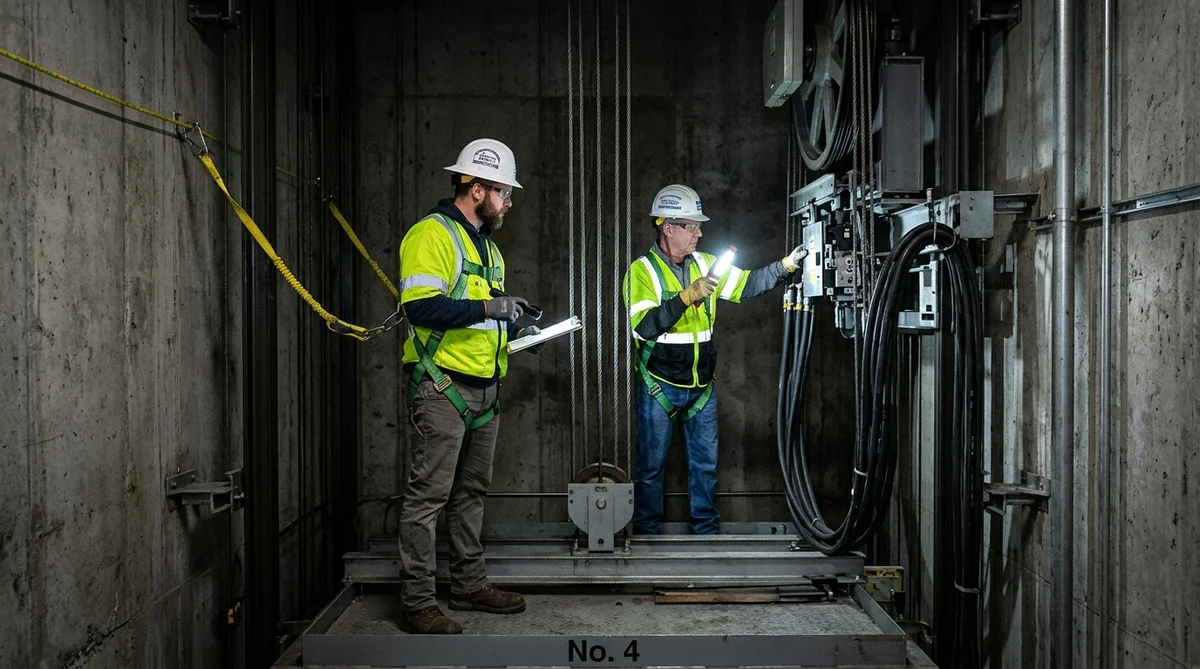
An inspection report may identify deficiencies that require corrective work before the elevator's compliance record can be completed. Under the current 1 RCNY §103-02:
- Defects found during a category test or periodic inspection must generally be corrected within 90 days.
- Hazardous conditions must be corrected immediately.
- Defects related to firefighters' Phase I emergency recall and Phase II emergency in-car operation must also be corrected immediately.
- An Affirmation of Correction must be filed within 14 days after correction.
The 90-day period is not permission to continue operating an elevator with a hazardous condition. Immediate safety requirements take priority.
For example, suppose a CAT1 test identifies a defect involving an elevator safety component. The owner arranges the repair with the maintenance agency. Once the repair is completed, the required AOC needs to be filed within 14 days. If the correction is not completed or the AOC is not filed within the applicable period, DOB may issue a Failure to Correct (FTC) violation.
Where extraordinary circumstances or delays beyond the owner's control prevent the required correction, the owner may be able to request an extension, but the request must be made before the applicable deadline and supported by the required evidence. Financial or administrative hardship alone is not sufficient. Reference: 1 RCNY §103-02(e) and (h)–(j).
7. Elevator Maintenance Records: What Owners Must Keep On Site
Inspection reports are only one part of elevator compliance. NYC also requires owners to maintain an appropriate service and maintenance arrangement.
Owners must have a current maintenance contract with an approved elevator agency capable of performing the required maintenance, repairs, and replacement work. The contract should include a Maintenance Control Program (MCP) that follows the manufacturer's maintenance procedures or a program established by a qualified design professional engaged by the owner.
A maintenance log must also be maintained on site. It should document the maintenance work performed and the dates on which the work took place.
For practical record management, the property team should keep:
- The current elevator maintenance contract.
- The applicable Maintenance Control Program (MCP).
- The elevator maintenance log.
- Previous CAT1, CAT3, and CAT5 reports.
- Periodic inspection records.
- Completed ELV29 affirmations of correction.
- Records of repairs, modernization work, and relevant permits.
These documents help demonstrate that the building is maintaining its elevator system rather than simply arranging periodic testing. NYC DOB's Elevator Owner Guidance explains the maintenance-contract, MCP, and on-site log requirements.
8. Elevator Permits: When Is a DOB Application Required?
Routine maintenance and inspections should not be confused with elevator modernization or construction work.
NYC requires permits for new elevator installations and applicable alterations or major upgrades. The permit application is submitted through DOB NOW: Build by a NYC-licensed Elevator Director or an appropriate registered design professional, depending on the project.
Examples of work that may require a permit include:
- New elevator installations.
- Major equipment upgrades.
- Elevator modernization.
- Renovations or remodeling involving regulated elevator work.
- Elevator removal or dismantling.
The exact filing requirements depend on the work scope and applicable DOB rules. Owners planning modernization should also coordinate the project with the maintenance provider and inspection agency. Work involving the elevator's safety systems may require acceptance testing and other approvals before the equipment can return to service.
DOB requires permits to remain posted as applicable until the permitted work is completed and signed off. In multiple dwelling buildings, residents must also receive advance notice for qualifying planned elevator outages. Reference: NYC DOB — Elevator Applications and Permits.
9. What Happens If the Owner Misses an Elevator Filing Deadline?
Missing a required inspection report or correction filing can result in late fees and civil penalties. The amount depends on the building classification, type of filing, elevator device, and applicable violation.
DOB's published late-filing schedule includes monthly charges per device, with different amounts for residential and non-residential buildings. Failure-to-file penalties can also apply.
It is important to understand that paying a late fee does not replace the requirement to complete the missing inspection or test.
Some reports filed outside the permitted timeframe may be considered expired. In those circumstances, the owner may need to pay the applicable penalties, arrange a new inspection or test for the current cycle, and submit a new report.
Where a violation is issued, owners should review the associated device record and determine whether the issue is a missing report, an uncorrected defect, or a separate maintenance violation. For CAT1 and CAT5 violation payments, DOB directs owners to the Violations section of DOB NOW: Safety. Reference: NYC DOB — Resolve Elevator Violations.
10. How to Check Your Building's Elevator Inspection Status
Property owners do not need to rely exclusively on emails from the elevator contractor to verify filing status. DOB NOW provides public records for elevator compliance filings. A practical review process is:
1
Identify the Elevator Device Number
The device number can generally be found on the inspection certificate posted in the elevator or kept in the building manager's office.
2
Open DOB NOW: Safety
Use the DOB NOW portal and search for the property or elevator device.
3
Review Safety Compliance Filings
Search using the property address, BIN, block and lot, or device number. Open the Property Profile and locate the Safety: Compliance Filings section.
4
Review Submitted Inspection Reports
Check the report type, inspection date, filing date, and status. Make sure the record covers the correct testing cycle.
5
Verify Outstanding Violations Separately
Review active elevator violations and confirm whether each issue relates to a missing filing, defective equipment, or an outstanding affirmation of correction.
Owners should create an NYC.ID account to access their associated filings through the dashboard. If a previous elevator company submitted reports without associating the current owner's email address, the reports may not appear on that owner's personal dashboard. The public portal can still be used to search the property records. Reference: DOB NOW: Safety Elevator Compliance FAQs.
A Practical Annual Elevator Compliance Calendar
Consider a hypothetical NYC commercial building with three passenger elevators. The property manager needs to coordinate periodic inspections, CAT1 testing, maintenance, and any corrective work throughout the calendar year.
| Period | Owner or Property Manager Action |
|---|---|
| January–March | Review previous-year inspection records, confirm current maintenance contract, and schedule required inspections |
| April–June | Coordinate periodic inspections and annual CAT1 testing with approved agencies |
| July–September | Review findings, complete repairs, and monitor outstanding AOC filings |
| October–December | Verify all annual inspections and CAT1 tests have been completed and submitted within the applicable deadlines |
| Throughout the year | Maintain the MCP and maintenance log, review DOB NOW records, and monitor CAT3/CAT5 anniversary dates |
This is an internal planning example, not a mandatory DOB inspection schedule. Actual dates must follow the device-specific cycle and filing rules.
The property manager should maintain a separate record for each elevator because the three devices may have different test histories, maintenance conditions, and CAT5 anniversary dates.
Conclusion
NYC elevator compliance involves more than arranging an annual maintenance visit. Owners must coordinate periodic inspections, annual CAT1 safety testing, applicable CAT3 or CAT5 testing, defect corrections, and electronic filings with DOB.
The most important responsibility is ensuring that each inspection or test is completed and its report is properly submitted. The approved elevator agency performs the technical work and handles the required reporting process, but the property owner must monitor the deadlines, sign the applicable reports, maintain the service contract and records, and ensure defects are corrected.
For NYC building owners and property managers, a device-by-device elevator compliance calendar is one of the most practical ways to prevent missed filings and avoidable violations.
The safest approach is to track the inspection date, filing deadline, correction deadline, and AOC status separately for every elevator. A completed test does not mean the compliance process is finished until the required records have been accepted by DOB.
Frequently Asked Questions
Most regulated elevators require an annual periodic inspection and a separate annual CAT1 no-load safety test. Additional CAT3 testing applies to water-hydraulic elevators every three years, while CAT5 rated-load and speed testing generally takes place every five years.
The property owner is ultimately responsible for ensuring that required filings are completed. An approved elevator inspection agency typically prepares and submits the reports through DOB NOW: Safety. Required owner and inspection-agency signatures must be included.
Under current 1 RCNY §103-02, CAT1 test reports must be submitted within 21 days after the test. DOB's current compliance guidance also identifies January 21 of the following year as the final filing cutoff for the preceding calendar-year cycle.
CAT1 is an annual no-load safety test. CAT5 is a more extensive rated-load and speed test performed every five years. Both evaluate elevator safety but under different testing conditions.
ELV3 is NYC DOB's Elevator Inspection/Test Report used for applicable category testing, including CAT1, CAT3, and CAT5. New reports are submitted electronically through DOB NOW: Safety.
ELV29 is the form used to certify that previously identified elevator defects have been corrected. Under the current rule, the affirmation must generally be filed within 14 days after correction.
Generally, identified defects must be corrected within 90 days of the applicable inspection or test. Hazardous conditions and specified firefighters' emergency-operation defects must be corrected immediately. The required AOC must be filed within 14 days after correction.
No. NYC requires independence between the agency performing the owner's periodic inspection and the agency maintaining the elevator. Approved independent agencies also perform or witness applicable category testing.
The owner may face late fees and civil penalties. Some reports submitted beyond the permitted timeframe may be considered expired, requiring a new inspection or test and a new filing. The specific consequences depend on the filing type and applicable rule.
Use DOB NOW: Safety and its Public Portal. Owners can search by building address, BIN, block and lot, or elevator device number to review available compliance filings and violations.
No. CAT3 applies to water-hydraulic elevators and is uncommon in NYC. Most building elevators will instead have annual CAT1 testing and five-year CAT5 testing, where applicable.
Applicable new installations, removals, renovations, and major upgrades require permits. New elevator application filings are submitted through DOB NOW: Build by an appropriately licensed Elevator Director or registered design professional.
You may also like