BY NYC Energy Code Team
ON 26 Jun 2026
LL152 Community District Schedule: Why Your Building's Deadline Depends on Its Community District
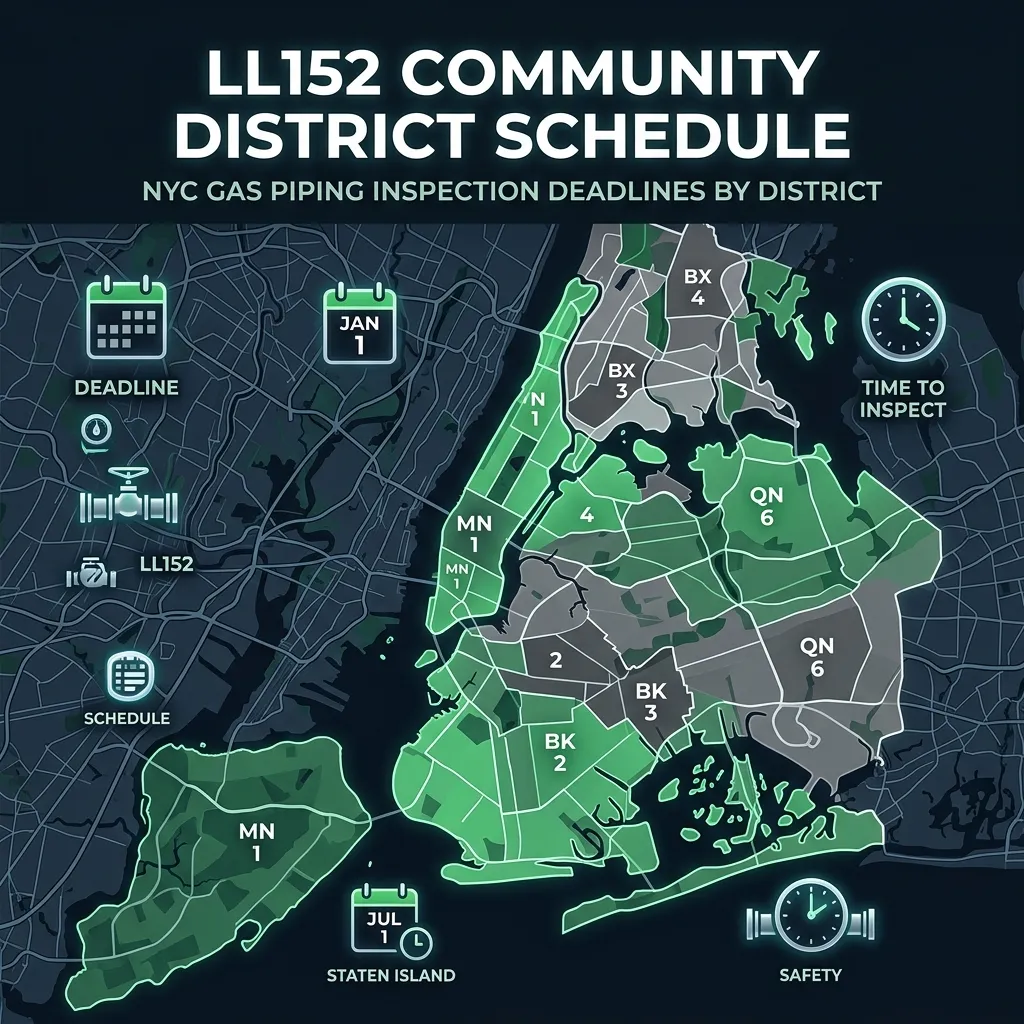
One of the most misunderstood aspects of New York City's Local Law 152 is how inspection deadlines are determined. Many property owners believe that filing dates are based on the borough where a building is located, the building's size, or the year it was constructed. Others assume that every property owner in the same neighborhood follows the same inspection timeline.
None of those assumptions are entirely correct.
Under Local Law 152, gas piping inspection deadlines are determined by the LL152 community district schedule. This rotating schedule assigns inspection years based on a property's designated Community District rather than simply its borough or address.
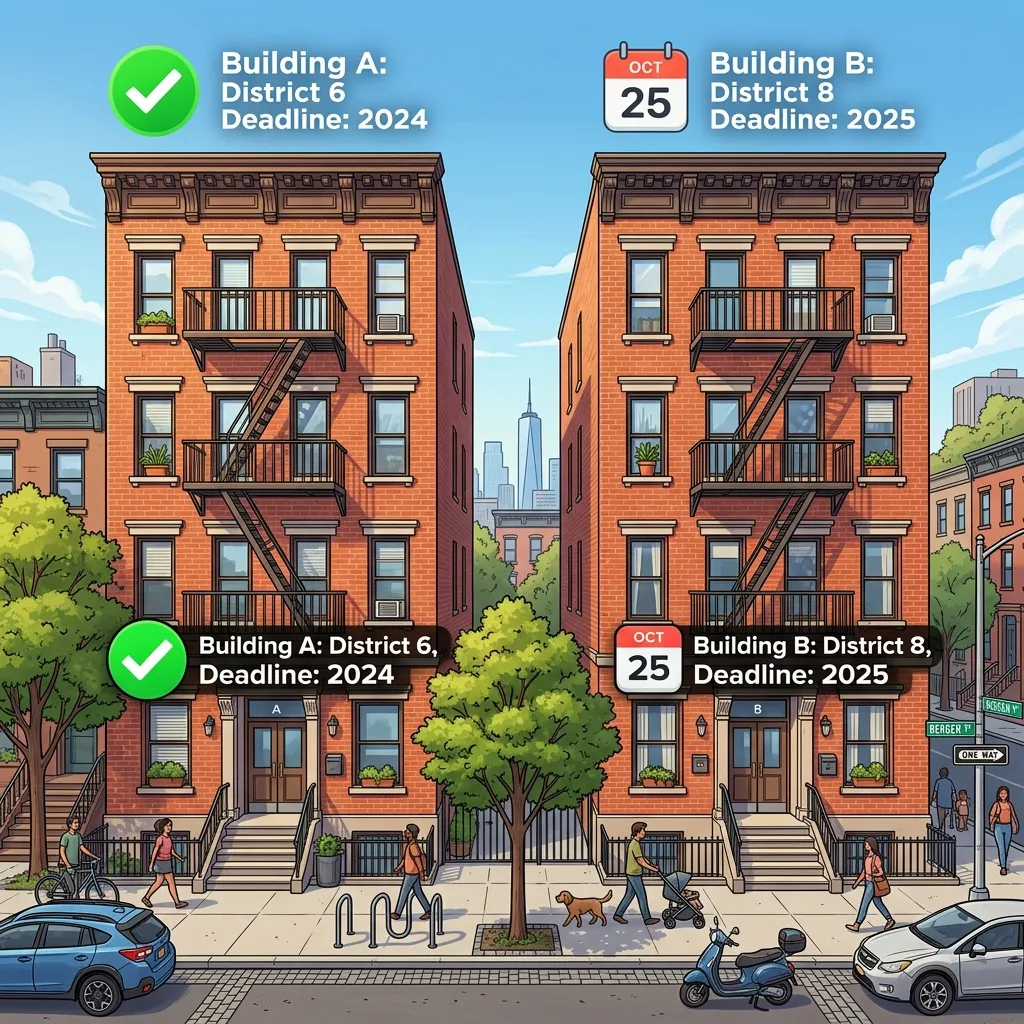
As a result, two buildings located only a few blocks apart—or even within the same borough—can have completely different filing deadlines.
Understanding how the community district schedule works is essential for staying compliant with Local Law 152, avoiding missed filing deadlines, and maintaining accurate building records.
What Is the LL152 Community District Schedule?
The LL152 community district schedule is the inspection calendar established by the New York City Department of Buildings (DOB) for Local Law 152 gas piping inspections.
Instead of requiring every covered building to complete inspections in the same year, DOB spreads inspections across multiple years using Community Districts.
This rotating approach helps:
- Distribute inspection workloads.
- Reduce scheduling bottlenecks.
- Allow Licensed Master Plumbers to complete inspections efficiently.
- Improve compliance management across New York City.
- Prevent thousands of inspections from becoming due simultaneously.
Every covered property is assigned an inspection year based on the Community District where it is located.
Why the Deadline Is Not Random
Many owners first learn about Local Law 152 after receiving a notice from their property manager, plumber, or compliance consultant. Because of this, it is easy to assume deadlines are assigned randomly.
In reality, every inspection deadline follows an organized schedule developed by DOB.
The inspection year is determined primarily by:
- Community District
- Official DOB schedule
- Inspection cycle
It is not determined by:
- Building age
- Number of apartments
- Building value
- Borough alone
- Ownership history
- When the owner purchased the building
Understanding this distinction helps eliminate one of the most common causes of missed filing deadlines.
What Is a Community District?
Every borough in New York City is divided into multiple Community Districts. These districts are administrative geographic areas used by various city agencies for planning, budgeting, public services, and regulatory programs.
Local Law 152 also relies on these districts when assigning inspection schedules. Every covered property belongs to one specific Community District. That district determines when the building's gas piping inspection becomes due.
Why Similar Buildings Can Have Different Deadlines
One of the biggest surprises for property owners is discovering that similar buildings can have completely different compliance years.
Imagine two apartment buildings:
- Both are five-story residential buildings.
- Both were constructed in the 1950s.
- Both have natural gas service.
- Both are located in Brooklyn.
Even though they appear nearly identical, they may belong to different Community Districts. If they do, their inspection years may also be different. This is why relying on another owner's inspection schedule can lead to costly mistakes.
Why Owners Frequently Get Confused
Several factors contribute to confusion surrounding the LL152 community district schedule.
Assuming Borough Equals Deadline
Many owners only know that their building is located in Manhattan, Queens, Brooklyn, the Bronx, or Staten Island. They assume every building within the borough follows the same inspection cycle. That assumption is incorrect. Each borough contains multiple Community Districts with different inspection years.
Managing Multiple Properties
Property managers often oversee buildings throughout several boroughs. If they apply one inspection schedule to every building, some properties may receive inspections too early while others may miss required deadlines. Each property must be evaluated individually.
Relying on Old Spreadsheets
Many management companies maintain internal compliance spreadsheets. While useful, these documents should never replace current DOB information. Inspection schedules should always be verified using current city guidance and the property's official records.
How to Determine Your Building's Inspection Cycle
Finding the correct inspection year begins with accurate property information. Owners should gather:
- Property address
- Borough
- Block and Lot (BBL)
- Building Identification Number (BIN)
These identifiers help confirm that the correct property is being reviewed. After confirming the property information, owners should determine the Community District associated with that address. Once the district is known, it can be matched with the official Local Law 152 inspection schedule.
Why Property Records Matter
Local Law 152 compliance depends heavily on accurate records. Mistakes involving addresses, ownership changes, or outdated information can lead to incorrect assumptions about inspection deadlines.
Owners should regularly verify:
- Property ownership records
- Building classification
- Community District
- DOB records
- Inspection history
- Previous certifications
Accurate records make future compliance significantly easier.
Portfolio Owners Should Track Every Building Separately
Owners with multiple buildings should think of Local Law 152 as a portfolio management task rather than an individual inspection. Every building should have its own compliance record.
A useful tracking spreadsheet should include the following parameters:
| Information | Purpose |
|---|---|
| Building Address | Identify property |
| Borough | General location |
| BBL | Official property identifier |
| BIN | Building Identification Number |
| Community District | Determines inspection schedule |
| Inspection Cycle | Current compliance period |
| Inspection Status | Completed or pending |
| GPS1 Status | Inspection report received |
| GPS2 Filing Status | Certification submitted |
| DOB Confirmation | Filing accepted |
| Next Inspection Due | Future planning |
Maintaining this information in one place reduces administrative errors and simplifies long-term compliance management.
Benefits of Using a Compliance Tracker
A well-organized tracking system provides several advantages. It helps owners:
- Monitor upcoming deadlines.
- Prevent duplicate inspections.
- Organize compliance documents.
- Track repair work.
- Confirm DOB submissions.
- Prepare for future inspection cycles.
- Simplify property management during ownership changes.
For companies managing dozens of buildings, a tracker can become one of the most valuable compliance tools.

Common Mistakes Property Owners Make
Several recurring mistakes lead to unnecessary compliance issues. These include:
- Assuming every building in one borough has the same deadline.
- Forgetting to verify the Community District.
- Using outdated inspection schedules.
- Losing GPS1 inspection reports.
- Forgetting GPS2 certification filing.
- Waiting until the deadline approaches.
- Confusing inspection completion with filing completion.
- Failing to update internal tracking systems.
Most of these issues can be avoided with better organization and regular record reviews.
Why Early Planning Saves Time
Licensed Master Plumbers become significantly busier as inspection deadlines approach. Owners who schedule inspections early often benefit from:
- Better appointment availability.
- More scheduling flexibility.
- Additional time for repairs.
- Reduced administrative pressure.
- Lower risk of missing deadlines.
Waiting until the last few weeks before a filing deadline can create unnecessary stress.
How Property Managers Can Improve Compliance
Property managers should establish standardized procedures for every building they oversee. These procedures should include:
- Annual review of inspection schedules.
- Verification of Community District assignments.
- Updating compliance trackers.
- Organizing inspection documents.
- Monitoring repair progress.
- Confirming GPS2 submissions.
- Saving DOB confirmations.
- Scheduling future inspection reminders.
Consistency reduces the likelihood of missed requirements.
Preparing for Future Inspection Cycles
Local Law 152 operates on recurring inspection cycles. Owners should not think of compliance as a one-time event. Instead, each completed inspection should become the starting point for the next compliance cycle. Maintaining organized records allows future inspections to proceed much more smoothly.
Why This Topic Matters for NYC Property Owners
The LL152 community district schedule answers one of the most common questions property owners ask: "When is my building actually due?"
Many online resources explain the law itself but provide little guidance on how inspection years are assigned. Understanding the role of Community Districts eliminates much of the uncertainty surrounding Local Law 152 compliance. Instead of relying on assumptions, owners can determine their inspection schedule using accurate property information and official DOB records.
Best Practices for Staying Compliant
To reduce compliance risks, property owners should:
- Verify their property's Community District.
- Review the current DOB inspection schedule.
- Maintain accurate building records.
- Schedule inspections well before deadlines.
- Save GPS1 inspection reports.
- Confirm GPS2 certification filing.
- Retain DOB confirmation records.
- Track future inspection cycles.
These simple practices help create a reliable compliance process.
Conclusion
The LL152 community district schedule is one of the most important aspects of Local Law 152 compliance, yet it is frequently misunderstood.
Inspection deadlines are determined by Community District—not simply by borough, building size, or ownership history. That is why two similar buildings located in the same borough can have entirely different inspection years.
Property owners, building managers, and compliance professionals should always verify the property's Community District, review the official inspection schedule, and maintain organized records throughout every inspection cycle.
A structured compliance tracker, combined with accurate property information and timely inspections, can help reduce administrative errors and ensure buildings remain compliant with Local Law 152 requirements for years to come.
Frequently Asked Questions
Is Local Law 152 due every year?
No. Local Law 152 follows recurring inspection cycles. The required inspection year depends on the property's Community District under the official DOB schedule.
Can two buildings in the same borough have different deadlines?
Yes. Community District—not borough alone—is the determining factor. Two nearby buildings may belong to different districts and therefore have different filing years.
How do I find my Community District?
Start with your building address, BBL, and BIN. Then use official NYC resources to identify the property's Community District before checking the applicable Local Law 152 inspection schedule.
What should property owners track?
Owners should maintain records for: Community District, building address, BBL, BIN, inspection cycle, GPS1 inspection report, GPS2 certification, DOB filing confirmation, repair history, and next inspection due date.
Why shouldn't I rely on an old spreadsheet?
Inspection schedules and property information should always be verified against current DOB guidance. Outdated records can lead to missed deadlines or unnecessary inspections.
What is the biggest compliance mistake owners make?
One of the most common mistakes is assuming that all buildings in the same borough share the same Local Law 152 deadline. Inspection schedules are assigned by Community District, making verification essential.
You may also
like