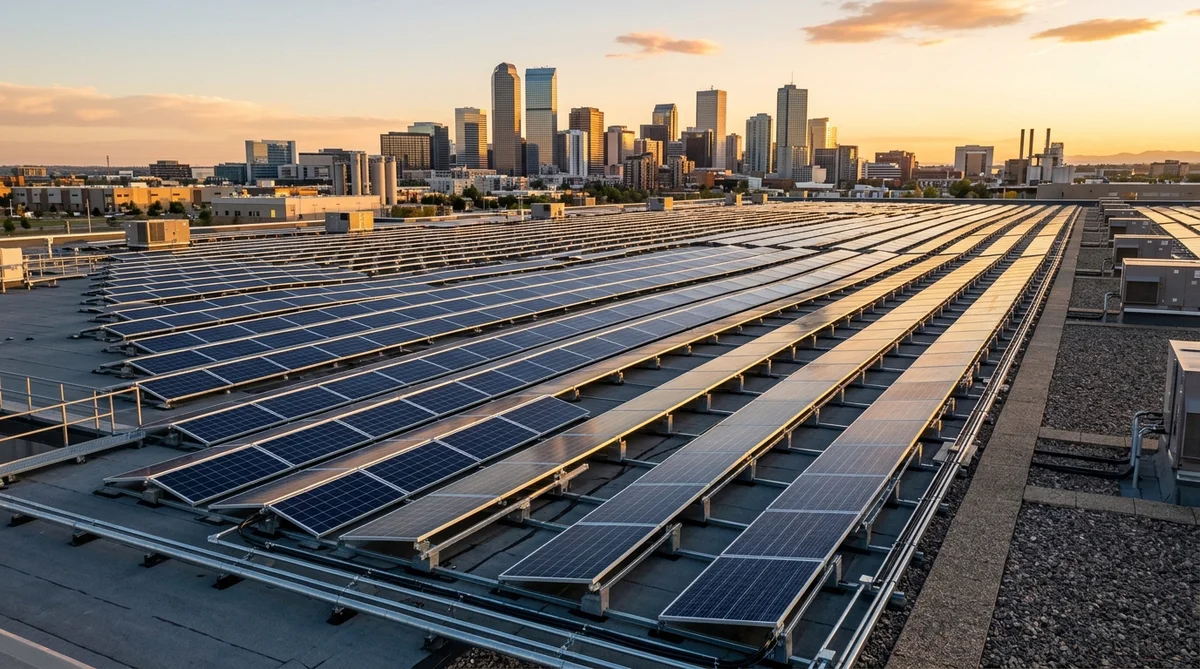
Introduction: The Long-Term Economics of Commercial Solar
Installing commercial solar panels represents a major capital investment for businesses seeking to reduce peak demand charges, hedge against escalating utility tariffs, and comply with building decarbonization mandates like NYC Local Law 97. However, before committing to a rooftop or canopy photovoltaic (PV) installation, financial directors and facility engineers must evaluate a foundational question: How long will the solar asset realistically generate power, and what ongoing maintenance will it require?
Commercial solar panels are solid-state electronic devices designed to operate outdoors for decades. Most modern monocrystalline and bifacial PV modules possess an expected operational lifespan of 25 to 35 years, with electricity output diminishing at a predictable, fractional rate each year.
Unlike rotating equipment such as chillers or cooling towers, solar panels have no internal mechanical components that wear out through friction. Furthermore, panels do not abruptly stop producing power at the end of their warranty period. When paired with structured operations and maintenance (O&M), high-quality modules frequently generate clean power well past their 25-year performance benchmark.
Understanding degradation curves, inverter lifecycles, and routine inspection schedules enables property owners to accurately calculate levelized cost of energy (LCOE), forecast replacement reserves, and protect their solar ROI over 30+ operating years.
Golden Rule of Solar Asset Management:
A solar module's warranty expiration date is not its retirement date. High-tier commercial panels retain approximately 80% to 85% of their original nameplate power after 25 years. The real maintenance bottleneck in any commercial installation is not the solar panel—it is the inverter, electrical balance of system (BOS), and rooftop drainage.
1. How Long Do Commercial Solar Panels Last?
Under standard commercial operating conditions, commercial solar panels deliver an operational service life of 25 to 35 years. Their exact longevity is dictated by silicon cell architecture, encapsulant durability, installation craftsmanship, local weather extremes, and maintenance adherence.
According to research from the National Renewable Energy Laboratory (NREL) and the U.S. Department of Energy, solar panel longevity and reliability have expanded significantly over the past two decades. In 2007, average module design life was modeled at roughly 20 years; today, tier-1 commercial modules are engineered to withstand 30+ years of environmental exposure.
Because photovoltaic cells generate direct current (DC) entirely through photon absorption within semiconductor layers, there are no belts, gears, bearings, or lubricants to replace. The primary factor limiting a solar panel's operational life is slow, progressive materials degradation.
1.1 Do Solar Panels Stop Working After 25 Years?
No. Reaching year 25 does not trigger an electrical failure or cause the module to shut down. The 25-year milestone simply reflects the standard duration of the manufacturer's performance guarantee.
For instance, consider a premium commercial module rated at 500 Watts at installation. Assuming an industry-standard 0.5% annual degradation curve, that module will still reliably deliver approximately 437.5 Watts at year 25 and 425 Watts at year 30 under standard test conditions (STC). In dense urban commercial facilities with high electricity rates, an array operating at 85% capacity continues to generate immense financial value.
Facility managers should evaluate real-world production metrics and kilowatt-hour value rather than preemptively decommissioning panels purely based on calendar age.
1.2 Solar Panel Lifespan vs. Solar Panel Warranty
It is vital for property owners and asset managers to distinguish between the physical lifespan of equipment and the legal protections afforded by manufacturer warranties:
- Product / Workmanship Warranty (typically 12 to 25 years): Protects against manufacturing defects, frame failures, glass delamination, junction box detachment, and premature materials failure.
- Linear Performance Warranty (typically 25 to 30 years): Guarantees that the panel will not degrade faster than an agreed baseline (e.g., maximum 2.0% degradation in Year 1, followed by no more than 0.40% to 0.55% annually thereafter, guaranteeing at least 80% to 85% capacity at Year 25).
2. How Much Do Commercial Solar Panels Degrade Over Time?
Photovoltaic degradation refers to the gradual reduction of power output caused by environmental exposure and semiconductor aging. For commercial financial modeling, the standard planning benchmark is approximately 0.5% degradation per year.
Illustrative 30-Year Output Trajectory for a 500-Watt Module
| Operating Timeline | Estimated Remaining Capacity | Estimated Power Output (500W Module) | Cumulative Energy Delivery |
|---|---|---|---|
| Year 0 (Commissioning) | 100.0% | 500.0 W | Baseline Nameplate Output |
| Year 5 | 97.5% | 487.5 W | Peak financial payback window |
| Year 10 | 95.0% | 475.0 W | Inverter inspection / mid-life check |
| Year 15 | 92.5% | 462.5 W | Typical string inverter replacement window |
| Year 20 | 90.0% | 450.0 W | Full system capital amortization achieved |
| Year 25 | 87.5% | 437.5 W | End of standard performance warranty |
| Year 30 | 85.0% | 425.0 W | Extended operational value phase |
2.1 What Causes Solar Panel Degradation?
Degradation is driven by physical, thermal, and chemical mechanisms acting on the module assembly:
- UV-Induced Degradation (UVID): High-energy solar radiation gradually discolors ethylene vinyl acetate (EVA) encapsulants, reducing solar glass transmittance.
- Thermal Cycling Stress: Extreme shifts between sub-freezing NYC winter nights and 140°F summer roof temperatures cause microscopic expansion and contraction in silver soldered busbars and silicon ribbons.
- Moisture & Ingress Corrosion: Over decades, humidity can penetrate module edge seals, oxidizing internal copper and silver contacts and elevating series resistance.
- Potential-Induced Degradation (PID): High voltage differentials between the PV circuit and the grounded aluminum frame can cause stray ion migration, temporarily or permanently suppressing cell voltage.
3. What Factors Affect Commercial Solar Panel Lifespan?
While silicon PV cells are inherently robust, the actual operating lifetime of a commercial solar installation is determined by four site-specific variables:
3.1 Tier-1 Manufacturing Quality
High-efficiency monocrystalline panels constructed with split-cell architecture, multi-busbars (MBB), and dual-glass encapsulation resist micro-cracking and moisture ingress far better than budget poly-crystalline modules. Investing in BloombergNEF Tier-1 manufacturers with proven balance sheets ensures warranty claims will be honored 20 years down the line.
3.2 Quality of Engineering & Installation
A substantial percentage of solar failures originate during mechanical mounting and electrical rough-in. Inadequate torque on racking mid-clamps, pinched DC conductors under module frames, poorly crimped MC4 connectors, and compromised roof flashing create moisture leaks and electrical ground faults. Proper engineering reviews through a structured solar feasibility study ensure structural load capacities, wind uplift resistance, and electrical configurations are sound.
3.3 Weather and Environmental Contaminants
Commercial rooftops are hostile environments. Installations in urban environments must endure acidic airborne pollutants, particulate soot, HVAC exhaust fumes, coastal salt spray, wind vibrations, and heavy snow loads. Particulates that adhere to glass surfaces create persistent micro-hotspots if left uncleaned.
3.4 Roof Shading & Drainage Conditions
New rooftop penthouse additions, telecom antennas, elevator bulkheads, or adjacent high-rise construction can introduce partial shading. If internal bypass diodes are forced into continuous operation due to unmitigated shading, they can overheat and prematurely fail. Furthermore, flat roofs with ponding water pose severe risks to conduit runs and cable trays.
4. How Long Do Different Commercial Solar System Components Last?
A solar array is a cohesive power plant comprising structural, electrical, and electronic subsystems. Solar panels are the most durable component; other components have distinct operational life expectancies that require planned capital replacement reserves.
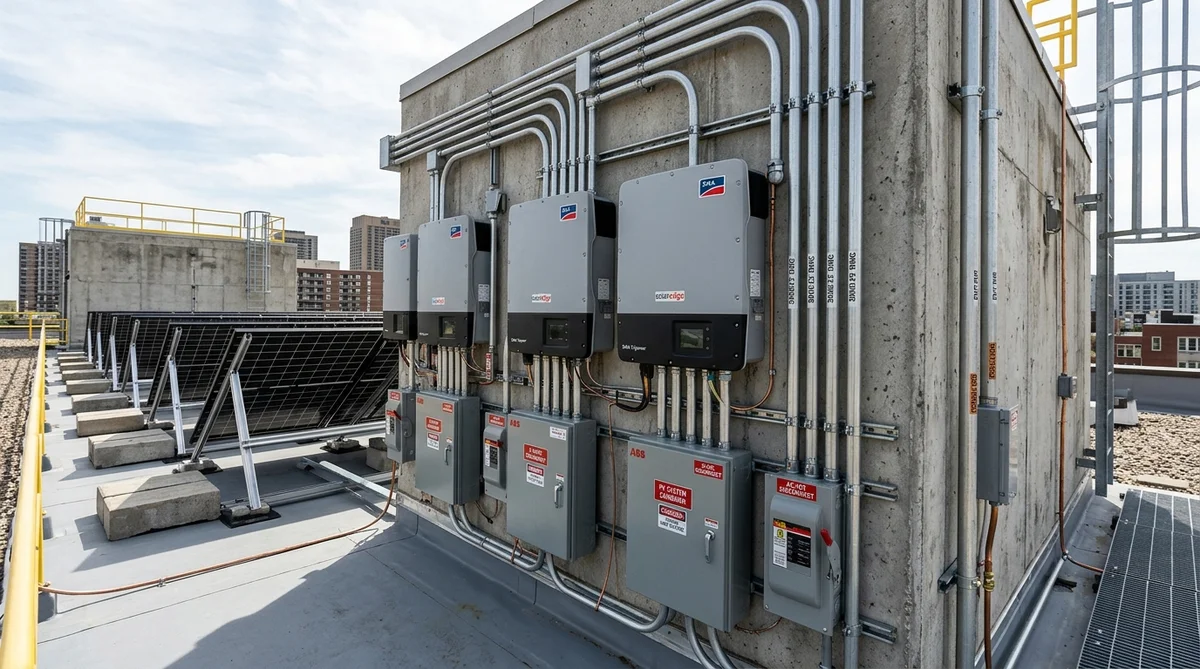 A commercial solar plant comprises modules (25–35 years), anodized racking (30+ years), and power inverters (10–15 years). Balancing component lifecycles ensures predictable capital reserve management.
| System Component | Expected Lifespan | Primary Failure Mechanism | Recommended Maintenance Focus |
|---|---|---|---|
| Photovoltaic Modules | 25–35 Years | Linear materials degradation, microcracks | Annual visual review, IR thermal scan, cleaning |
| Commercial String Inverters | 10–15 Years | Electrolytic capacitor drying, fan failures, IGBT fatigue | Annual filter cleaning, thermal monitoring, firmware updates |
| Central Inverters | 15–20 Years | Semiconductor heat wear, cooling fan seizure | Biannual preventative servicing, coolant checks |
| Aluminum Racking & Ballasts | 30–40 Years | Galvanic corrosion, clamp bolt loosening | Periodic torque audits, ballast block integrity |
| DC/AC Cabling & Conduit | 25–30 Years | UV insulation embrittlement, water intrusion | Insulation resistance (megger) testing |
| DAS & Monitoring Sensors | 8–12 Years | Pyranometer drift, cellular modem obsolescence | Sensor recalibration, software communication audits |
4.1 Why Do Solar Inverters Require Replacement Sooner?
Solar inverters operate under intense electrical and thermal stress every single day. While solar panels sit statically on roof ballast, inverters use high-speed insulated gate bipolar transistors (IGBTs) to invert pulsating direct current into synchronized 480V or 208V alternating current at 60 Hertz.
The cooling fans, electrolytic capacitors, and switching circuits inside inverters run hot. Consequently, most commercial string inverters have an operational lifespan of 10 to 15 years. Commercial financial plans should budget for one scheduled inverter repowering cycle during the 30-year life of the array.
5. What Maintenance Do Commercial Solar Panels Need?
While commercial solar is commonly advertised as "set it and forget it," running an unmaintained commercial array guarantees output losses of 10% to 25% due to soiling, unnoticed breaker trips, and localized diode failures. A structured Operations & Maintenance (O&M) program is essential.
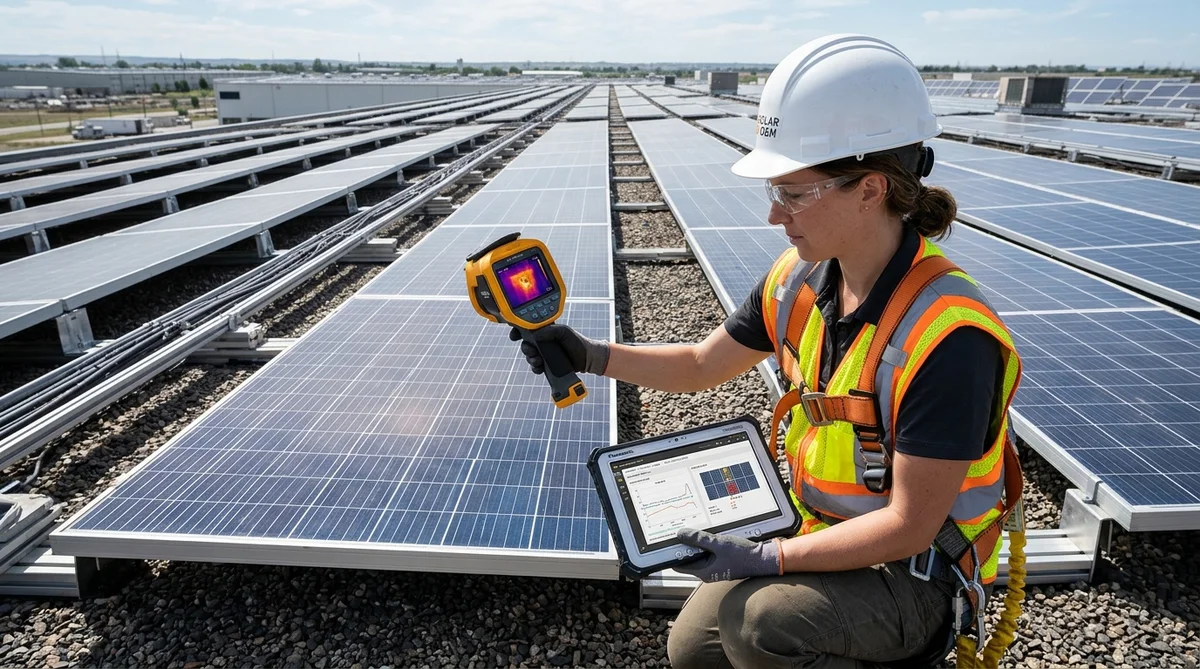 Certified solar technicians utilize handheld thermal imaging cameras during annual inspections to locate micro-cracks, diode failures, and localized hot spots before they escalate into safety hazards.
5.1 Scheduled Solar Panel Cleaning (Mitigating Soiling)
Soiling—the accumulation of atmospheric dirt, airborne road exhaust, pollen, bird droppings, and industrial particulate matter—forms an opaque barrier over solar cells. In urban commercial environments, soiling reduces annual solar yields by 3% to 8%, and up to 15%+ in dry climates with low rainfall.
- Deionized Water Cleaning: Always use demineralized or deionized water. Tap water with high mineral hardness leaves calcium scale deposits that permanently bake onto anti-reflective glass coatings.
- Non-Abrasive Rotating Brushes: Utilize specialized soft-bristle solar brush systems. Never pressure-wash modules or use metal scrapers, which create micro-fractures and strip optical coatings.
- Optimal Timing: Clean panels in the early morning or evening when modules are cool. Spraying cold water onto glass that has reached 140°F in direct midday sun can cause catastrophic thermal shock shattering.
5.2 Electrical System Inspection & Testing
Preventative electrical diagnostics ensure the array operates safely without fire risk:
- Thermal Infrared (IR) Thermography: Using drone-mounted or handheld FLIR cameras to detect hotspots. A malfunctioning bypass diode or cracked cell presents as a distinct hot zone (ΔT > 15°C above adjacent cells).
- String Open-Circuit Voltage (Voc) and Operating Current (Isc): Comparing measured strings against expected STC curves to isolate shaded, disconnected, or degraded strings.
- Insulation Resistance (Megohmmeter) Testing: Verifying that underground and rooftop conductor insulation has not degraded, preventing ground faults.
5.3 Inverter Servicing
Inverters are the brain of the solar facility. Technicians must clear intake air filters, confirm cooling fan bearings are free of grit, test DC arc-fault detection systems, and record internal operating temperatures to avoid thermal derating.
5.4 Structural Racking & Roof Inspections
Inspectors must verify that ballast blocks have not degraded from freeze-thaw cycles, grounding bonds maintain low electrical resistance, cable trays remain securely latched, and roof membrane penetrations have not developed sealant shrinkage or water ponding.
5.5 Real-Time Cloud Performance Monitoring
Digital Data Acquisition Systems (DAS) track real-time kilowatt-hour generation alongside solar irradiance sensors. Automated anomaly alerts notify facility managers within minutes if an inverter drops off-line or a combiner box fuse blows, preventing weeks of silent generation losses.
6. Recommended Commercial Solar Maintenance Schedule
| Maintenance Task | Recommended Interval | Action Item | Primary Operational Benefit |
|---|---|---|---|
| Cloud Analytics Monitoring | Continuous / Daily | Review automated daily yield, performance ratio (PR), and inverter status | Instant notification of outages and ground faults |
| Visual Walkthrough Inspection | Quarterly | Check for physical damage, vegetative growth, debris, and animal nesting | Prevents wiring damage from pests and physical debris |
| Module Cleaning | 1 to 3 Times Annually | Deionized water wash based on measured soiling losses | Restores 3% to 10% lost generation capacity |
| Inverter Filter & Fan Servicing | Semi-Annually | Clean or replace dust filters, vacuum vents, test cooling fans | Prevents thermal derating and inverter premature shutdown |
| Complete Electrical Audit | Annually | Torque audits, insulation resistance testing, VOC/ISC checks | Maintains NEC compliance and fire-safety standards |
| IR Infrared Thermography | Annually | Thermal camera scan of every module, combiner box, and disconnect | Identifies cell micro-fractures, failing diodes, and loose lugs |
| Severe Weather Post-Check | Event-Driven | Immediate inspection following severe windstorms, blizzards, or hail | Verifies structural racking ballast and fastener security |
7. Signs Your Commercial Solar Panels Need Immediate Maintenance
Building operators should watch for five distinct warning signals that indicate developing equipment faults:
1. Unexplained Drop in Performance Ratio (PR): If overall kilowatt-hour generation drops significantly compared to adjacent weather-normalized baseline periods, investigate immediately for inverter clipping, tripped combiner fuses, or severe soiling.
2. Discolored Cells or Snail Trails: Brown or yellow localized cell browning indicates localized encapsulant burning. Gray or dark zig-zag "snail trails" indicate microscopic cell cracks where silver paste is reacting with moisture.
3. Frequent Inverter Error Codes: Recurring ground-fault detection (GFDI) errors, insulation resistance warnings, or DC bus overvoltage codes indicate internal electrical breakdowns that will not resolve with manual restarts.
4. Localized Module Hotspots: Visual thermal cameras reveal localized cells glowing significantly hotter than the surrounding module, indicating a shorted bypass diode or cracked silicon wafer that creates a permanent resistance point.
5. Racking Clamp Movement or Sagging Cable Harnesses: Any mechanical movement in aluminum framing or cables drooping onto abrasive roof ballast blocks must be re-secured before wind vibrations abrade insulation.
8. When Should Businesses Repair vs. Replace vs. Repower?
| Action Strategy | When to Choose This Path | Typical Project Scope |
|---|---|---|
| Targeted Repair | Isolated module damage, single blown fuse, broken inverter fan, loose wire lug | Technician replaces individual components while keeping 99% of original array intact. Lowest capital outlay. |
| Module Replacement | Severe storm impact, localized hail damage, or manufacturing PID defect affecting a specific string | Procure matching electrical-spec modules to swap out damaged units without voiding string voltages. |
| System Repowering | Array is 15–20 years old; panels still generate well but inverters are obsolete or modern 650W modules can double capacity | Replace aging inverters with high-efficiency smart hybrid units, update monitoring, and potentially upgrade high-density panels on existing racking. |
9. How Businesses Can Maximize Solar Asset ROI
To ensure commercial solar equipment delivers maximum kilowatt-hours across a 30+ year service life:
- Select High-Spec Hardware: Insist on Tier-1 dual-glass monocrystalline panels, aluminum racking with stainless-steel hardware, and inverters with 12-to-20-year extended warranty packages.
- Commission a Professional Feasibility Study: Ensure your building roof structure, electrical service headroom, and utility interconnection are properly engineered through a thorough commercial solar feasibility assessment.
- Establish a Formal O&M Service Contract: Contract an experienced solar operations team for annual electrical testing, thermal scanning, and scheduled cleaning with defined response-time Service Level Agreements (SLAs).
- Maintain a Capital Reserve Fund: Budget for a planned inverter overhaul between years 12 and 15 to eliminate unexpected capital strain.
10. Conclusion: Protecting Your Solar Asset for 30+ Years
Commercial solar panels represent one of the most durable, reliable energy investments a business can make. With expected operating lifespans reaching 25 to 35 years, modern photovoltaic arrays routinely outlive commercial HVAC units, chillers, and roofing membranes.
However, long-term solar success is never accidental. While the panels themselves degrade at a minimal 0.5% annual rate, inverters require planned replacement, electrical connections demand routine torque audits, and modules require condition-based cleaning to preserve peak solar harvesting.
By implementing a proactive Operations & Maintenance strategy from day one, commercial property owners can ensure dependable zero-carbon electricity generation, compliance with NYC emissions caps, and maximum financial returns across the multi-decade lifespan of their solar plant.