Learn why shading analysis is critical in solar feasibility studies for NYC buildings and how it protects solar ROI.
BY NYC Energy Code Team
ON
23 September 2026
Community Solar vs Rooftop Solar: Which Fits Your Property?
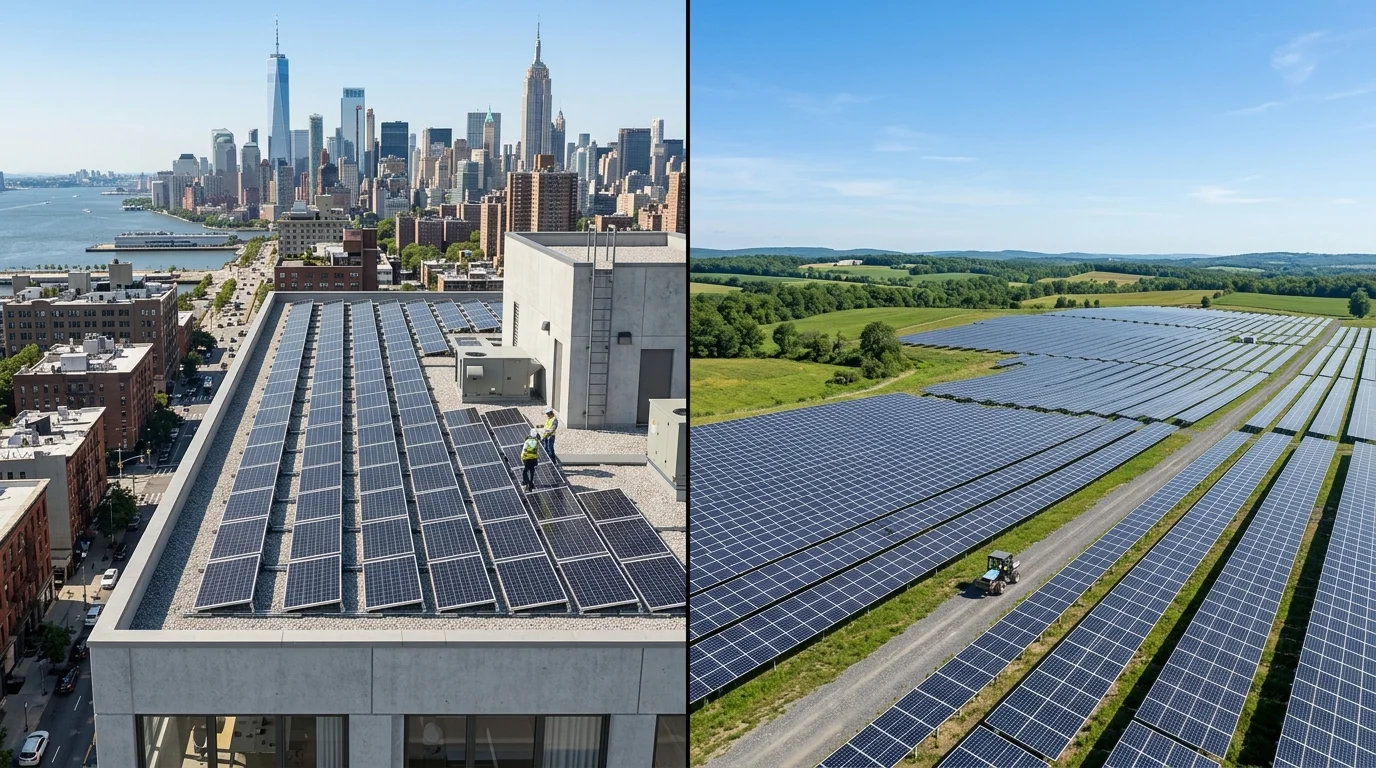
Solar is no longer a single-path decision for commercial and multifamily property owners. A building can generate electricity onsite with rooftop solar, participate in an offsite community solar project, or in some circumstances explore other offsite arrangements.
The important question is not simply, “Can I put solar panels on my roof?” It is:
“What solar arrangement makes the most sense for this property?”
That answer depends on the roof, the building's electricity consumption, available capital, shading, structural conditions, utility arrangement, and how much responsibility the owner wants to take on.
For New York properties, both onsite and community solar are established options. NYSERDA describes rooftop or other onsite solar and community solar as two primary ways businesses can participate in solar energy.
The Real Difference: Where the Solar Asset Sits
The easiest way to understand the choice is to look at where the panels actually live.
With rooftop solar, the photovoltaic system is physically installed on the owner's property. The building uses the electricity generated onsite, while applicable excess generation can be credited through the utility under the relevant compensation arrangement. The building remains connected to the grid for periods when solar production does not meet demand.
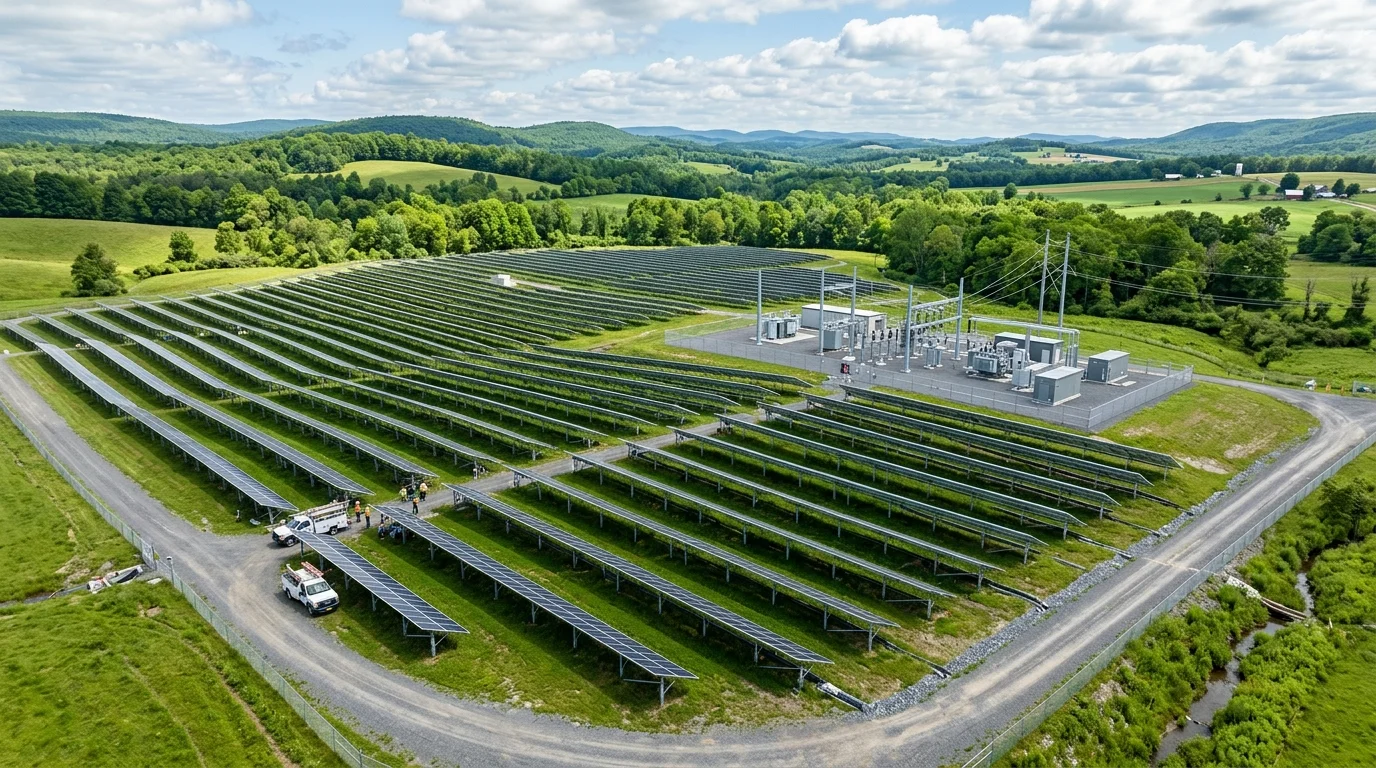
Community solar works differently. The solar project is located somewhere else, and multiple customers receive credits associated with their portion of the project's generation. NYSERDA notes that community solar can provide access to solar for businesses and multifamily properties that cannot—or do not want to—install panels onsite.
That difference changes almost everything about the project.
| Consideration | Rooftop Solar | Community Solar |
|---|---|---|
| Physical installation | On the property | Offsite |
| Roof condition | Critical | Not relevant to the solar array |
| Upfront construction | Required | Usually minimal for subscription models |
| Maintenance | Owner/project agreement responsibility | Generally handled by project operator |
| Control | Greater | Less |
| Site constraints | High | Low |
| Bill impact | Onsite generation and applicable credits | Utility bill credits |
| Best suited to | Solar-ready properties | Properties with limited onsite potential |
Start With the Roof—Not the Solar Panels
For a rooftop project, the roof is effectively part of the solar investment.
A roof that is already nearing replacement introduces an important question: should solar be installed now, or should the roof be addressed first?
NYSERDA recommends that businesses assess roof condition before installing solar and consider the remaining useful life of the roof. The agency also identifies roof space, slope, sun exposure, and shading as factors in determining whether a commercial property is suitable for onsite solar.
Imagine a building with a large, unobstructed roof—but only three years of useful roof life remaining.
On paper, it looks like a strong solar candidate.
In practice, the owner may need to coordinate:
Roof replacement → solar installation → long-term maintenance
rather than treating the two as unrelated projects.
That can substantially change the capital-planning decision.
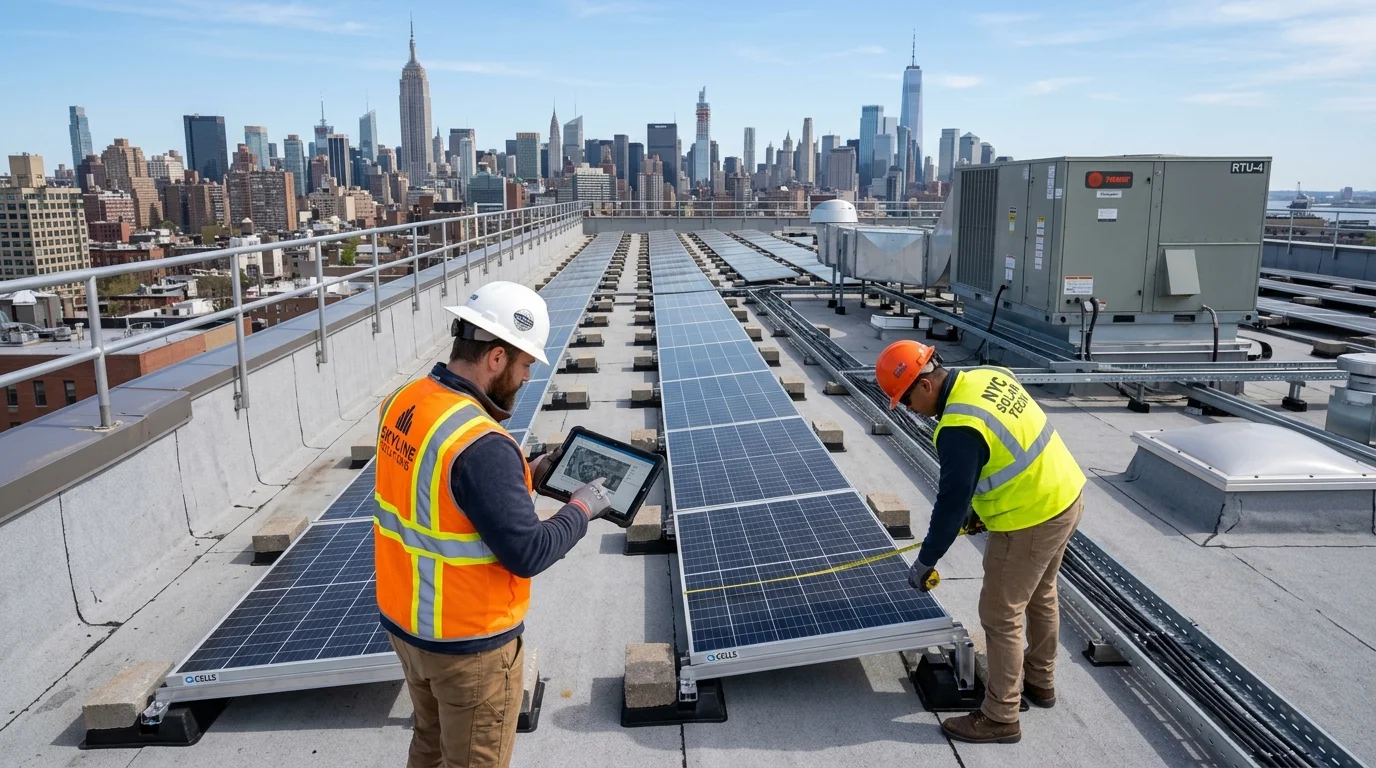
A Big Roof Doesn't Necessarily Mean a Big Solar Opportunity
Square footage alone is a poor way to judge a solar site.
Mechanical equipment, access paths, setbacks, parapets, structural limitations, fire-safety requirements, and shading can eliminate portions of a roof from practical solar use.
NYSERDA notes that commercial solar systems work best on sunny areas with little or no shade and recommends a detailed property assessment before system sizing.
This is why a serious feasibility study typically moves through:
Roof area → usable area → shading → structural capacity → electrical capacity → expected production
The number at the end is far more useful than simply saying, “The roof is 20,000 square feet.”
What If the Building Is a Poor Rooftop Candidate?
This is where community solar becomes particularly useful.
A building may have excellent electricity demand but a poor solar site. Perhaps the roof is shaded by neighboring towers. Maybe rooftop mechanical equipment consumes most of the usable space. The roof could be historic, structurally constrained, or approaching the end of its service life.
That does not necessarily prevent the property from participating in solar.
Through community solar, customers can receive bill credits from an offsite project without installing and maintaining an array at the property. NYSERDA specifically presents community solar as an option for businesses and multifamily buildings that cannot install solar onsite or do not want to.
In other words, community solar separates the solar opportunity from the physical condition of the building.
The Financial Decision Is Also Different
Rooftop solar is primarily a capital and asset decision.
The owner may purchase or finance the system, then benefit from the electricity it generates and any applicable incentives or compensation.
Community solar is typically structured more like an energy-service or subscription arrangement. NYSERDA says many community solar subscription plans involve little or no upfront cost, with customers receiving credits on their electric bills based on their share of project generation.
That creates two very different financial questions.
For rooftop solar:
“What will this asset cost, produce, save, and be worth over its useful life?”
For community solar:
“What will I pay under this contract, what credits should I receive, and what savings should I realistically expect?”
The second question makes contract terms much more important.
Community Solar Is Not Simply “Free Solar”
This is an important point when evaluating offers.
Some community solar arrangements have little or no upfront installation cost, but that does not mean there are no financial obligations.
NYSERDA recommends reviewing the project's subscription or purchase terms, expected savings, contract provisions, transferability, and other conditions before enrolling. Customers should also verify providers and projects through available state resources.
For a property owner, a seemingly attractive monthly discount should therefore be evaluated alongside:
contract length + payment structure + credit mechanism + cancellation terms + expected savings
rather than considered in isolation.
Rooftop Solar Gives You More Control
With onsite solar, the property owner has direct control over the physical system or can structure ownership through financing, leasing, or other arrangements.
That can matter when solar is part of a broader capital strategy.
For example, an owner may want to coordinate:
Rooftop solar + battery storage + EV charging + building electrification
Because all of these systems are physically connected to the property, their design can potentially be coordinated.
NYSERDA also highlights the possibility of pairing onsite solar with energy storage and electric systems such as heat pumps and EV charging.
Community solar offers less physical control, but that can be a feature rather than a disadvantage for owners who do not want another piece of equipment on their roof.
What About Maintenance?
Rooftop solar turns part of the roof into an operating energy asset.
The owner or contracted provider may need to manage system monitoring, equipment servicing, inverter issues, electrical components, roof coordination, and future repairs.
Community solar removes most of this physical responsibility because the solar array is located elsewhere and operated by the project owner.
For a property manager already dealing with HVAC equipment, elevators, fire systems, facade work, and other building infrastructure, reducing another onsite maintenance responsibility may have real operational value.
Multifamily Buildings Need an Extra Layer of Analysis
Multifamily buildings can have more complicated electricity arrangements than a single-meter commercial property.
NYSERDA notes that multifamily properties can participate in onsite solar through master-metered or individually metered configurations, with the distribution of benefits depending on the property's metering arrangement. Community solar or remote crediting may provide alternatives when onsite installation is not practical.
This makes the electricity-account structure an important early question.
Before evaluating solar economics, determine:
- Who owns the meter?
- Who pays the electricity bill?
- Who receives the savings or credits?
A technically excellent solar system can have a complicated financial structure if the property's meters and ownership arrangements are not considered at the beginning.
What About NYC Roof Requirements?
For certain NYC projects, solar is not purely an optional sustainability feature.
Under NYC's sustainable-roofing framework, applicable projects can be required to cover the sustainable roofing zone with solar photovoltaic systems, green roof systems, or a combination, subject to the applicable requirements and exceptions.
That makes rooftop planning even more important during certain roof replacement and construction projects.
For HPD-covered projects, HPD's current Solar Where Feasible program also requires solar feasibility analysis for specified rehabilitation and roof-related project scopes, with defined exceptions.
The result is that a roof replacement should sometimes be evaluated as a solar decision as well as a roofing decision.
A Better Way to Decide
Rather than beginning with a technology preference, start with the property.
A
Property A: Strong Rooftop Candidate
The building has a relatively new roof, good solar exposure, limited shading, usable roof area, sufficient structural capacity, and substantial daytime electricity consumption. Here, rooftop solar may deserve detailed financial and engineering analysis.
B
Property B: Poor Rooftop Candidate
The building has heavy shading, little usable roof space, significant structural constraints, or a roof that needs major work. Here, community solar may provide a way to participate in solar without solving those physical limitations.
C
Property C: Roof Replacement Is Imminent
This property should not automatically choose either option. The better first move may be to coordinate the roof project with the solar feasibility study. The economics can change considerably when roof replacement and solar construction are planned together.
Don't Compare the Options Using One Number
A simple “monthly savings” comparison can miss important differences.
For rooftop solar, evaluate the full lifecycle economics:
Capital cost → incentives → energy production → utility savings → maintenance → financing → useful life
For community solar, evaluate the contract economics:
Subscription cost → utility credits → expected savings → contract term → escalation → cancellation/transfer terms
These are different investments and should be evaluated accordingly.
Solar Decision Framework
| Question | Rooftop Solar | Community Solar |
|---|---|---|
| Is the roof suitable? | Essential | Not required |
| Is shading manageable? | Essential | Project-dependent, handled offsite |
| Is structural capacity adequate? | Essential | Not a property constraint |
| Does the owner want onsite generation? | Yes | No |
| Does the owner want low onsite maintenance? | Less suitable | More suitable |
| Is long-term property control important? | More control | Less control |
| Is upfront capital limited? | Financing may be needed | Subscription can have low upfront cost |
| Is the roof near replacement? | Coordinate projects carefully | Avoids roof dependency |
What a Property Owner Should Do First
The smartest first step is usually not choosing between two solar products. It is establishing whether the property is physically and financially suitable for onsite generation.
Start with the building's electricity bills, roof condition, usable area, shading, structural capacity, and electrical infrastructure.
NYSERDA recommends gathering a year's electricity bills and having a qualified contractor evaluate the site's sun exposure, roof size and slope, available roof space, and other factors before determining system size.
If those factors point toward a strong rooftop opportunity, evaluate onsite solar.
If the property fails those basic tests, community solar may deserve a closer look.
Conclusion
The question of community solar vs. rooftop solar is really a question of fit.
Rooftop solar can turn a suitable roof into a long-term energy asset and give the property greater control over generation. Community solar provides a different advantage: access to solar without requiring the property itself to host the equipment.
For NYC property owners, the decision should begin with the realities of the building—roof condition, shading, structural capacity, electrical demand, metering, capital availability, maintenance responsibilities, and long-term plans.
A building with a strong solar site may benefit from evaluating an onsite system. A building with a poor roof or limited solar access may find community solar more practical.
The smartest strategy is to evaluate both options against the property's actual conditions and economics rather than assuming that the simplest-looking solution is automatically the right one.
Frequently Asked Questions
Neither option is universally better. Rooftop solar requires a suitable property and creates an onsite asset, while community solar allows customers to receive credits from an offsite project without installing panels on their own property.
A suitable roof, strong solar exposure, limited shading, adequate structural capacity, usable roof area, and an electricity load that can benefit from the generated power are important considerations.
No. Community solar projects are located offsite, and participating customers generally receive credits on their utility bills for their share of the project's generation.
Yes. NYSERDA identifies community solar as an option for businesses as well as residential and multifamily customers.
The roof's condition and remaining useful life should be evaluated first. Installing solar on a roof that will soon require major replacement can create avoidable coordination and removal/reinstallation issues. NYSERDA recommends assessing roof condition before commercial solar installation.
Yes. Onsite solar can potentially be coordinated with EV charging, heat pumps, energy storage, and other electric technologies.
Review the expected bill credits and savings, payment structure, contract length, cancellation and transfer provisions, and the legitimacy of the project and provider. NYSERDA recommends researching projects and reviewing the contract before enrollment.
It may be possible in some circumstances, but the answer depends on the property's utility accounts, project structure, and applicable program rules. The combination should be evaluated with the utility and relevant solar providers rather than assumed.