Understand the distinct roles of WELL and LEED in green real estate, how their standards compare, and how to align building strategies.
BY NYC Energy Code Team
ON
12 September 2026
How Green Roofs Impact Building Energy Performance
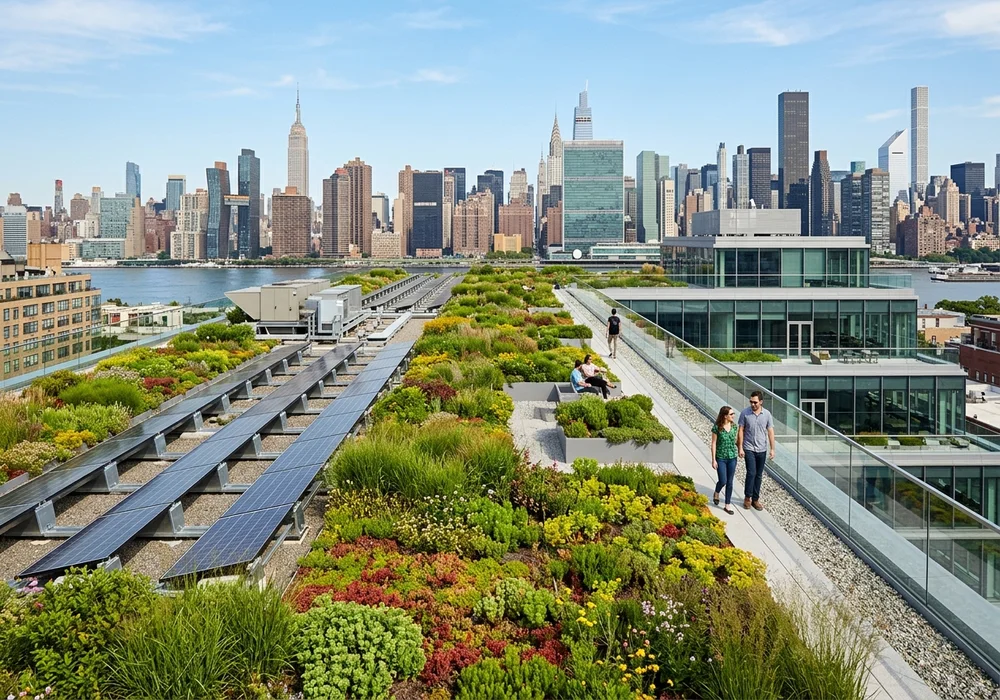
A green roof can do more than add vegetation to a building. By covering part of a rooftop with plants and growing media, a properly designed green roof can change how the roof responds to sunlight, heat, rain, and outdoor temperatures.
For NYC building owners, this makes green roofs an interesting component of a broader building energy-efficiency and sustainability strategy. Green roofs can provide additional insulation, keep roof surfaces cooler, and reduce the amount of heat transferred into the building. NYC's Department of Buildings specifically identifies insulation, heat-island reduction, and stormwater management among the benefits of green roofs.
Key Reality for NYC Owners
A green roof should not be treated as a total replacement for high-performance insulation, efficient HVAC, or other energy upgrades. Its energy impact depends on the building, roof assembly, climate, vegetation, moisture conditions, and comprehensive system design.
What Is a Green Roof?
A green roof is a roof system that incorporates vegetation and growing media above a waterproofed roof assembly.
A typical green roof system includes:
- Waterproofing Membrane: Prevents moisture penetration into the building structure.
- Root Barrier: Shields the waterproofing from invasive root penetration.
- Drainage Layer: Directs excess water away while retaining necessary reservoir moisture.
- Filter Layer: Keeps soil media in place while allowing filtered water drainage.
- Growing Medium: Engineered lightweight soil providing nutrients and thermal mass.
- Vegetation: Hardy sedums, grasses, or perennials providing shade and evapotranspiration.
NYC's green-roof requirements and tax-abatement criteria specify additional design and maintenance conditions for qualifying systems. A green roof also adds substantial weight, so NYC requires an appropriate structural analysis by a Professional Engineer (PE) or Registered Architect (RA) to determine whether the existing roof structure can safely support the added dead and live loads.
How Green Roofs Affect Building Energy Use
The main energy-related benefit comes from changing the thermal behavior of the roof.
A conventional roof exposed to strong summer sunlight can become significantly hotter than the surrounding air—often reaching 150°F to 180°F on hot summer days. Vegetation and growing media provide shading and evaporative cooling at the roof surface, drastically reducing the amount of heat reaching the underlying roof assembly.
Less Rooftop Heat
→
Lower Roof Heat Transfer
→
Lower Cooling Demand
The U.S. Department of Energy identifies green roofs as a strategy that can improve building energy performance by providing shade and cooling the roof and surrounding microclimate.
1. Reduced Summer Heat Gain
Summer is generally where green roofs provide their most visible energy benefit.
Vegetation shades the roof surface, while water retained in the growing medium contributes to continuous evapotranspirative cooling. This substantially reduces the temperature of the roof assembly compared with an exposed dark membrane.
That reduction prevents excess heat from entering conditioned areas below the roof, particularly in buildings with occupied spaces directly beneath the roof deck. The actual reduction varies considerably from project to project—a building's insulation level, roof construction, HVAC system, solar exposure, and local weather conditions all affect the result.
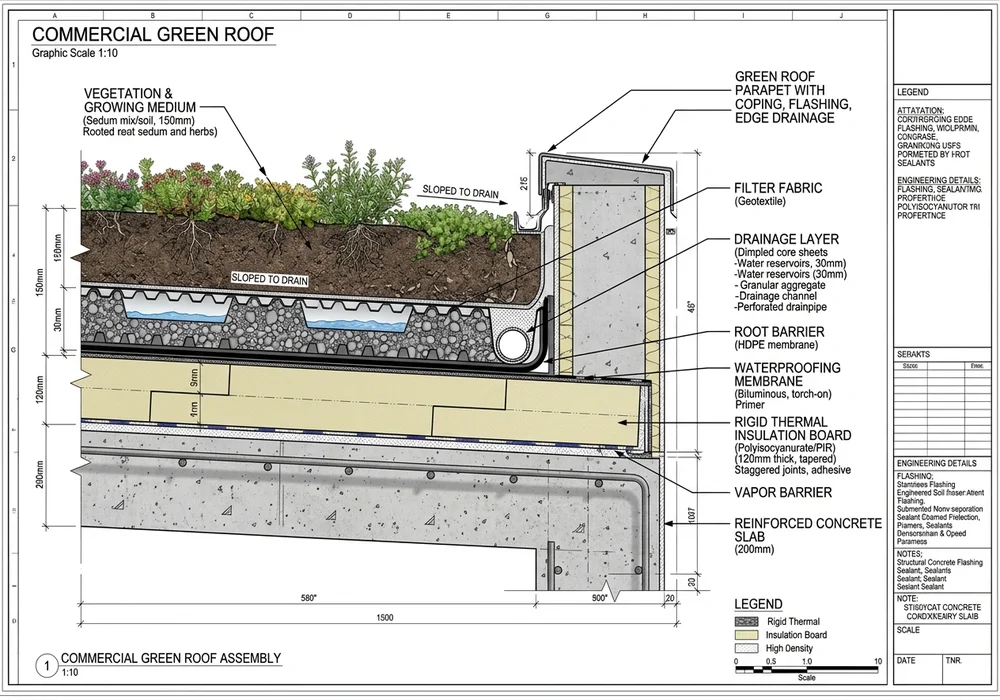
2. Additional Thermal Insulation
The growing medium, drainage elements, and vegetative canopy provide additional thermal resistance (R-value) above the roof structure.
This does not mean a green roof eliminates the need for code-required continuous roof insulation under the NYC Energy Conservation Code. Instead, it complements the roof assembly's existing thermal performance, damping peak temperature swings and stabilizing interior conditions. For an existing building, this is particularly useful when a green roof is evaluated during a larger roof replacement or envelope retrofit.
3. Changes to Roof Temperature & Microclimate
A green roof keeps portions of a rooftop cooler than conventional dark roofing surfaces. That matters because roof surface temperature directly governs conductive heat transfer into the building interior and influences the surrounding urban microclimate.
NYC identifies green roofs as a primary municipal strategy for combating the urban heat-island effect, where dense concrete and asphalt surfaces cause urban centers to heat up significantly more than surrounding suburban or rural regions.
4. Potential HVAC Benefits
When less heat enters a building through the roof envelope, the mechanical cooling system operates under reduced thermal stress during peak summer heatwaves.
This can potentially reduce:
- Cooling Energy Consumption: Lower total kilowatt-hour (kWh) draw across the summer cooling season.
- Peak Cooling Demand: Reduced peak kilowatt (kW) demand charges during high-rate utility periods.
- HVAC Equipment Runtime: Decreased cycle times for chillers, rooftop units (RTUs), and compressors.
- Thermal Stress on Rooftop Spaces: More manageable temperatures for top-floor tenants and penthouse suites.
However, the impact must be evaluated at the whole-building level rather than assuming an arbitrary percentage of HVAC savings. A green roof on a small portion of a large skyscraper will have a much smaller proportional effect than one covering the entire roof of a low-rise commercial facility.
5. Winter Performance
Green roofs can also affect heat transfer during colder winter periods, but the winter energy benefit is more dependent on the complete roof assembly. Factors such as baseline insulation, soil moisture content, growing-medium depth, and snow cover influence thermal conductance.
For this reason, green roofs should not be evaluated simply as an insulation upgrade—the entire roof thermal envelope must be engineered holistically.
Green Roof vs. Conventional Roof
Understanding how a vegetated roof compares to a standard commercial membrane clarifies its multi-system role:
| Factor | Conventional Roof | Green Roof |
|---|---|---|
| Vegetation | None | Vegetated sedum / perennial surface |
| Solar Exposure | Roof membrane receives direct exposure | Vegetation shades portions of roof |
| Summer Roof Temperature | Can become very high (150°F–180°F) | Moderated by plant shade & evaporation |
| Thermal Performance | Depends primarily on roof assembly | Roof assembly plus green-roof layers |
| Stormwater | Primarily drains through roof system | Vegetation/media retain & delay runoff |
| Maintenance | Conventional roof maintenance | Includes vegetation & drainage upkeep |
| Structural Load | Standard existing roof load | Requires PE/RA structural evaluation |
What Determines the Energy Impact?
Not every green roof produces identical energy results. Key performance variables include:
Variable 1
Roof Area & Geometry
A larger vegetated footprint has a greater influence on the building's envelope heat transfer, provided it sits over actively conditioned occupied space.
Variable 2
Growing-Medium Depth
Deeper intensive systems provide greater thermal mass and water storage than shallow, lightweight extensive systems (3–4 inches).
Variable 3
Vegetation Health & Density
Plant type, leaf area index, seasonal dormancy, and root health directly govern surface shading and evapotranspiration rates.
Variable 4
Moisture & Irrigation
Water availability powers evaporative cooling. Proper drainage balance prevents moisture stagnation while sustaining plant life.
Variable 5
Existing Roof Insulation
A poorly insulated existing roof sees higher relative percentage improvements from a green roof than a newly built roof with R-30+ continuous polyiso.
Variable 6
Local Climate & Exposure
Solar radiation intensity, surrounding skyscraper shading, wind speeds, and seasonal precipitation all modulate thermal dynamics.
Green Roofs and NYC Requirements (LL92/LL94)
New York City enforces strict sustainable roofing mandates under Local Laws 92 and 94 of 2019. Under these laws, applicable new buildings, vertical enlargements, and existing buildings replacing an entire roof deck or roof assembly must cover their sustainable roofing zone with:
NYC Sustainable Roofing Zone Mandate
Roofs subject to LL92/LL94 must dedicate qualifying contiguous roof zones to solar photovoltaic systems, green roof systems, or a combination of both, subject to code exemptions and structural requirements.
Green Roof + Solar: Can They Work Together?
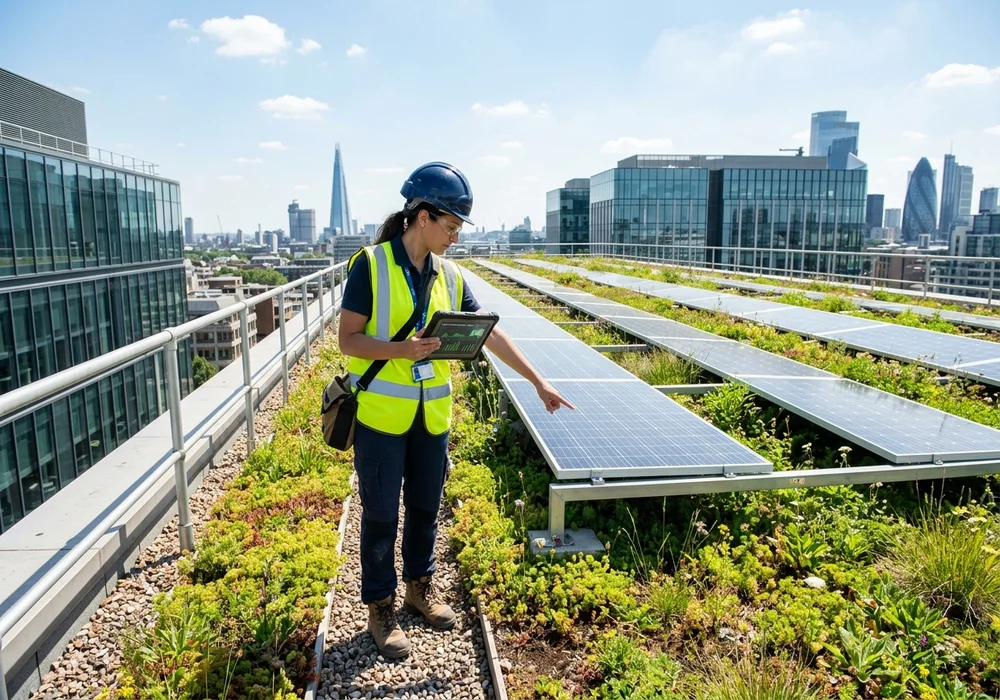
Yes. Green roofs and solar panels do not have to be mutually exclusive options. A project can implement an integrated biosolar roof system when roof layout, structural capacity, clearances, maintenance access, and building code provisions allow it.
NYC's sustainable-roofing framework explicitly accommodates combined green roof and solar PV installations. In fact, the two technologies create positive synergies:
Green Roof (Thermal, Stormwater & Cooling)
+
Solar PV (Clean Electricity Generation)
=
Enhanced Total Building Performance
Because photovoltaic panels lose efficiency as ambient surface temperatures soar on dark black roofs, the cooling effect of surrounding green roof vegetation can help keep solar modules operating closer to their optimal temperature range.
How to Evaluate a Green Roof's Energy Benefit
For a commercial property owner, judging a proposed green roof solely on initial capital expense overlooks broader life-cycle benefits. A thorough feasibility analysis considers:
Roof Condition
→
Structural Capacity
→
Insulation & HVAC Impact
→
Stormwater & Abatements
→
Long-Term ROI
Building energy modeling (such as DOE-2 or EnergyPlus simulations) helps quantify the interactive thermal impacts across different roofing alternatives:
| Roofing Option | Primary Building Objective |
|---|---|
| Conventional Replacement | Restores basic water-tight envelope performance |
| Cool Roof (High Albedo) | Reflects solar radiation, reducing heat absorption |
| Green Roof | Adds vegetation, thermal buffering, stormwater retention, and amenity value |
| Solar PV System | Generates onsite zero-emission electricity to offset utility bills and LL97 emissions |
| Biosolar (Green Roof + Solar) | Combines clean power generation with microclimate cooling and stormwater capture |
Common Mistakes to Avoid
1. Assuming Guaranteed Massive Energy Reductions
Energy savings depend on baseline insulation and building geometry. Highly insulated modern roofs will see modest percentage HVAC reductions compared to older uninsulated assemblies.
2. Ignoring Structural Load Limits
Saturated green roofs add significant dead weight (15 to 30+ lbs/sq ft for extensive; 50–100+ lbs/sq ft for intensive). A PE/RA structural sign-off is mandatory.
3. Treating Plants as a Substitute for Continuous Insulation
A green roof complements code-required rigid insulation; it cannot replace the baseline continuous R-value mandated by the NYC Energy Code.
4. Forgetting Ongoing Operational Maintenance
Vegetation requires weeding, nutrient management, drain clearance, and seasonal inspections to maintain performance and fire safety compliance.
5. Misaligning Roof Replacement Timelines
Installing a green roof over an aging membrane creates costly teardown issues later. Green roofs should always coincide with full roof membrane replacement.
Green Roof Energy Performance Checklist
Use this checklist when evaluating a green roof project for your NYC property:
Evaluate the existing
roof deck condition and underlying waterproofing membrane.
Confirm roof
structural capacity with a licensed PE or Registered Architect.
Review existing
insulation levels and complete roof assembly thermal performance.
Determine the portion
of roof directly covering conditioned occupied space.
Identify suitable
green-roof system types (extensive tray vs. built-in-place).
Consider
drought-tolerant vegetation and engineered lightweight growing media.
Evaluate roof
drainage, stormwater retention requirements, and irrigation access.
Model whole-building
energy and HVAC peak load impacts where appropriate.
Compare green roof,
cool roof, and solar PV alternatives for maximum compliance value.
Review applicable NYC
sustainable-roofing requirements under Local Laws 92/94.
Investigate available
NYC green roof property tax abatements and NYSERDA incentives.
Coordinate design,
permitting, and DOB filings with qualified engineering professionals.
Conclusion
Green roofs can affect building energy performance by shading the roof, moderating roof temperatures, adding thermal resistance, and potentially reducing heat entering conditioned spaces. Their benefits extend beyond energy efficiency to include essential stormwater management, roof membrane protection, and urban heat-island mitigation.
For NYC building owners, the decision should be part of a broader roof and building-performance strategy. Structural capacity, roof condition, insulation, maintenance, solar opportunities, code requirements, and financial incentives should all be evaluated before installation.
A green roof is not a magic standalone solution for eliminating energy consumption. But when properly designed and integrated into the building envelope, it becomes a valuable component of a comprehensive sustainability and energy-performance plan.
Frequently Asked Questions
They can. Green roofs can reduce heat transfer and moderate roof temperatures,
which may reduce cooling demand. The actual savings vary depending on roof
design, insulation, climate, vegetation, and building conditions.
Neither is universally better. A cool roof can reduce solar heat absorption,
while a green roof adds vegetation, thermal, and stormwater benefits. The best
choice depends on the project's objectives and existing roof conditions.
Potentially. Reduced heat transfer through the roof can reduce cooling demand,
but the resulting HVAC savings depend on the building and the extent of the
green-roof installation.
Yes. NYC's sustainable-roofing requirements allow qualifying roofs to use green
roofs, solar PV systems, or a combination, subject to applicable requirements
and exceptions.
Yes. NYC states that green roofs can add substantial weight and requires an
appropriate structural analysis to determine whether the existing roof and
supporting structure can safely carry the additional load.