BY NYC Energy Code Team
ON
16 October 2026
Green Lease Clauses: How Landlords and Tenants Share Energy Costs
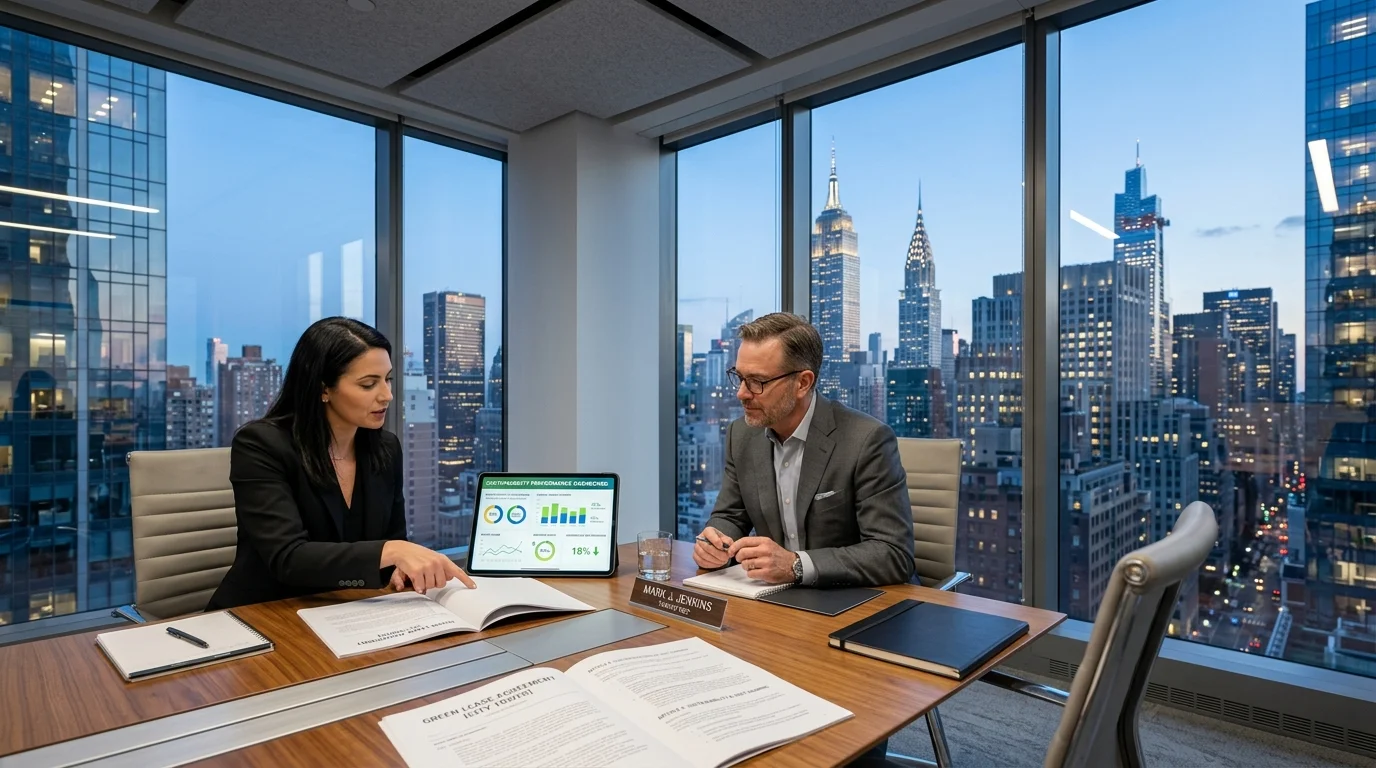
A commercial building owner invests $100,000 in energy-efficient lighting and HVAC controls. The upgrade reduces electricity consumption, but the tenants pay the utility bills and receive most of the immediate financial benefit. The landlord has funded the improvement without necessarily receiving a direct return on that investment.
Now consider the reverse situation: a tenant pays its own energy bills but cannot justify investing in equipment upgrades because the improvements will remain with the property after the lease expires.
Both situations illustrate the same problem: the person paying for an energy improvement is not always the person benefiting from the savings.
Green lease clauses help align the financial interests of landlords and tenants by defining who pays for efficiency improvements, how savings are measured, and what responsibilities each party has. They can also establish rules for utility data sharing, building operations, and sustainability-related reporting.
For NYC property owners, these provisions can be particularly useful when planning energy retrofits, managing commercial tenant spaces, or tracking building performance. The goal is not simply to make a lease more environmentally friendly. It is to create a practical financial arrangement in which both parties understand their responsibilities and have a reason to support better building performance.
Resolving the Split Incentive in NYC Real Estate
The traditional commercial lease creates a split incentive: capital expenditure belongs to the landlord, while utility savings accrue to the tenant. Green lease clauses restructure capital cost recovery, amortize investments through operating expense passthroughs, and mandate transparent utility data exchanges under NYC Local Law 84 and LL97.
What Is a Green Lease?
A green lease is a lease agreement that incorporates provisions intended to improve a property's environmental performance, energy efficiency, water use, or operating practices.
It is not necessarily a separate type of lease. Green provisions can be added to a new commercial lease, incorporated into an amendment, or negotiated when an existing agreement is renewed.
Depending on the property, these clauses might cover energy-efficient equipment, operating hours, tenant fit-outs, HVAC maintenance, utility data sharing, renewable energy, and the allocation of costs associated with building improvements.
The central issue is the split incentive. Under a conventional leasing arrangement, the landlord may be responsible for capital improvements while the tenant pays for energy consumed inside the leased premises. Without a negotiated cost-sharing mechanism, the landlord may have little direct financial incentive to fund upgrades that primarily reduce tenant utility bills.
Green Lease Leaders, an initiative developed by the Institute for Market Transformation with support from the U.S. Department of Energy's Better Buildings Alliance, provides guidance and sample language for addressing this problem. Its 2026 Green Lease Guide includes provisions dealing with capital cost recovery, shared savings, energy data, benchmarking, and building performance standards. Source: Green Lease Leaders.
Why Traditional Leases Can Make Energy Upgrades Difficult
The structure of a lease often determines whether an efficiency project makes financial sense for each party.
Imagine an office building where the landlord controls the central HVAC system but tenants pay for electricity used within their spaces. The landlord considers replacing outdated equipment with a more efficient system.
The project may reduce total energy consumption, yet the landlord must first commit the capital. The tenants may receive lower utility bills without contributing to the installation cost. Unless the lease permits a reasonable cost-recovery arrangement, the owner may postpone the project—even when it would benefit the building overall.
The reverse can also happen. A tenant may want efficient lighting or improved HVAC controls, but the lease does not clearly establish who owns the equipment, who maintains it, or whether the investment can be recovered before the tenancy ends.
Green lease clauses address these uncertainties before they become disputes. They clarify the conditions under which improvements can be installed, how their costs may be allocated, and what evidence is needed to demonstrate benefits.
Five Green Lease Clauses That Help Share Energy Costs
Clause 1
Energy-Efficiency Capital Cost Recovery
This clause explains whether the landlord can recover part of the cost of an eligible energy-efficiency improvement through the lease.
Without clear language, tenants may object to paying for an upgrade that benefits the building owner in the long term. The owner, meanwhile, may be reluctant to invest if the lease provides no reasonable path to recovering the cost.
A carefully drafted clause can specify eligible improvements, the amortization period, the tenant's proportionate share, the treatment of incentives, and any annual limit on recoverable charges.
For example, the agreement might allow the landlord to recover the annualized cost of qualifying lighting or HVAC improvements through operating expenses, provided the charge is permitted by the lease and subject to an agreed savings-related cap.
The critical distinction is between a capital investment and an ordinary operating expense. The lease should expressly define how eligible energy-related capital costs are treated rather than assuming every upgrade can automatically be passed through to tenants. Green Lease Leaders' 2026 guide includes examples that amortize capital costs over an established period and, in some formulations, limit annual recovery to actual or projected operating-cost savings.
Clause 2
Shared-Savings Provisions
Instead of focusing only on cost recovery, a shared-savings clause can establish how the financial benefits of an agreed improvement are divided.
This approach can work where the landlord funds an upgrade and the tenant's energy bills decline, or where both parties contribute to a project and agree to share its benefits.
The lease needs to define what counts as a saving. A reduction in energy consumption is not always the same as a reduction in energy cost: utility rates may change, tenant operating hours may vary, and weather can affect building demand.
For that reason, a well-designed clause should state whether savings are based on actual utility costs, measured energy consumption, an agreed baseline, or a documented calculation method.
It should also establish how incentives and rebates are treated so the same financial benefit is not counted twice. The purpose is to give both parties a predictable financial outcome—not to promise that every efficiency project will produce a fixed percentage of savings.
Clause 3
Utility Data Sharing and Benchmarking
Energy data is essential when a landlord needs to understand a building's performance or demonstrate that an upgrade has produced results.
A green lease can require tenants to provide relevant utility information, authorize the landlord to request data from a utility provider where permitted, and cooperate with reasonable benchmarking and reporting requests.
The clause should also cover the timing of data delivery, the format of the information, privacy protections, and the responsibilities of each party.
This is particularly relevant in New York City. Under Local Law 84, owners of covered buildings must benchmark whole-building energy consumption annually using ENERGY STAR Portfolio Manager. The data must include relevant tenant consumption as well as common-area and central-system consumption. NYC provides guidance on obtaining aggregated utility data so owners do not necessarily have to collect every tenant's energy bills individually. Source: NYC DOB — Energy and Water Data. A green lease can help operationalize the cooperation required to collect accurate information, but it does not replace the owner's responsibility to comply with applicable reporting requirements.
Clause 4
Submetering and Transparent Utility Charges
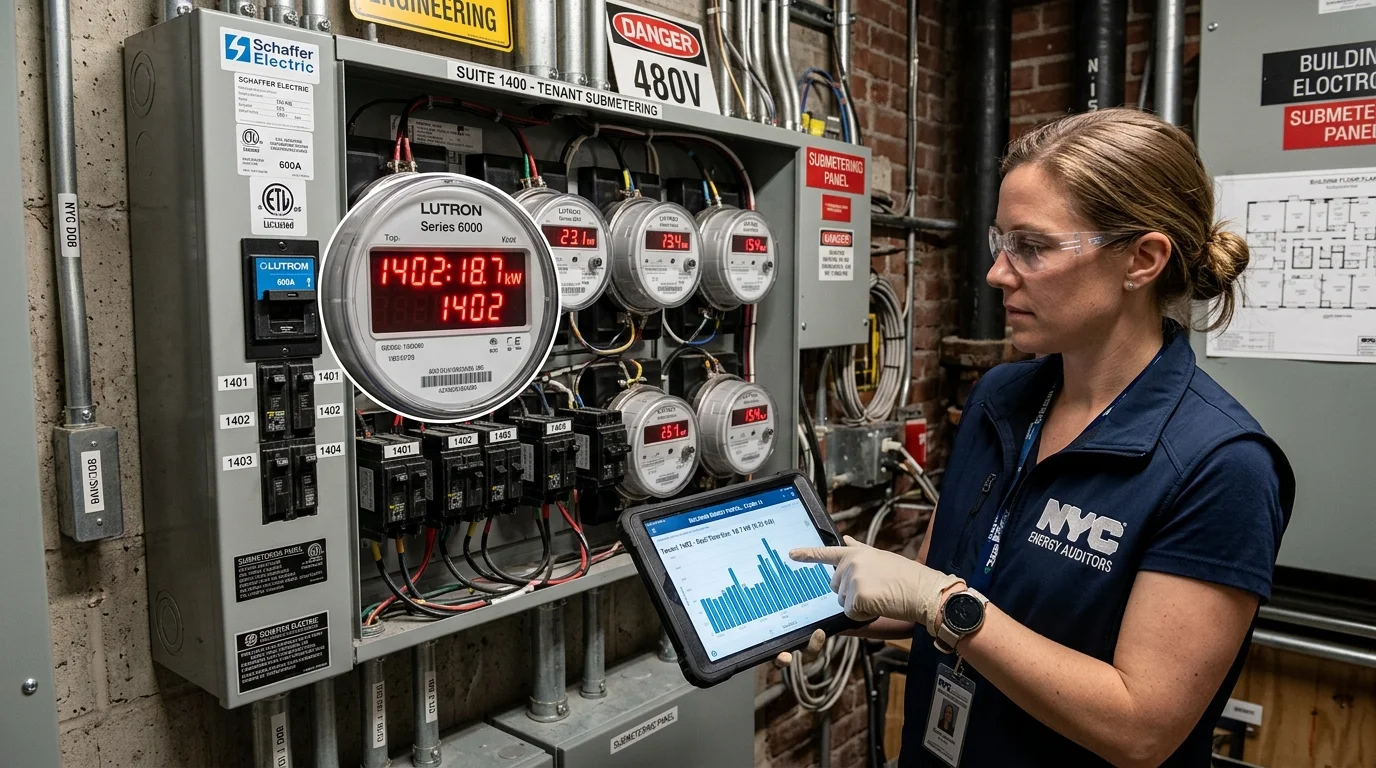
Submetering can help tenants understand how much electricity their own spaces consume. It can also support more transparent cost allocation where electricity is not separately measured by a dedicated utility meter.
A lease clause should explain what the meter measures, how readings are obtained, how charges are calculated, how billing statements are provided, and how disputes or meter errors are handled.
For certain covered NYC commercial tenant spaces, the Administrative Code requires electrical consumption to be measured by one or more submeters, subject to applicable exceptions. The relevant provision took effect on January 1, 2025. For qualifying multi-tenant floors, the code provides options for separate or shared submeters based on the circumstances. However, measuring electricity and deciding how the tenant may be charged for it are separate questions. A submeter does not, by itself, establish the contractual or legal basis for every billing arrangement. Owners should verify which rules apply to their building, tenancy, and utility setup before allocating costs.
Clause 5
Operating Practices and Energy Performance
Not every green lease provision concerns capital spending. Some of the most useful clauses define how the landlord and tenant operate the space after an improvement is installed.
For instance, the landlord may be responsible for maintaining central HVAC equipment, while the tenant agrees to follow reasonable operating guidelines for equipment serving its premises. The parties may also establish procedures for reporting malfunctioning controls, avoiding unnecessary after-hours operation, and coordinating maintenance.
A lease can also specify reasonable access for energy audits, retro-commissioning, equipment inspections, or the installation of approved monitoring devices. These provisions matter because even a well-designed building can waste energy if its systems are operated incorrectly. The U.S. Department of Energy's Better Buildings resources highlight tenant engagement and green leasing as useful strategies for reducing the split incentive and improving commercial building efficiency.

A Realistic Example: Sharing the Cost of an Office Lighting Upgrade
Consider a hypothetical NYC office building with a landlord-funded LED lighting and controls project.
The landlord wants to recover a reasonable portion of the investment through the lease. The tenants want lower electricity bills but do not want to pay an undefined or unlimited surcharge.
Suppose the project has the following illustrative financial details:
| Item | Example Amount |
|---|---|
| Initial project cost | $100,000 |
| Utility or other incentive received | $20,000 |
| Net project cost after the incentive | $80,000 |
| Agreed amortization period | 8 years |
| Annualized project cost before tenant allocation | $10,000 |
| Tenant's negotiated proportionate share | 25% |
| Illustrative annual charge to this tenant | $2,500 |
Under this example, the tenant's annual charge would be $2,500, assuming the lease permits this allocation and all contractual conditions are met.
Now suppose the tenant's attributable annual utility savings are estimated at $5,000. The tenant would retain an estimated:
$5,000 (Estimated Savings) - $2,500 (Annual Charge) = $2,500 Net Annual Savings
These figures demonstrate one possible calculation, not an industry-standard formula. Actual agreements may use different allocation methods, savings tests, amortization periods, or caps. The charge may also be subject to other operating-expense provisions and applicable law.
The lease should explain how the savings estimate is established, whether the charges change if performance differs from expectations, and whether any tenant contribution ends when the agreed recovery period expires.
This level of clarity makes the investment easier to evaluate for both parties.
The Lease Details That Prevent Disputes
The financial formula is only one part of a workable green lease. The parties also need to agree on what happens when circumstances change.
For example, what happens if a tenant vacates before the investment has been fully amortized? Does a new tenant inherit the same obligation, or is the remaining cost handled differently? Who receives a utility rebate? Does the landlord need to disclose the upgrade's expected savings before charging a tenant? Can the tenant request an independent review of the calculation?
These questions should be resolved in the written lease or amendment, not left to informal promises.
At a minimum, a negotiated provision should make the following issues clear:
1
Eligible Costs
Which energy improvements qualify, and which ordinary repairs or landlord obligations are excluded?
2
Cost Allocation
Is the charge based on leased area, metered consumption, proportionate share, verified savings, or another agreed method?
3
Incentives
Are rebates, grants, and applicable tax incentives deducted before costs are recovered?
4
Savings Limits
Is annual cost recovery capped by a specified amount or an agreed savings measure?
5
Transparency
What records, calculations, invoices, and performance data must be made available to the tenant?
6
Duration
When does the charge begin, how long can it continue, and what happens at lease expiration or renewal?
These are negotiation points, not universal legal requirements. The appropriate terms depend on the lease structure, the building's systems, and the parties' commercial objectives.
Green Lease Clauses and NYC Building Compliance
Green leases can support energy management and regulatory coordination, but they do not transfer every building owner's statutory responsibility to tenants.
NYC Local Law 84 requires owners of covered buildings to benchmark energy consumption annually. The applicable covered-building criteria include buildings exceeding 25,000 gross square feet and certain combinations of buildings; owners should verify the current covered-building list and rules for their property. Reports are generally due by May 1 for the preceding calendar year.
A lease can assign practical responsibilities for supplying information, authorizing data access, reviewing energy reports, and cooperating with efficiency projects. The owner must still ensure that the required filing is accurate and complete.
Similarly, a lease may specify how the parties intend to address energy-performance standards, retrofit expenses, or emissions-related costs. Those allocations should be drafted carefully, taking into account the applicable law and the landlord's underlying responsibilities.
The 2026 Green Lease Leaders guide includes language related to building performance standards, compliance payments, renewable energy credits, and the allocation of sustainability-related responsibilities. Because these provisions can have significant financial and legal consequences, they should be adapted to the specific building and jurisdiction.
How to Put a Green Lease Framework in Place
The process is more effective when the landlord identifies the building's priorities before writing the clauses.
Start with the current lease structure. Determine who pays for electricity, who maintains central equipment, whether the building uses submeters, and whether operating expenses already allow specific capital-cost recoveries.
Next, identify the main energy opportunities. Lighting upgrades, HVAC controls, efficient tenant equipment, and building-envelope improvements may require different funding arrangements. A project that benefits one tenant directly may call for a different cost-allocation method from an upgrade to a shared central plant.
Then establish a baseline for measuring results. Utility bills, meter data, operating schedules, and documented assumptions can help define expected performance and verify the outcome after the work is complete.
Finally, have a qualified real estate attorney review the draft language. Green lease clauses should align with the rest of the agreement, including the provisions governing utilities, additional rent, operating expenses, landlord maintenance, tenant alterations, and lease expiration.
A green lease works best as a coordinated operating and financial framework—not as a collection of broad sustainability promises.
Conclusion
Green lease clauses give landlords and tenants a way to share the cost and benefits of energy efficiency more transparently. Capital cost recovery, shared-savings provisions, utility data access, submetering rules, and agreed operating practices can help resolve the split incentive that often delays building upgrades.
For NYC property owners, the benefits extend beyond reduced energy use. Clear contractual responsibilities can make benchmarking, utility-data collection, equipment improvements, and ongoing building operations easier to coordinate.
The most effective agreement defines eligible costs, explains the allocation method, accounts for incentives, establishes reasonable limits, and identifies how performance will be measured. With those details in place—and legal review before signing—a green lease can support practical energy improvements while giving both landlord and tenant a clearer view of the financial outcome.
Frequently Asked Questions
A green lease clause is a provision in a lease that addresses sustainability-related matters such as energy efficiency, utility data sharing, equipment operation, environmental performance, or the allocation of costs associated with building improvements.
They help align the party paying for an improvement with the parties benefiting from its results. For example, a lease may permit an agreed cost recovery for an eligible energy upgrade, subject to specified limits, so a landlord can justify the investment while tenants retain a defined benefit.
Potentially, if the lease permits the particular charge and the arrangement complies with applicable law. The agreement should clearly define eligible improvements, the calculation method, amortization, incentives, caps, and documentation. Capital costs should not be assumed to qualify automatically as operating expenses.
They can, depending on the negotiated agreement. A shared-savings formula should define the baseline, how savings are measured, how utility-rate changes and operating conditions are treated, and how any tenant contribution is calculated.
Depending on the building and project, the lease may cover electricity, natural gas, fuel, water, common-area usage, and relevant building-performance information. It should define who provides the data, how often it is supplied, and how it may be used or disclosed.
Certain covered tenant spaces are subject to NYC electrical submetering requirements, with exceptions including spaces served by a dedicated meter exclusively measuring their consumption. The applicable building and tenant-space criteria should be checked before determining whether a particular installation is required.
Not automatically. A lease can allocate cooperation, reporting, and cost-sharing responsibilities between the parties, but it does not eliminate statutory obligations imposed on the property owner. Each provision should be reviewed against the relevant code and lease terms.
Yes, if the parties agree to an amendment that is valid under the lease and applicable law. An amendment can address energy-data access, planned upgrades, operating practices, or a specific cost-sharing arrangement without necessarily rewriting the entire lease.
A commercial real estate attorney should review the clauses, ideally with input from the property manager and an energy or building-performance professional. The financial terms need to match the property's actual systems and should be consistent with the lease's existing utility, maintenance, and operating-expense provisions.
You may also like