Learn how to calculate available electrical panel capacity, assess utility service, and plan EV charging infrastructure in NYC.
BY NYC Energy Code Team
ON
22 September 2026
EV Charging Station Maintenance: What Building Owners Need to Budget For
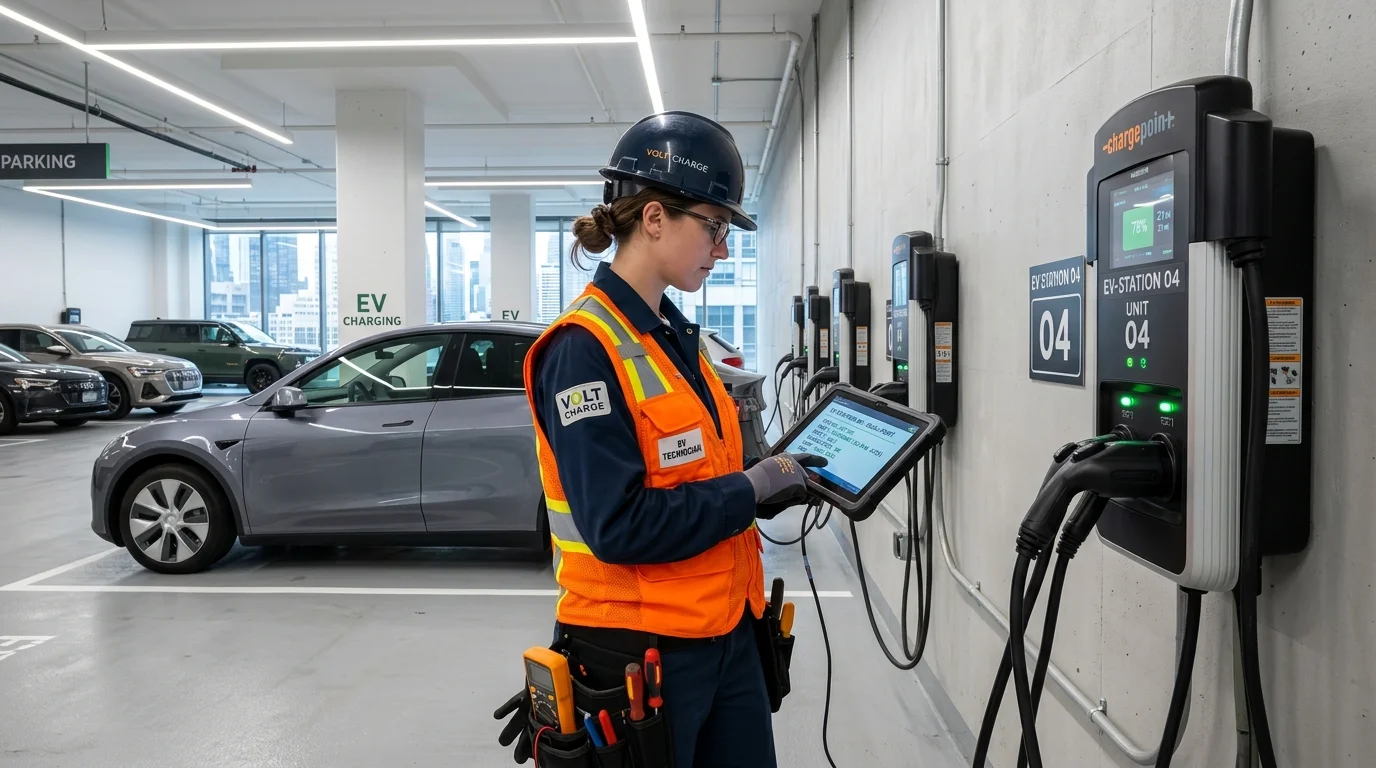
Installing EV chargers is only the beginning of an EV charging project. Once the equipment is operational, building owners need to budget for maintenance, networking, inspections, repairs, software, and eventual component replacement.
For commercial buildings, multifamily properties, hotels, and workplaces, maintenance costs can vary significantly based on the number of chargers, equipment type, location, usage, networking platform, and warranty coverage.
A good maintenance budget helps owners keep chargers available for drivers while avoiding unexpected costs when equipment fails.
Why EV Charger Maintenance Matters
EV charging equipment is exposed to regular electrical use, physical contact, weather, and sometimes vehicle impact.
Poor maintenance can lead to:
- Charging interruptions
- Damaged cables or connectors
- Communication failures
- Payment problems
- Electrical faults
- Network outages
- Reduced charger availability
- Customer or tenant complaints
For property owners, charger availability is particularly important because a station that is installed but frequently unavailable provides much less value.
NYSERDA's Charge Ready NY 2.0 quality program includes field inspection of completed projects and checks the delivered equipment for installation quality, code compliance, and overall operation.
What Should Be Included in an EV Maintenance Budget?
An EV charging maintenance budget should generally include six major categories:
| Cost Category | Typical Examples |
|---|---|
| Preventive maintenance | Cleaning, inspection, testing |
| Repairs | Connectors, cables, screens, electronics |
| Electrical maintenance | Breakers, wiring, panels, connections |
| Networking | Software and network service fees |
| Warranty | Covered and non-covered repairs |
| Replacement | Chargers and major components at end of life |
Not every site will have every expense every year, but planning for each category makes the budget more realistic.
1. Preventive Maintenance
Preventive maintenance is intended to identify problems before they become major failures.
Depending on the charger and site, maintenance may include checking:
- Charging connectors
- Cables
- Housing and mounting hardware
- Displays
- Emergency-stop or safety features where applicable
- Electrical connections
- Signs and labels
- Network connectivity
- Physical damage
- Water or environmental exposure
The appropriate inspection frequency depends on the equipment manufacturer's requirements, site conditions, usage, and applicable electrical and safety requirements.
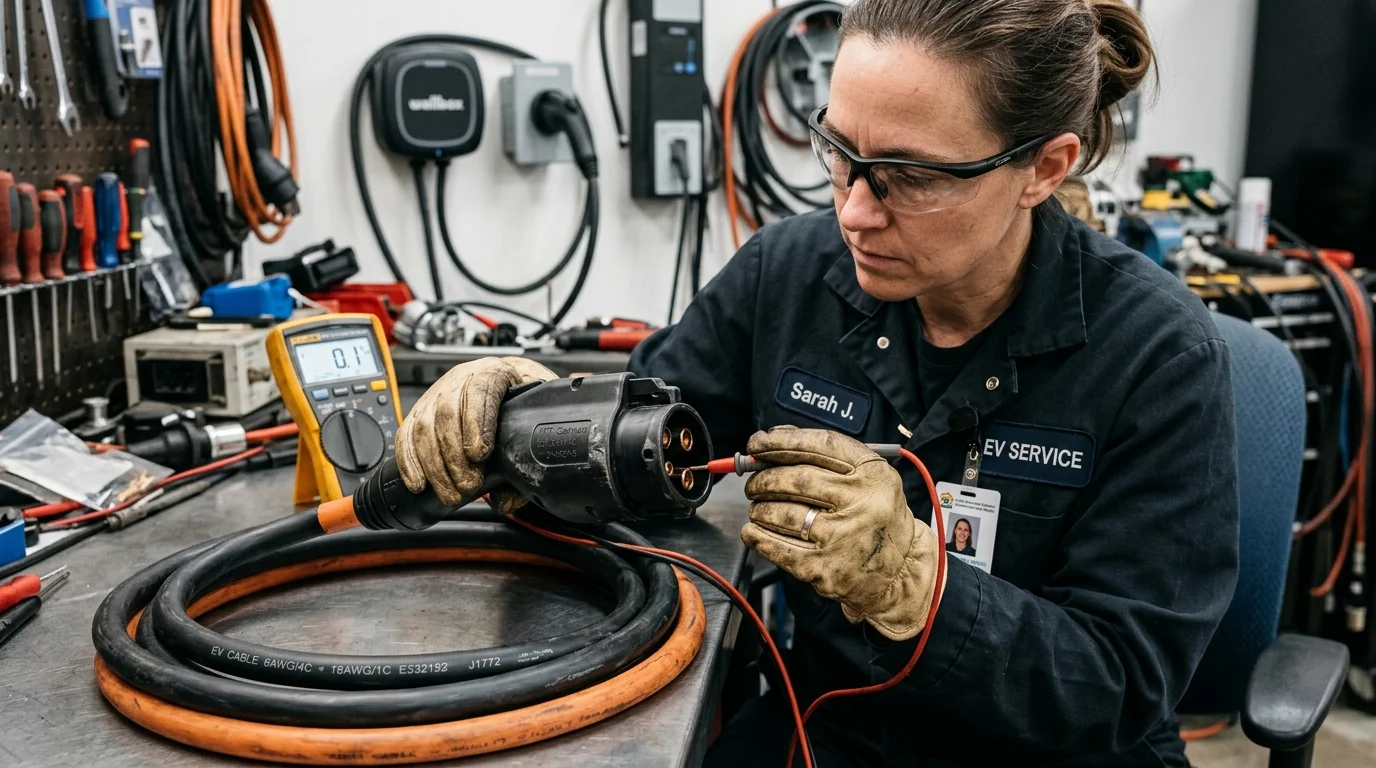
2. Cable and Connector Wear
Charging cables and connectors receive frequent physical use.
Over time, connectors can become damaged through:
- Repeated plugging and unplugging
- Improper handling
- Vehicle contact
- Dirt and debris
- Weather exposure
- Physical impact
A maintenance budget should therefore include the possibility of cable or connector repair and replacement.
This can become particularly important at busy commercial or public charging locations where equipment may be used much more frequently than chargers at a private workplace or residential property.
3. Electrical System Maintenance
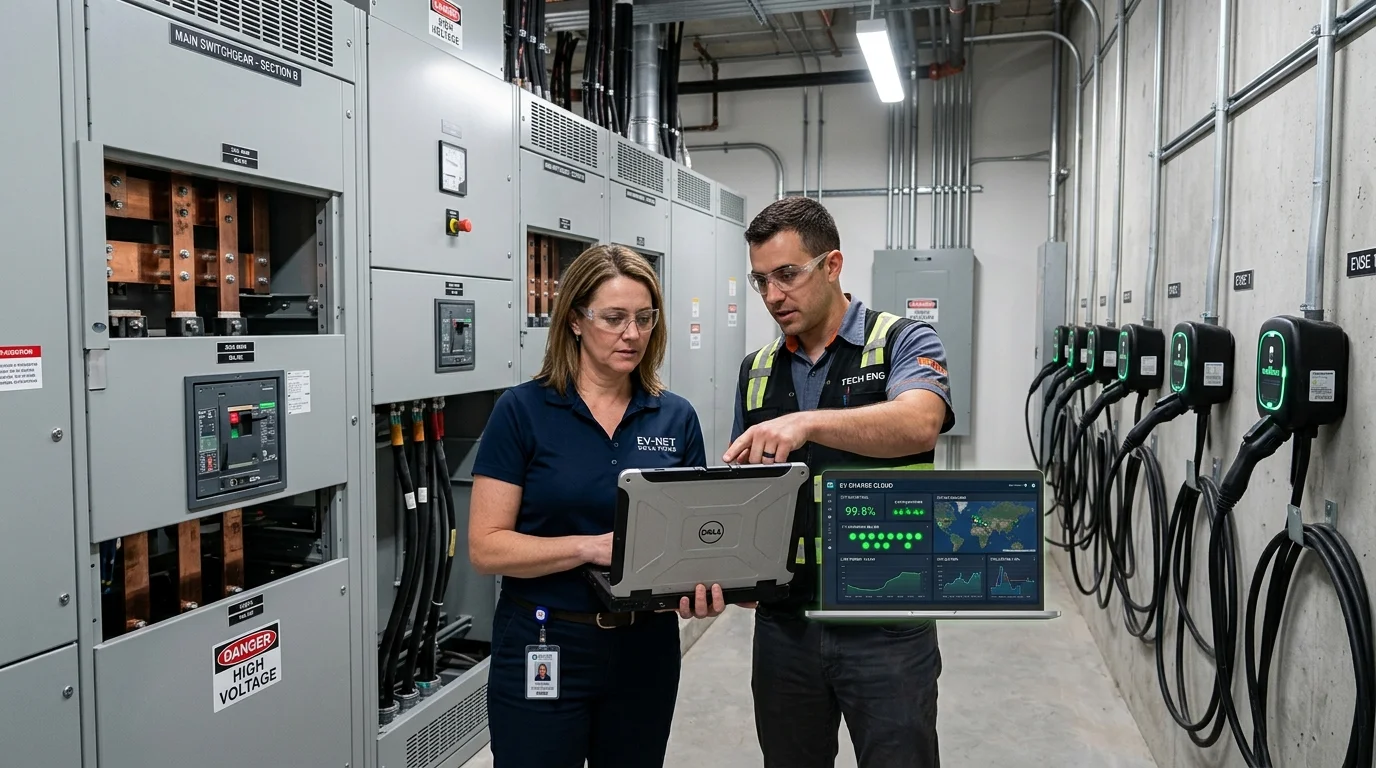
The charger is only one part of the installation.
The electrical infrastructure supporting it may include:
Utility service → switchgear → distribution equipment → breaker → feeder → charger
Maintenance planning should therefore consider the condition of the associated electrical equipment as well.
Potential work may involve:
- Electrical inspections
- Breaker testing
- Connection checks
- Repairs
- Panel maintenance
- Weatherproofing
- Grounding verification
- Replacement of damaged components
NYC's current Electrical Code is the 2025 NYC Electrical Code, which took full effect on December 21, 2025. Applicable electrical installations must comply with the requirements of the code edition governing the project.
4. Software and Network Fees
Many commercial charging stations are networked.
Network services can provide features such as:
- Remote monitoring
- User authentication
- Usage reporting
- Payment processing
- Software updates
- Fault notifications
- Access control
These services may involve recurring fees even when the physical charger itself needs little maintenance.
NYSERDA specifically notes that networked charging stations can involve monthly fees, and Charge Ready NY 2.0 requires participating EVSE to remain networked throughout the program's five-year reporting period.
Building owners should therefore treat networking as an ongoing operating cost, not a one-time installation expense.
5. Warranty Coverage
Warranty terms can significantly affect maintenance costs.
Before purchasing equipment, owners should review:
- Warranty duration
- Covered components
- Labor coverage
- Replacement procedures
- Shipping costs
- On-site service
- Exclusions
- Software or network coverage
For Charge Ready NY 2.0, eligible project documentation must identify a minimum three-year warranty, including the items covered and cost.
A strong warranty can reduce unexpected repair costs during the early years of operation, but owners should still maintain a reserve for issues that fall outside warranty coverage.
6. Charger Replacement
Eventually, major equipment may need replacement.
The useful life of a charger depends on:
- Equipment quality
- Operating frequency
- Weather exposure
- Maintenance
- Technology changes
- Physical damage
- Manufacturer support
Owners should not assume the entire electrical installation has to be replaced when a charger reaches the end of its service life.
Depending on the system, some infrastructure may remain usable while the EVSE equipment itself is replaced.
This is one reason to maintain documentation for the original installation, including equipment models, electrical diagrams, network information, and warranty records.
Level 2 vs. DC Fast Charger Maintenance
Maintenance requirements can differ substantially by charging type.
| Factor | Level 2 | DC Fast Charging |
|---|---|---|
| Typical power level | Lower | Much higher |
| Equipment complexity | Generally lower | Generally higher |
| Electrical infrastructure | Moderate | Potentially substantial |
| Maintenance complexity | Moderate | Often higher |
| Installation environment | Workplace, multifamily, hotel, retail | Public/commercial high-use locations |
| Replacement cost exposure | Lower per unit | Potentially much higher |
NYSERDA notes that many DC fast-charging installations require electrical service upgrades, which can add infrastructure considerations beyond the charger itself.
Usage Levels Affect Maintenance Costs
A charger used occasionally will generally experience different wear patterns from one used continuously throughout the day.
For budgeting purposes, owners should consider:
Number of chargers × usage frequency × operating environment
For example:
Low-Use Site
A small workplace installation with limited daily charging may mainly require periodic inspection and networking.
Medium-Use Site
A multifamily or hotel installation may have more frequent connector use and greater demand for troubleshooting.
High-Use Site
A public charging location may require more frequent attention because chargers operate much more often and users interact with equipment continuously.
Don't Forget Physical Site Maintenance
Some maintenance costs are not directly related to the charger electronics.
Owners may also need to maintain:
- Parking-space markings
- Protective bollards
- Signage
- Lighting
- Curb or pavement around equipment
- Drainage
- Snow or debris clearance
- Cable-management areas
NYSERDA's current Charge Ready NY 2.0 inspection criteria include lighting, signs, payment functionality, customer support information, and proper site condition as part of the quality review process.
For outdoor installations, keeping the surrounding area accessible and safe can be just as important as maintaining the charging unit itself.
Monitoring Can Reduce Downtime
Networked chargers can provide useful operational data.
A monitoring platform may help identify:
Charger offline → alert → remote diagnosis → technician dispatched
Without monitoring, a failed charger may remain unavailable until a tenant, customer, or property manager reports the problem.
For buildings with several chargers, remote monitoring can make maintenance more proactive and help prioritize repairs.
How Much Should Building Owners Budget?
There is no universal annual maintenance percentage that applies to every EV installation.
Instead, owners should build a site-specific operating budget around:
Annual networking costs
+
Preventive maintenance
+
Expected repairs
+
Site maintenance
+
Warranty gaps
+
Replacement reserve
For example, an owner with 20 networked Level 2 ports should not simply multiply the purchase price by an arbitrary maintenance percentage. The budget should reflect actual vendor pricing, network fees, warranty terms, charger utilization, and site conditions.
A Practical 5-Year Budget Framework
A long-term EV charging budget might look like this:
| Year | Main Budget Focus |
|---|---|
| Year 1 | Commissioning, network setup, warranty |
| Year 2 | Preventive maintenance, software/networking |
| Year 3 | Inspection, minor repairs, warranty review |
| Year 4 | Increased repair reserve |
| Year 5 | Major maintenance review and replacement planning |
This is a planning framework, not a prediction of when specific components will fail.
For projects receiving Charge Ready NY 2.0 funding, equipment must remain in operation and networked for at least five years, making this five-year period particularly relevant to participating owners.
How to Lower Maintenance Costs
Several design decisions made before installation can affect long-term maintenance.
Choose Appropriate Equipment
Compare reliability, warranty, service support, software, and replacement availability—not just purchase price.
Select the Location Carefully
A well-positioned charger is less likely to suffer vehicle impact and can be easier to service.
Protect the Equipment
Bollards, appropriate mounting, drainage, lighting, and weather protection can reduce physical and environmental risks.
Use Remote Monitoring
Alerts can reduce the time a charger remains offline.
Maintain Spare Parts Information
Keep model numbers, vendor contacts, warranty information, and installation documents accessible to the property team.
EV Charger Maintenance Checklist
- Record every charger model and serial number
- Document warranty terms
- Track network and software fees
- Establish preventive inspection procedures
- Inspect cables and connectors
- Check electrical equipment and connections
- Monitor charger availability
- Maintain site lighting and signage
- Track repairs and recurring faults
- Keep vendor and service contacts updated
- Maintain a replacement reserve
- Review maintenance costs annually
Common Budgeting Mistakes
Budgeting Only for Electricity
The electricity consumed by vehicles is not the same as the cost of operating the charging infrastructure.
Ignoring Network Fees
Networked chargers can carry recurring software and service costs.
Assuming the Warranty Covers Everything
Warranty coverage varies by manufacturer and component.
Forgetting Site Maintenance
Parking spaces, bollards, signage, cables, and surrounding surfaces also need attention.
Waiting Until Equipment Fails
A small maintenance problem can become a larger repair if it is ignored.
Not Planning for Replacement
Even reliable equipment eventually becomes obsolete, unsupported, or unsuitable for the building's future needs.
Conclusion
EV charging station maintenance should be treated as a normal part of the building's long-term operating budget rather than an unexpected expense.
Owners should plan for preventive inspections, electrical maintenance, cable and connector repairs, networking, software, site upkeep, warranty gaps, and eventual equipment replacement.
For NYC and New York State properties, incentive programs can also introduce additional operating requirements. For example, Charge Ready NY 2.0 participating equipment must remain operational and networked for five years, while the program requires eligible installations to have at least a three-year warranty.
The best approach is to budget from the actual equipment, usage, warranty, network, and site conditions rather than applying a generic maintenance percentage.
When maintenance is planned from the beginning, building owners can reduce downtime, protect their investment, and keep charging infrastructure dependable for tenants, employees, and customers.
FAQs
Yes. Charging stations should be inspected and maintained according to
manufacturer instructions, site conditions, usage, and applicable electrical and
safety requirements.
Common expenses include networking, preventive maintenance, repairs,
electrical-system maintenance, site upkeep, software services, and eventual
charger replacement.
Most commercial charging equipment is sold with a manufacturer's warranty, but
the duration and coverage vary. Charge Ready NY 2.0 requires eligible projects
to document a minimum three-year warranty.
Not every charger needs networking, but networked equipment is common for
commercial installations because it can support monitoring, access control,
payment, reporting, and remote troubleshooting. Certain incentive programs have
their own networking requirements.
There is no single inspection interval that applies to every installation. The
appropriate schedule depends on equipment manufacturer requirements, operating
environment, utilization, and applicable regulations.
Yes. Even when equipment is under warranty, a long-term capital reserve can help
cover repairs outside warranty, technology upgrades, and eventual replacement.
It can help identify offline chargers and faults more quickly, allowing
operators to respond before problems remain unresolved for extended periods. The
financial benefit depends on the network and service arrangement.