Discover key state, city, and utility rebates for commercial EV charging installations in NYC.
BY NYC Energy Code Team
ON
21 August 2026
Level 1 vs Level 2 vs DC Fast Charging: Which Is Right for Your Building?
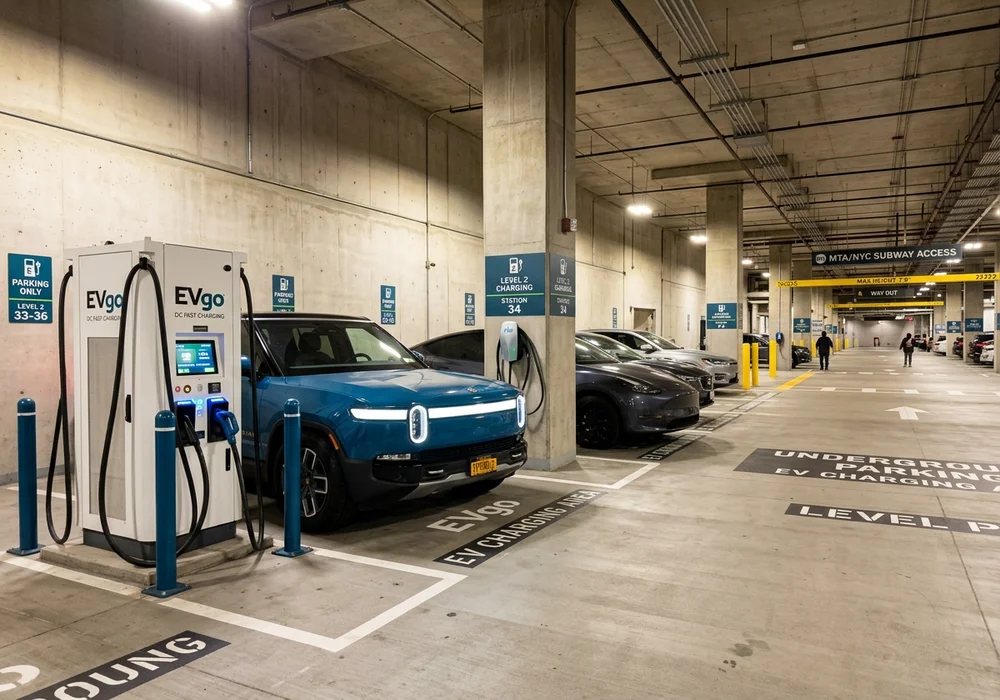
Installing electric vehicle (EV) charging in an NYC building sounds straightforward until you start comparing hardware specifications.
Level 1. Level 2. DC Fast Charging (DCFC).
They aren't simply three versions of the same charging plug. They require vastly different electrical power inputs, deliver energy at completely different speeds, and are engineered for distinct parking scenarios.
For an NYC property owner, choosing the wrong charging level can create a costly infrastructure problem. An expensive DC fast charger is completely unnecessary for a residential apartment garage where tenants park overnight. Conversely, a basic Level 1 outlet is utterly inadequate for a commercial logistics fleet that needs vehicles back on the road in under an hour.
The right question is: "How long do vehicles remain parked at your facility, what electrical capacity does the building currently have, and what are your regulatory code requirements?"
The Three Charging Levels at a Glance
Here is a side-by-side comparison of electrical supply, charging speed, and target applications:
| Charging Level | Electrical Supply | Approx. Charging Speed | Best Property Use Case |
|---|---|---|---|
| Level 1 (AC) | 120V AC, 15–20 Amp dedicated circuit | 3 to 5 miles of range per hour | Long-duration residential, private garages, low-mileage vehicles |
| Level 2 (AC) | 208V–240V AC, 30–80 Amp circuit | 15 to 30 miles of range per hour | Apartments, co-ops, condos, office buildings, hotels, public parking |
| DC Fast (DCFC) | 480V AC 3-Phase (50 kW to 350+ kW) | 100 to 250+ miles in 20–45 mins | Commercial fleets, rideshare/taxis, public highway hubs, high-turnover retail |
NYC Department of Transportation (DOT) describes Level 1 as standard 120V convenience charging, Level 2 as the primary 240V destination standard, and DC Fast Charging as the premier rapid-turnaround option. NYSERDA similarly designates Level 2 as the benchmark standard for destination parking where vehicles dwell for several hours.
Level 1 Charging: Simple but Slow
Level 1 is the most basic tier of EV charging, plugging directly into a standard 120-volt AC wall outlet with a standard NEMA 5-15 or 5-20 receptacle.
NYC DOT estimates Level 1 provides roughly 3 to 5 miles of range per hour of charging. While slow, it requires negligible electrical infrastructure and minimal upfront equipment expense.
- When it works: Dedicated private single-family garages, low-demand assigned parking, or plug-in hybrid electric vehicles (PHEVs) with compact battery packs.
- The limitation: Recharging an 80 kWh battery pack from empty takes 40+ hours, making it impractical for shared multifamily garages or high-utilization commercial properties.
Level 2 Charging: The Building-Friendly Workhorse
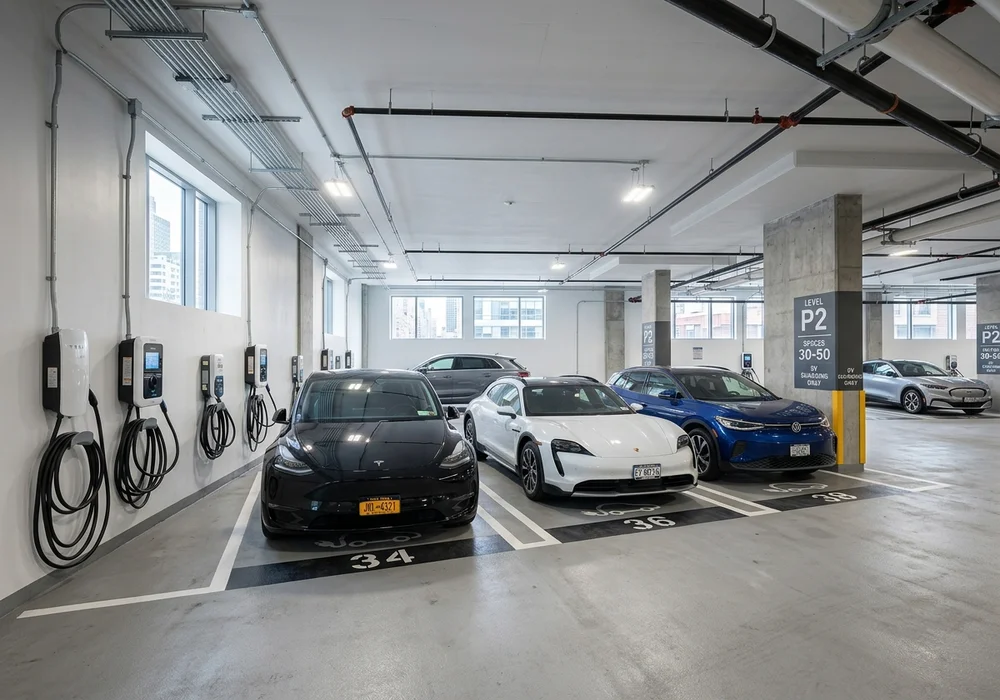
For the vast majority of commercial and residential buildings in New York City, Level 2 is the practical sweet spot.
Operating on 208V (common in commercial three-phase services) or 240V (residential single-phase), Level 2 stations deliver between 7.2 kW and 19.2 kW of power, adding 15 to 30 miles of range per hour.
In an apartment building or office parking structure where vehicles stay parked for 4 to 10 hours, Level 2 easily replenishes a full charge while vehicles dwell, without overloading the building's electrical service switchgear.
DC Fast Charging: Rapid Speed with High Infrastructure Demand
Direct Current Fast Charging (DCFC) bypasses the vehicle's on-board AC-to-DC converter, pumping high-voltage direct current straight into the battery pack.
DC fast chargers range from 50 kW up to ultra-fast 350 kW systems, capable of providing an 80% charge in just 20 to 45 minutes.
The Infrastructure Tradeoff of DC Fast Charging
A single 150 kW DC Fast Charger requires as much electrical capacity as an entire 50-unit apartment building. Installing DCFC in NYC typically necessitates a 480V 3-phase service, dedicated step-down utility transformers, major Con Edison service upgrades, and substantial peak demand charges on monthly utility bills.
Installing DC fast chargers makes sense for commercial fleets and high-turnover public retail, but is usually uneconomic for residential tenant garages.
Matching Charger Types to NYC Building Typologies
Multifamily Residential (Apartments, Co-ops, Condos)
Recommended Solution: Level 2 (208/240V) with smart load sharing.
Residents park for 8 to 12 hours overnight. Level 2 easily delivers a full charge while keeping electrical infrastructure and tenant billing manageable.
Commercial Office Buildings & Workplaces
Recommended Solution: Level 2 (208V).
Employees park for a full 8-hour workday. Level 2 chargers allow cars to top up during daytime solar hours, aligning perfectly with corporate sustainability and ESG targets.
Hotels & Hospitality
Recommended Solution: Level 2 with optional DCFC amenity.
Overnight hotel guests require Level 2 destination charging. Premier properties may add one DCFC port for transient travelers and rideshare drop-offs.
Retail Centers & High-Turnover Parking
Recommended Solution: Level 2 (for 1-3 hr shoppers) or DC Fast Charging.
If shoppers dwell for 60 to 90 minutes, high-output Level 2 provides a substantial boost. Standalone charging hubs designed for rapid turnover require 50 kW+ DCFC.
Commercial Fleets & Last-Mile Delivery
Recommended Solution: Combination of Level 2 (depot overnight) and DC Fast Charging.
Delivery vans and municipal vehicles can charge overnight on Level 2, while shift vehicles utilize DC fast charging for midday turnaround.
Electrical Capacity & Smart Load Management
Many property managers ask: "How many chargers can we fit in our garage?"
The true engineering constraint is: "How much spare electrical service capacity is available in the main switchgear?"
Installing 20 unmanaged 40-amp Level 2 chargers requires 800 amps of dedicated electrical service. If all 20 vehicles plug in simultaneously at 6:00 PM, the demand spike can trip main breakers or trigger punitive utility demand charges.
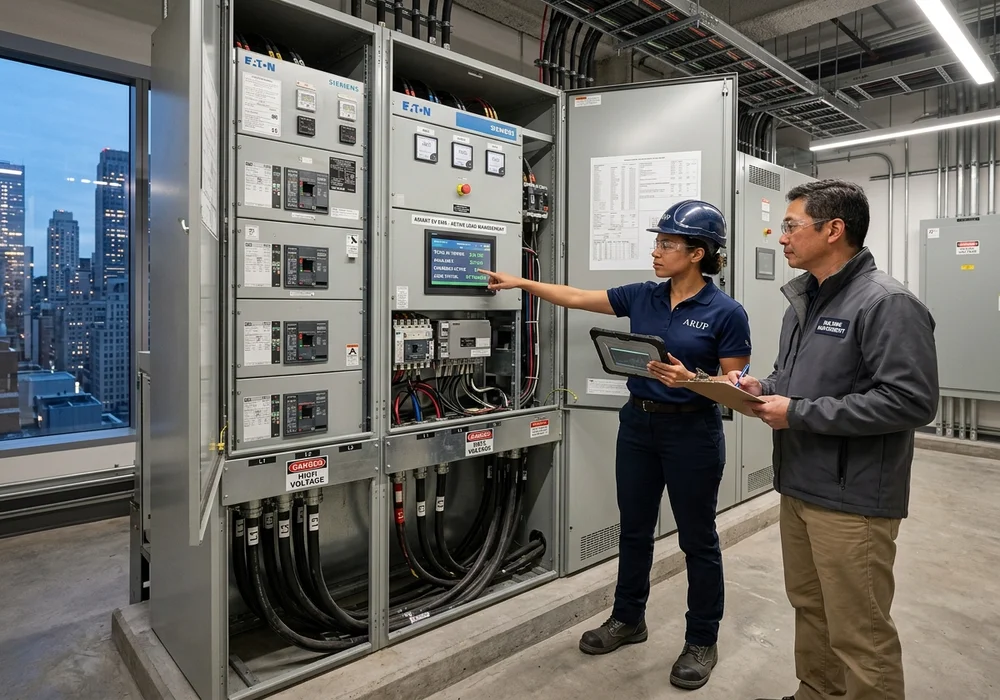
Electric Vehicle Energy Management Systems (EVEMS)
Smart EV load management systems dynamically modulate power across multiple charging ports. If 20 vehicles plug in, the software distributes available capacity safely. As cars reach full charge, full power shifts to remaining vehicles—allowing buildings to install 4x to 6x more charging ports without upgrading the building's utility transformer.
NYC Parking Code Mandates & Local Law 55 of 2024
In New York City, EV charging is no longer just a tenant amenity—it is increasingly a strict building code mandate.
Under Local Law 55 of 2024 and the NYC Building Code:
- Applicable new and substantially altered parking garages and open parking lots must provide dedicated Level 2 installed chargers and EV-capable spaces (raceways, panels, and capacity pre-installed).
- The DCFC Substitution Rule: One DC Fast Charging station (minimum 50 kW) can count as the equivalent of ten Level 2 charging stations for code compliance purposes.
- The 50% Cap: DC fast chargers cannot satisfy more than 50% of the total mandated Level 2 charging stations. You cannot simply install one fast charger and omit all Level 2 infrastructure.
Project Costs and NYSERDA Incentive Programs
Total project cost includes hardware, electrical distribution switchgear, submetering, trenching/conduit, DOB electrical permitting, and network subscriptions.
To accelerate adoption, New York State offers powerful financial rebates:
- NYSERDA Charge Ready NY 2.0: Provides direct rebates of up to $4,000 per Level 2 charging port for commercial properties, workplaces, and multifamily buildings, with bonus incentives for Disadvantaged Communities (DACs). (Note: Level 1 equipment is not eligible for Charge Ready NY 2.0.)
- Con Edison PowerReady (Make-Ready): Covers up to 100% of the utility-side and customer-side electrical infrastructure costs (panels, transformers, conduit) for qualifying Level 2 and DCFC installations.
- Federal Clean Energy Tax Credit (30C): Offers up to 30% tax credits (up to $100,000 per charger) for commercial EV charging installations located in qualifying census tracts.
Owner's Checklist Before Selecting EV Chargers
Parking Duration: Do vehicles stay parked for 8+ hours (Level 2) or under 45 minutes (DCFC)?
Load Feasibility: Has a licensed electrical engineer conducted an ampacity load study on the main electrical panel?
Smart Load Sharing: Will the project incorporate EVEMS to prevent utility service upgrades?
NYC Code Applicability: Is your facility subject to NYC LL55 parking requirements?
Incentive Stacking: Have you applied for Con Edison PowerReady and NYSERDA Charge Ready NY 2.0 prior to hardware procurement?
Final Takeaway
There is no single "best" EV charger—only the right charger for how your property is actually used.
Level 2 represents the most practical, cost-effective, and code-aligned baseline for NYC apartments, workplaces, and commercial garages. DC Fast Charging delivers unmatched speed for commercial fleets and retail hubs, but requires heavy electrical infrastructure.
By assessing tenant dwell times, leveraging smart load management, and capturing Con Edison Make-Ready and NYSERDA incentives, building owners can deploy future-proof EV charging infrastructure with minimal out-of-pocket capital.
Frequently Asked Questions
Level 1 uses a standard 120V circuit (~5 miles of range/hr). Level 2 uses 208-240V (~20 miles of range/hr). DC Fast Charging utilizes 480V 3-phase power, adding 100-250+ miles in 20 to 45 minutes.
Level 2 is the most practical choice for multifamily residential properties because residents leave vehicles parked for several hours or overnight, allowing full charging without high-demand spikes.
Level 1 is generally too slow for commercial and employee parking. Level 2 is the industry benchmark for commercial workplace destination charging.
DC Fast Charging is justified for commercial fleets, taxi/rideshare hubs, last-mile delivery vans, and public high-turnover retail parking where fast vehicle turnaround is critical.
Yes. NYC Local Law 55 of 2024 and municipal building codes require specific ratios of installed Level 2 EV chargers and EV-capable spaces in newly constructed or substantially renovated parking facilities.
Under NYC code, one DC Fast Charger can substitute for ten Level 2 charging stations, but DCFC cannot satisfy more than 50% of the total mandated Level 2 stations.
It depends on available panel capacity. Many buildings have spare 208/240V capacity, and smart Electric Vehicle Energy Management Systems (EVEMS) can share load across ports to prevent utility service upgrades.
No. NYSERDA's Charge Ready NY 2.0 exclusively subsidizes eligible networked Level 2 charging stations, providing up to $4,000 per port. Level 1 stations are not eligible.
No. A phased approach is smarter: install chargers for current and near-term demand while pre-installing raceways, conduit, and panel space (EV-capable) for future expansion.
Yes. Mixed-use facilities frequently install Level 2 for resident/employee long-duration parking, alongside one or two DCFC stalls for short-term visitors, commercial deliveries, or rapid fleet turnover.