BY NYC Energy Code Team
ON 04 Jul 2026
NYC Local Law 152
DOB Complaint vs Violation vs OATH NYC: A Plain-English Guide for Building Owners

If you own or manage property in New York City, you have probably heard terms such as DOB complaint, DOB violation, and OATH summons. They often appear in conversations with contractors, property managers, attorneys, architects, or compliance consultants.
Many owners assume these terms all describe the same thing.
They do not.
Although they may relate to the same property or even the same issue, a complaint, a violation, and an OATH summons represent different stages or types of enforcement activity. Confusing them can lead to unnecessary delays, missed deadlines, or incomplete responses.
Understanding the difference between DOB complaint vs violation vs OATH NYC records helps property owners respond appropriately, maintain accurate compliance records, and avoid overlooking important obligations.
This guide explains each term in plain English and outlines practical steps owners can take when any of these records appear.
Why Understanding the Difference Matters
Many compliance problems become larger because owners respond to the wrong issue.
For example:
- An owner pays a penalty but never corrects the underlying violation.
- A complaint is ignored because it is mistaken for a resolved matter.
- An OATH hearing deadline is missed because the owner believes the issue is still only a complaint.
Each record type has a different purpose, and the appropriate next step depends on understanding which one you are dealing with.
Recognizing that difference is often the first step toward effective compliance management.
What Is a DOB Complaint?
A DOB complaint generally begins when someone reports a concern about a property to the New York City Department of Buildings.
The complaint may come from:
- A neighbor
- A tenant
- A passerby
- Another government agency
- A contractor
- A member of the public
The complaint alerts DOB to a condition that may require investigation.
Importantly, a complaint is not automatically proof that a violation exists.
It is simply a report that may lead to further review.
What Happens After a Complaint?
After receiving a complaint, DOB may decide to:
- Review the report.
- Inspect the property.
- Request additional information.
- Determine that no violation exists.
- Issue a violation if non-compliance is confirmed.
Not every complaint results in enforcement.
Some complaints are closed after inspection with no further action.
Others lead to additional investigations or enforcement measures.
What Is a DOB Violation?
A DOB violation is different from a complaint.
A violation generally reflects an official finding that a building condition or compliance issue requires corrective action.
Depending on the circumstances, a violation may involve:
- Building code issues
- Permit-related problems
- Unsafe conditions
- Administrative non-compliance
- Inspection deficiencies
- Documentation failures
Unlike a complaint, a violation represents an official enforcement record.
Owners should review violation notices carefully to understand what corrective actions may be required.
What Is an OATH Summons?
An OATH summons is another distinct type of enforcement action.
OATH stands for the Office of Administrative Trials and Hearings, which handles many administrative enforcement matters in New York City.
An OATH summons may require:
- A hearing
- A response
- Supporting documentation
- Payment of penalties if applicable
- Compliance with corrective requirements
Although an OATH summons may arise from the same underlying issue as a DOB violation, the summons itself is part of a separate adjudication process.
Owners should not assume that resolving one automatically resolves the other.
Why These Terms Are Not Interchangeable
Because the same property issue can generate several different records, owners sometimes use the terms interchangeably.
For example:
- "I received a complaint."
- "I got a violation."
- "It's just a summons."
These statements may describe entirely different legal or administrative situations.
Treating them as identical can result in missed responsibilities.
Understanding the specific record type helps determine the appropriate response.
Complaint vs Violation: The Key Difference
Complaint
A report or allegation that may require investigation.
Violation
An official finding that identifies a compliance issue requiring attention.
The complaint begins the process. The violation reflects an enforcement decision following review or inspection. Not every complaint becomes a violation.
Violation vs OATH Summons
These records are also different:
Violation
Identifies a compliance issue.
OATH Summons
Addresses the adjudication or enforcement process related to certain violations.
Resolving the summons does not necessarily eliminate every compliance obligation associated with the property.
Why Owners Should Never Assume One Action Resolves Everything
One of the most common mistakes is assuming that completing one step automatically resolves every related record.
For example:
- Paying an OATH penalty does not necessarily correct the underlying building condition.
- Correcting a violation does not always resolve an associated hearing requirement.
- Closing a complaint does not automatically update every public record.
Each record should be reviewed individually.
Understanding the Next Step
Different records generally require different responses.
Complaint
Owners may need to:
- Monitor the complaint.
- Provide property access if requested.
- Cooperate during inspections.
- Maintain documentation.
Violation
Owners may need to:
- Correct cited conditions.
- Complete required filings.
- Obtain permits.
- Submit supporting documentation.
- Verify compliance.
OATH Summons
Owners may need to:
- Respond appropriately.
- Prepare supporting documentation.
- Participate in hearings if required.
- Resolve penalties where applicable.
- Complete any outstanding compliance obligations.
Understanding which category applies prevents unnecessary confusion.
Where These Records Appear
One reason owners become confused is that different NYC systems display different records. Property information may appear across multiple platforms depending on the age and type of the record.
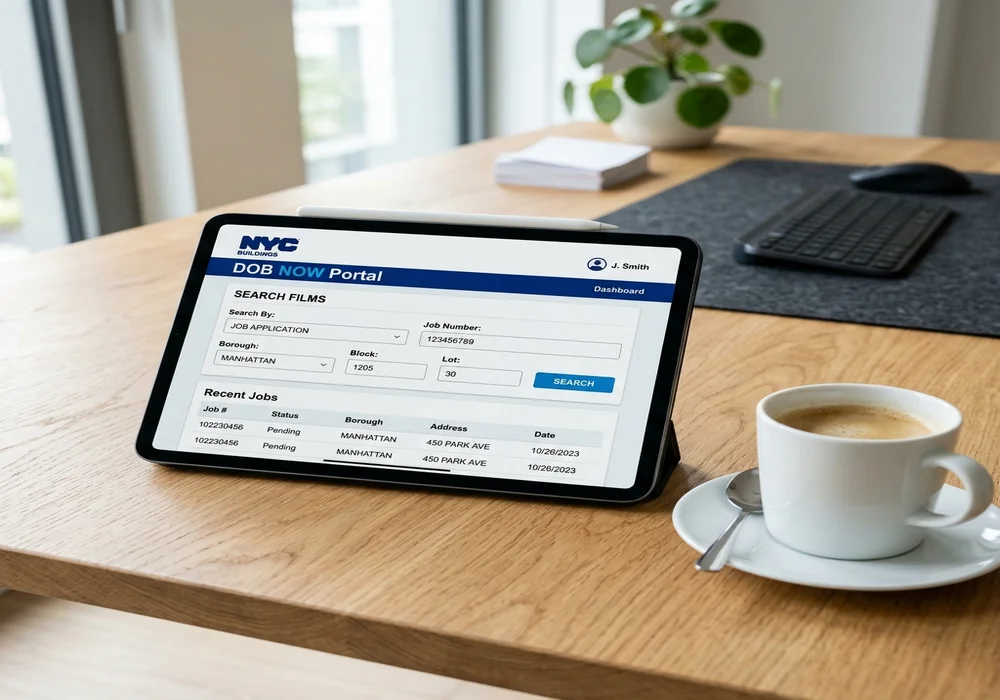
DOB NOW
DOB NOW is used for many newer applications, filings, permits, inspections, and compliance records. Owners should review DOB NOW when monitoring current construction and filing activity.
Building Information System (BIS)
Many older properties still contain historical information within the Building Information System (BIS). Legacy permits, violations, and other historical records may continue to appear there. Owners of older buildings often need to review both systems.
NYC Open Data
NYC Open Data provides public datasets that include information such as:
- DOB complaints
- DOB civil violations
- OATH/ECB-related records
- Safety violations
- Inspection data
Because these datasets are organized separately, owners may find different information in different locations.
Why Address Searches Can Produce Different Results
Owners sometimes search only by address and become confused when records appear incomplete. Property records may also rely on identifiers such as:
- BIN (Building Identification Number)
- BBL (Borough, Block, Lot)
- Job numbers
- Complaint numbers
- Violation numbers
Using multiple identifiers often produces a more complete understanding of the property's history.
Why Good Recordkeeping Matters
Compliance records often remain relevant for years. Ownership changes. Managing agents change. Contractors retire. Employees leave.
Without organized documentation, reconstructing the property's compliance history becomes much more difficult. Good recordkeeping benefits both current and future owners.
What Records Should Owners Save?
Maintain a dedicated compliance file containing:
- Complaint numbers
- Violation numbers
- OATH summons information
- Issue dates
- Hearing dates
- Property address
- BIN
- BBL
- Status updates
- Inspection reports
- Payment receipts
- Correction documentation
- Correspondence
- Portal screenshots
Organizing these records reduces future administrative work.
Why Screenshots Are Helpful
Online systems change over time. Statuses may be updated. Records may move between systems.
Saving dated screenshots provides additional documentation of the property's compliance history. Screenshots should complement—not replace—official records.
Common Mistakes Property Owners Make
Several mistakes appear repeatedly. These include:
- Assuming complaints are violations.
- Ignoring complaint notices.
- Paying penalties without correcting conditions.
- Missing OATH hearing dates.
- Losing compliance documentation.
- Assuming one system contains every record.
- Failing to verify updated statuses.
- Depending entirely on email conversations.
Most of these issues are preventable through better organization.
Best Practices for Managing Compliance Records
Owners can improve compliance management by:
- Creating one compliance folder per property.
- Saving every notice received.
- Recording complaint and violation numbers.
- Keeping payment receipts.
- Saving hearing documentation.
- Recording correction dates.
- Reviewing public records periodically.
- Maintaining digital backups.
Simple organization often prevents significant future problems.
A Practical Compliance Checklist
Whenever a new enforcement record appears, verify the following:
- ✔ Record type identified
- ✔ Complaint number recorded
- ✔ Violation number recorded (if applicable)
- ✔ OATH summons reviewed (if applicable)
- ✔ Property identifiers confirmed
- ✔ Required deadlines noted
- ✔ Supporting documentation organized
- ✔ Correction requirements understood
- ✔ Public record reviewed
- ✔ Status verified after completion
Using a checklist helps ensure that no important administrative step is overlooked.
Plain-English Takeaway
One simple rule can prevent many compliance mistakes:
- A complaint is not automatically a violation.
- A violation is not automatically an OATH summons.
- Paying an OATH penalty does not necessarily correct the underlying building condition.
- Closing an inspection does not always mean every public record has been updated.
Before responding, identify exactly which type of record you are dealing with and determine what action that specific record requires.
Conclusion
Understanding DOB complaint vs violation vs OATH NYC terminology is essential for effective property management in New York City.
Although these records may relate to the same property or even the same event, they serve different purposes and often require different responses. Complaints typically begin as reports or allegations, violations represent official enforcement findings, and OATH summonses involve an administrative adjudication process.
Owners who identify the correct record type, maintain organized documentation, monitor multiple city systems, and verify compliance after corrective actions are better positioned to avoid unnecessary delays and administrative confusion.
Good compliance management begins with understanding what each record actually means.
Frequently Asked Questions
Is a complaint the same as a violation?
No. A complaint is generally a report or allegation that may lead to an investigation. A violation is an official enforcement record identifying a condition or compliance issue that requires attention.
Is an OATH summons the same as a DOB violation?
Not exactly. An OATH summons may relate to a DOB enforcement matter, but it is handled through the Office of Administrative Trials and Hearings as part of a separate adjudication process.
Why do property records appear in different systems?
DOB NOW, the Building Information System (BIS), and NYC Open Data each contain different categories of records. Older properties often require reviewing multiple systems to obtain a complete compliance history.
What information should owners save?
Owners should retain complaint numbers, violation numbers, summons information, issue dates, hearing dates, BIN, BBL, inspection reports, payment records, correction documentation, correspondence, and screenshots of portal statuses.
Does paying an OATH penalty automatically resolve the violation?
Not always. Payment may satisfy the financial obligation, but owners may still need to complete corrective work, submit documentation, or satisfy other compliance requirements.
What is the most important first step?
Identify whether you are dealing with a complaint, a violation, or an OATH summons. Understanding the record type will help determine the appropriate next steps.
You may also
like