BY NYC Energy Code Team
ON 30 Jun 2026
NYC Local Law 152
Boiler Filing Mistakes NYC: Common Errors That Lead to DOB Violations
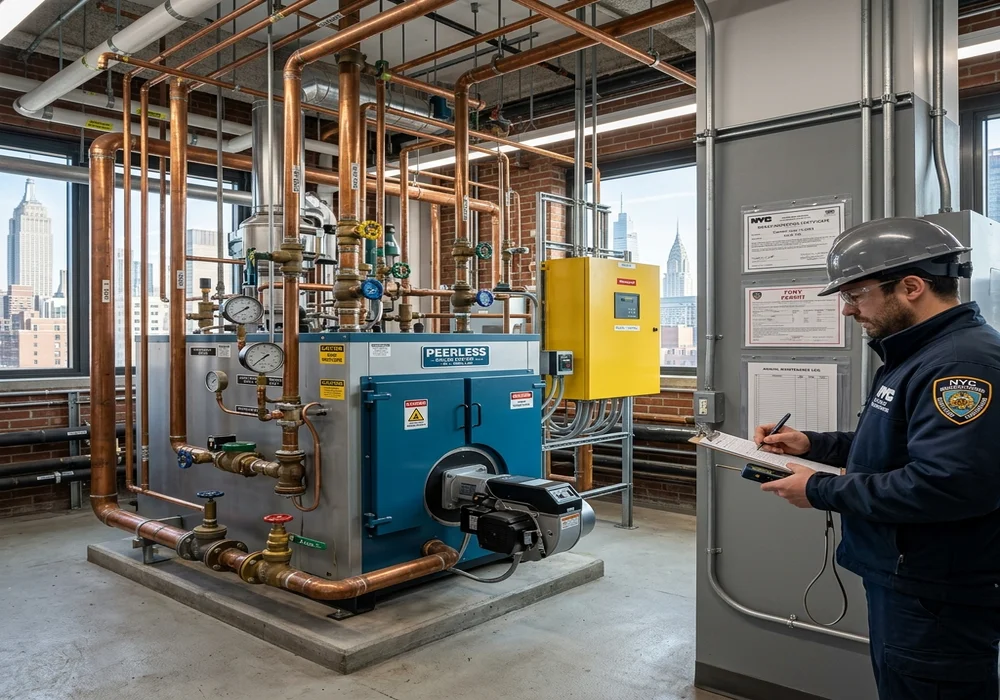
For many New York City property owners, annual boiler compliance feels like another routine administrative task. The inspection is scheduled, the technician visits the building, paperwork is completed, and everyone moves on to the next maintenance priority.
Unfortunately, this assumption is one of the biggest reasons boiler-related violations continue to appear in Department of Buildings (DOB) records.
Many violations are not caused by dangerous boiler conditions. Instead, they begin with simple paperwork errors—late filings, incomplete correction documentation, inaccurate status reports, or missing notifications.
Understanding the most common boiler filing mistakes NYC property owners make can help prevent unnecessary violations, reduce administrative headaches, and ensure that DOB records accurately reflect the condition of the building.
The goal of annual boiler compliance is not simply completing an inspection. The goal is ensuring that every required inspection, filing, correction, and notification has been properly documented and accepted.
Common Boiler Compliance Pitfalls in NYC
Boiler Compliance Is Routine Until Something Goes Wrong
Most building owners think about boilers only when heating season begins or when an inspection reminder arrives.
For the rest of the year, boilers operate quietly in the background.
Because inspections occur on a recurring schedule, owners sometimes treat compliance as a routine administrative task.
However, boiler compliance involves several connected steps.
These include:
- Annual inspection
- Report preparation
- Filing requirements
- Correction documentation
- Status updates
- Record retention
- DOB confirmation
Missing any one of these steps can create compliance issues that remain unresolved long after the inspection itself has been completed.
Why Boiler Filing Errors Continue to Happen
Several factors contribute to filing mistakes.
Many owners manage multiple responsibilities simultaneously.
Property managers oversee dozens of buildings.
Documentation is stored in different locations.
Ownership changes occur.
Building staff changes.
Contractors come and go.
Under these conditions, paperwork is often overlooked.
Unfortunately, DOB records do not distinguish between paperwork that was forgotten and paperwork that never existed.
If required documentation is missing, the property may appear non-compliant regardless of what actually happened.
Mistake #1: Assuming the Inspection Company Handled Everything
One of the most common boiler filing mistakes occurs immediately after the inspection.
The owner receives an invoice.
Payment is made.
The technician leaves.
The owner assumes compliance is complete.
That assumption is not always correct.
Inspection companies may perform the inspection, but owners should still verify:
- Whether reports were completed.
- Whether required filings were submitted.
- Whether corrections were identified.
- Whether additional documentation is required.
- Whether DOB records reflect the completed filing.
Never assume that paying an invoice automatically completes every compliance requirement.
An Inspection Does Not Automatically Mean Compliance
An inspection represents only one stage of the overall compliance process.
The inspection must also be properly documented.
Depending on the circumstances, additional administrative steps may still be necessary.
These may include:
- Filing inspection reports
- Submitting required certifications
- Completing correction documentation
- Updating building status
- Responding to DOB notices
Owners who verify these steps early avoid unnecessary confusion later.
Mistake #2: Failing to Confirm Filing Submission
Another common mistake involves assuming paperwork has already reached DOB.
Owners should request confirmation that required filings have actually been submitted.
Useful records include:
- Inspection report
- Filing receipt
- Submission confirmation
- Provider correspondence
- DOB acknowledgement
Keeping these records provides evidence that the compliance process has been completed.

Mistake #3: Ignoring Correction Deadlines
Some inspections identify deficiencies that require correction.
When this happens, compliance is not complete simply because the inspection occurred.
Owners should understand that Inspection → Correction → Documentation → Confirmation is often the full compliance sequence.
Ignoring correction timelines can create additional violations beyond the original inspection findings.
Why Correction Documentation Matters
Repairing a boiler issue is only part of the solution.
Documentation demonstrating that corrections have been completed is equally important.
Owners should retain:
- Repair invoices
- Contractor documentation
- Correction certifications
- Supporting photographs when appropriate
- Filing confirmations
Without documentation, completed repairs may not be reflected in official records.
Mistake #4: Forgetting Removed or Inactive Boilers
Many owners assume that removing a boiler eliminates future compliance responsibilities.
However, administrative records may still indicate that the boiler exists.
If the building undergoes changes such as:
- Boiler removal
- Boiler replacement
- Fuel conversion
- Permanent shutdown
appropriate status updates may still be necessary.
Keeping DOB records current helps avoid future misunderstandings.
Why Building Status Should Match City Records
A building evolves over time.
Equipment is replaced.
Mechanical systems change.
Heating systems are modernized.
However, administrative records do not automatically update themselves.
If official records continue showing equipment that no longer exists, questions may arise during future inspections or property transactions.
Accurate documentation keeps building records aligned with actual conditions.
Mistake #5: Losing Compliance Records
Documentation often becomes difficult to locate years after an inspection.
Common problems include:
- Missing inspection reports
- Lost filing confirmations
- Missing invoices
- Unavailable correction records
- Lost correspondence
Without organized records, proving compliance becomes much more difficult.
Create One Boiler Compliance Folder Per Inspection Cycle
A simple filing system solves many documentation problems.
Each inspection cycle should have its own folder containing:
- Annual inspection report
- Filing confirmation
- DOB correspondence
- Defect notices
- Repair documentation
- Correction certifications
- Payment receipts
- Contractor information
- Inspection schedule
- Future reminder dates
Digital storage combined with paper copies provides additional security.
Mistake #6: Assuming Payment Resolves Everything
Some owners believe paying a penalty immediately resolves a compliance issue.
Unfortunately, payment alone may not correct the underlying problem.
For example:
- Missing reports still require submission.
- Correction documentation may still be necessary.
- Status updates may remain incomplete.
Owners should understand whether administrative requirements remain after any financial penalty has been addressed.
Mistake #7: Waiting Until the Deadline
Many boiler inspections occur close to filing deadlines.
While this may appear efficient, it leaves little time to address unexpected issues.
If inspectors identify deficiencies, owners may have limited time to:
- Schedule repairs
- Prepare documentation
- Complete filings
- Respond to requests
Scheduling inspections earlier provides greater flexibility.
Mistake #8: Not Reviewing DOB Records
Even after documentation has been submitted, owners should periodically review the property's official records.
This simple step helps confirm that:
- Filings were received.
- Status is current.
- Corrections were recorded.
- No unexpected violations appear.
Verification reduces future surprises.
How Property Managers Can Reduce Filing Errors
Property managers responsible for multiple buildings should implement standardized compliance procedures.
A practical system includes:
- Annual inspection calendar
- Digital document storage
- Compliance tracking spreadsheet
- Filing confirmation checklist
- Reminder system
- Correction monitoring
- Record retention policy
Consistency reduces administrative mistakes across an entire portfolio.
Best Practices for Boiler Compliance
Owners can improve compliance by following several basic practices:
- Schedule inspections early.
- Verify report submission.
- Track correction deadlines.
- Save all invoices.
- Retain filing confirmations.
- Update building records after equipment changes.
- Review DOB records regularly.
- Maintain organized documentation.
Small organizational improvements often prevent much larger compliance problems.
A Boiler Compliance Checklist
Before considering a compliance cycle complete, verify the following:
- ✔ Annual inspection completed
- ✔ Inspection report received
- ✔ Required filings submitted
- ✔ DOB confirmation received
- ✔ Defects documented
- ✔ Repairs completed (if required)
- ✔ Correction documentation retained
- ✔ Payment receipts saved
- ✔ Boiler status updated (if changed)
- ✔ Records stored for future reference
Completing this checklist each inspection cycle helps minimize administrative risks.
Why Organized Documentation Protects Owners
Comprehensive records provide long-term benefits.
They simplify:
- Future inspections
- Property sales
- Refinancing
- Insurance reviews
- Management transitions
- DOB inquiries
- Contractor coordination
Good documentation often saves significant time years after an inspection has occurred.
Preparing for Future Inspection Cycles
Boiler compliance should be viewed as an ongoing process rather than a once-a-year obligation.
Each completed inspection becomes the starting point for the next compliance cycle.
Owners who maintain organized records and update compliance files annually spend less time reconstructing information in future years.
Planning ahead also improves budgeting and reduces the likelihood of missed deadlines.
Conclusion & Frequently Asked Questions
Understanding boiler filing mistakes NYC is an important part of responsible building management.
Many DOB violations begin not with unsafe boiler conditions but with administrative oversights such as late filings, missing correction documentation, outdated equipment status, or incomplete records.
By treating boiler compliance as a complete process—from inspection through filing, correction, confirmation, and record retention—property owners can reduce administrative risks while maintaining accurate DOB records.
A well-organized compliance system benefits everyone involved, including building owners, property managers, contractors, and future purchasers of the property.
The inspection itself is only one milestone. Boiler compliance is complete only when the documentation, filings, corrections, and city records all accurately reflect the building's current status.
Frequently Asked Questions
Can a boiler violation occur after an inspection?
Yes. An inspection alone does not guarantee compliance. If reports, correction documentation, or required status updates are not properly handled, DOB records may still show outstanding issues.
Does paying a boiler penalty resolve the problem?
Not always. Paying a penalty may address the financial aspect of a violation, but owners may still need to complete the underlying filing, correction, or documentation requirements.
What records should owners keep?
Owners should retain annual inspection reports, filing confirmations, defect notices, correction documentation, payment receipts, contractor information, and all DOB correspondence.
Why should owners review DOB records after filing?
Reviewing official records helps confirm that filings were received, corrections were processed, and no unexpected compliance issues remain.
What is the biggest filing mistake owners make?
One of the most common mistakes is assuming that completing the inspection automatically completes the compliance process. Owners should verify filings, maintain documentation, and confirm that DOB records accurately reflect the building's status.
How can property managers avoid boiler filing mistakes?
Maintaining a structured compliance calendar, storing records digitally, tracking correction deadlines, and reviewing DOB records regularly are among the most effective ways to reduce filing errors.
You may also
like