BY NYC Energy Code Team
ON 07 Jul 2026
NYC Local Law 152
Class 1, Class 2, and Class 3 DOB Violations in NYC: Why the Classification Matters
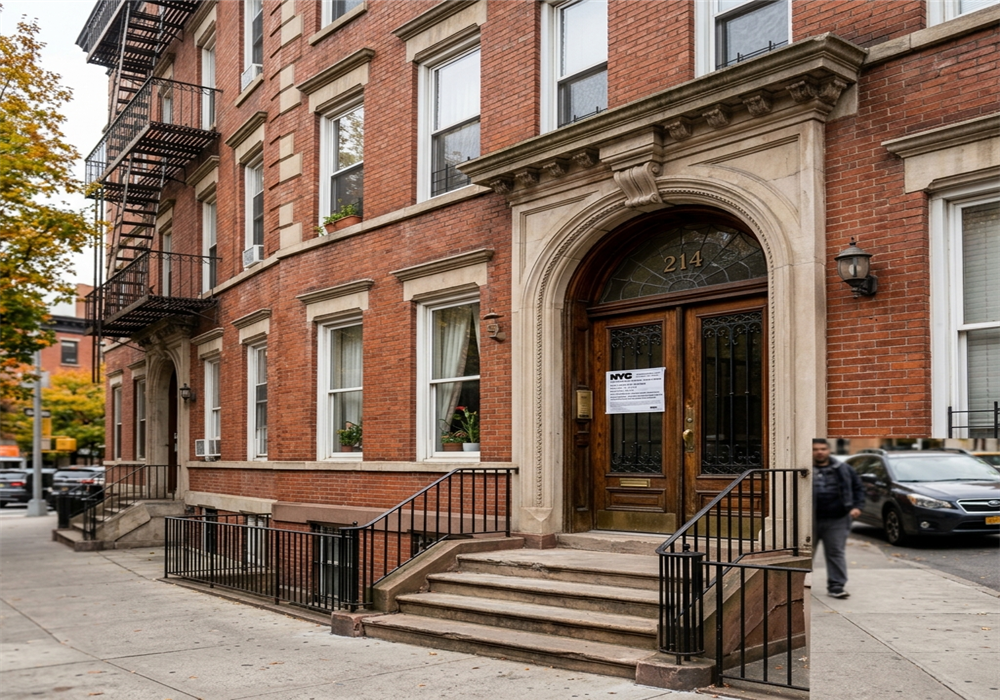
When New York City property owners receive a Department of Buildings (DOB) violation, one of the first things they notice is the violation class. The notice may identify the issue as Class 1, Class 2, or Class 3.
Many owners overlook this detail.
Others assume the class is simply an administrative label with little practical meaning.
In reality, the classification provides important information about how the city views the seriousness of the condition. While every violation deserves attention, the class designation helps owners understand the level of urgency, organize compliance priorities, and allocate resources more effectively.
Understanding class 1 class 2 class 3 DOB violations NYC is essential for anyone responsible for managing buildings, maintaining compliance, or overseeing multiple properties.
Rather than treating every violation the same, owners should use the classification system as one tool for deciding which issues require immediate field action and which require administrative follow-up.
Why DOB Uses Violation Classifications
New York City's Department of Buildings oversees an enormous number of buildings with different occupancy types, construction methods, and compliance issues.
Not every violation presents the same level of concern.
Some conditions require immediate attention because they may affect life safety.
Others involve important compliance matters but present less immediate risk.
The classification system helps distinguish between these different situations.
It allows:
- Building owners to prioritize corrective action.
- Property managers to organize compliance work.
- Inspectors to communicate severity.
- Professionals to coordinate appropriate responses.
- Portfolio managers to allocate resources efficiently.
The classification does not replace the need to read the violation carefully, but it provides useful context.
Understanding the Three Violation Classes
DOB violations are generally organized into three categories. These are Class 1, Class 2, and Class 3. Each represents a different level of severity.
The classification should influence how owners prioritize their response, although every violation should still be reviewed individually.
Class 1 Violations
Class 1 violations are generally considered the most serious category. They are commonly associated with conditions that the Department of Buildings considers immediately hazardous. Because these situations may involve safety concerns, owners should respond without unnecessary delay.
Examples of issues sometimes associated with higher-priority violations may include:
- Dangerous building conditions
- Certain life-safety concerns
- Unsafe construction conditions
- Serious occupancy issues
- Certain permit-related enforcement matters
The specific corrective action depends on the wording of the violation itself. Owners should never assume that every Class 1 violation requires the same response.
Why Class 1 Violations Require Immediate Attention
When a condition is classified at the highest level, owners should avoid treating it as routine paperwork. Instead:
- Read the notice immediately.
- Understand the cited condition.
- Secure any unsafe conditions if applicable.
- Contact appropriate professionals.
- Begin gathering required documentation.
- Review deadlines and procedural requirements.
Waiting until administrative deadlines approach may increase risk if unsafe conditions remain unaddressed.
Class 2 Violations
Class 2 violations are generally considered major violations but are not necessarily categorized as immediately hazardous in the same manner as Class 1. These violations still deserve prompt attention.
Ignoring them may lead to:
- Ongoing compliance issues
- Additional enforcement
- Delays during property transactions
- Administrative complications
Owners should review Class 2 violations carefully and determine:
- What corrective work is required.
- Whether documentation must be submitted.
- Whether permits are needed.
- Whether inspections or certifications are required.
Why Class 2 Violations Still Matter
Some owners mistakenly assume that anything less than Class 1 can wait indefinitely. That assumption often creates larger administrative problems later. Even if immediate safety concerns are not present, unresolved Class 2 violations may affect:
- Property management
- Building records
- Financing
- Insurance reviews
- Future inspections
- Property sales
Prompt action generally reduces long-term complications.

Class 3 Violations
Class 3 violations are generally considered less severe than Class 1 or Class 2. However, "less severe" should not be confused with "unimportant."
Open Class 3 violations may still:
- Appear during due diligence.
- Raise questions during refinancing.
- Affect property transactions.
- Require documentation.
- Influence future compliance reviews.
Owners should continue tracking and resolving these matters even if they do not require immediate emergency action.
Why Owners Should Not Ignore Class 3 Violations
Administrative issues often begin with smaller unresolved matters. Over time, multiple open violations can complicate:
- Compliance reviews
- Portfolio management
- Property sales
- Building audits
- Insurance renewals
Maintaining clean records is generally easier than reconstructing compliance history years later.
The Classification Is a Triage Tool
One useful way to think about the classification system is as a triage process. Just as medical professionals prioritize patients based on urgency, property managers can prioritize violations based on their assigned class:
Highest Priority (Class 1): Immediate review and response.
High Priority (Class 2): Prompt corrective planning.
Ongoing Compliance (Class 3): Administrative tracking and timely resolution.
The classification helps organize work. It does not eliminate the need to understand the specific violation.
Every Violation Must Still Be Read Carefully
A common mistake is responding only to the classification. Owners should instead review:
- Violation description
- Correction requirements
- Compliance deadlines
- Hearing requirements
- Filing obligations
- Certification requirements
- Inspection requirements
The class provides context. The notice provides instructions. Both are important.
What Should Owners Do After Receiving a Violation?
Regardless of classification, several basic steps remain useful:
Step One
Read the violation carefully.
Step Two
Confirm the cited condition exists.
Step Three
Determine the required corrective action.
Step Four
Identify applicable deadlines.
Step Five
Understand whether permits are required, certification is required, reinspection is necessary, or professional documentation must be submitted.
Step Six
Maintain organized records.
Why Active Unsafe Conditions Should Never Wait
If a violation identifies an active unsafe condition, owners should prioritize addressing the condition itself rather than focusing only on paperwork. Correcting hazardous conditions promptly may help reduce additional risks while administrative requirements are completed.
Portfolio Management Becomes Easier with Classification
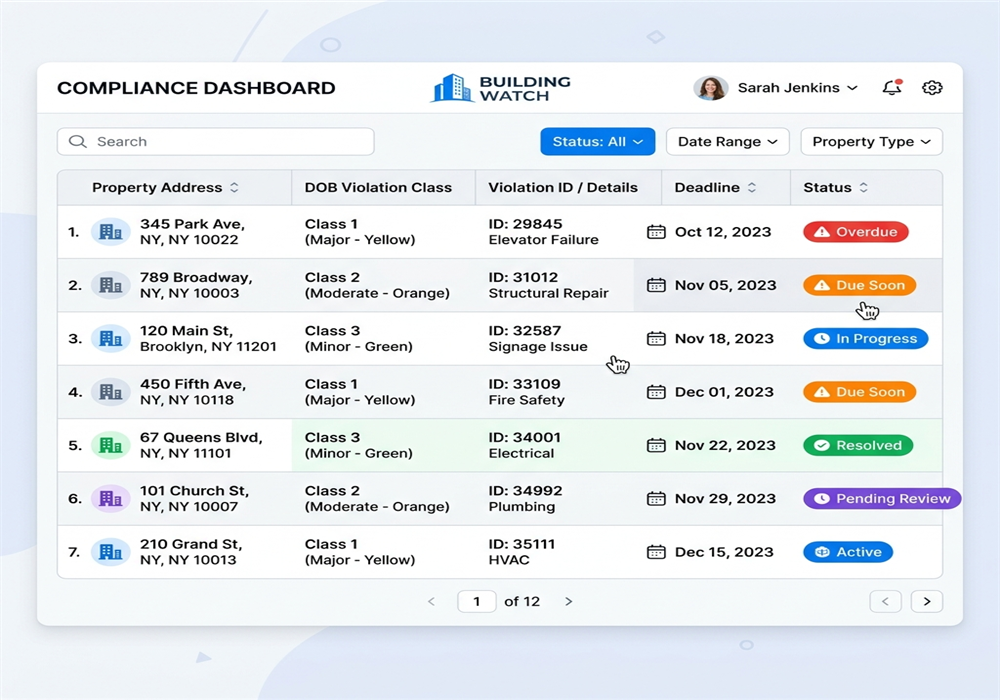
Property management companies often oversee dozens or hundreds of buildings. Without organization, compliance becomes difficult. Rather than maintaining one long list of violations, owners should organize records by:
- Property
- Violation class
- Issue date
- Status
- Correction deadline
- Compliance type
This approach allows management teams to prioritize resources more effectively.
Building a Portfolio Compliance Tracker
An effective compliance tracker helps ensure that higher-priority matters receive immediate attention. A typical portfolio spreadsheet may include:
| Field | Purpose |
|---|---|
| Property Address | Identify location |
| BIN | Building Identification Number |
| BBL | Borough, Block, Lot |
| Violation Number | Record reference |
| Violation Class | Priority level |
| Issue Date | Timeline tracking |
| Current Status | Open or resolved |
| Responsible Party | Accountability |
| Deadline | Compliance planning |
| Documentation | Record management |
Why Good Documentation Matters
Owners should retain:
- Original violation notices
- Inspection reports
- Payment receipts
- Correction documentation
- Professional certifications
- Filing confirmations
- Correspondence
- Updated status records
Well-organized documentation supports future compliance reviews.
Where Should Owners Check Their Records?
Property information may appear across several NYC systems. Depending on the age and type of record, owners may review:
- DOB NOW Public Portal
- Building Information System (BIS)
- NYC Open Data
Older buildings often require checking more than one system to understand the complete compliance history.
Payment Does Not Always Resolve Everything
One misconception appears repeatedly: owners believe paying a penalty automatically closes the violation.
Depending on the circumstances, additional requirements may still include:
- Correction documentation
- Professional certification
- Permit completion
- Reinspection
- Filing acceptance
Owners should verify the final status after every required step has been completed.
Common Mistakes Property Owners Make
Examples include:
- Ignoring Class 3 violations.
- Treating every violation identically.
- Responding only after deadlines.
- Losing documentation.
- Assuming payment closes compliance.
- Not verifying updated records.
- Failing to prioritize Class 1 issues.
Most of these problems are avoidable with better organization.
Best Practices for Managing DOB Violations
Owners can improve compliance by:
- Reviewing every violation immediately.
- Prioritizing according to classification.
- Correcting unsafe conditions promptly.
- Tracking deadlines carefully.
- Organizing digital compliance files.
- Saving all correspondence.
- Reviewing public records regularly.
- Maintaining portfolio spreadsheets.
Simple organizational systems often produce significant long-term benefits.
A Practical Violation Priority Checklist
For every new violation, confirm:
- ✔ Violation class identified
- ✔ Notice reviewed
- ✔ Unsafe conditions evaluated
- ✔ Correction requirements understood
- ✔ Deadlines recorded
- ✔ Responsible professional assigned
- ✔ Documentation organized
- ✔ Public record reviewed
- ✔ Status monitored
- ✔ Final closure verified
Using a checklist helps ensure that every violation receives the appropriate level of attention.
Bottom Line
The violation class is not just another administrative code. It is an important tool that helps property owners understand how urgently the Department of Buildings expects a response.
Class 1 violations generally require the most immediate attention because they often involve conditions considered immediately hazardous.
Class 2 violations remain significant and should be addressed promptly to prevent future compliance problems.
Class 3 violations may appear less urgent, but they should still be tracked and resolved because open records can affect property management, financing, insurance, and future transactions.
Understanding the classification helps owners prioritize—but the violation notice itself always provides the specific instructions that must be followed.
Conclusion
Understanding class 1 class 2 class 3 DOB violations NYC allows property owners and managers to respond more effectively when enforcement issues arise. Rather than viewing every violation as identical, owners should use the classification system to prioritize field work, organize administrative tasks, and allocate compliance resources across their properties. At the same time, every notice should be reviewed individually to determine the specific corrective actions, deadlines, and documentation requirements that apply.
By combining careful review of the violation notice with organized recordkeeping and regular monitoring of DOB records, owners can reduce compliance risks while maintaining cleaner building records over time.
Frequently Asked Questions
Why should owners care about Class 1, Class 2, and Class 3 DOB violations?
Because the classification helps indicate how urgently the Department of Buildings considers the issue. It also assists owners in prioritizing repairs, organizing compliance work, and managing building risks.
What does a Class 1 violation generally mean?
A Class 1 violation is generally considered immediately hazardous and should receive immediate attention. Owners should carefully review the notice to understand the specific corrective actions required.
Are Class 2 and Class 3 violations less important?
They may be considered less severe than Class 1, but they still require attention. Leaving them unresolved can affect property transactions, financing, insurance reviews, and future compliance.
Where should I check my building records?
Owners commonly review the DOB NOW Public Portal, the Building Information System (BIS), and NYC Open Data, depending on the age and type of the records involved.
Does paying the penalty automatically close the violation?
Not always. Depending on the violation, owners may also need to complete corrective work, submit certifications, obtain permits, undergo reinspection, or provide additional documentation.
What is the best way to manage violations across multiple buildings?
Maintain a portfolio tracker that organizes violations by property, classification, issue date, status, deadlines, and required actions. This helps ensure that the highest-priority issues receive attention first.
You may also
like