Learn the practical MEP considerations, electrical service requirements, and engineering challenges of replacing steam boilers with heat pumps.
BY NYC Energy Code Team
ON
15 September 2026
Understanding Submetering and Its Role in Energy Accountability
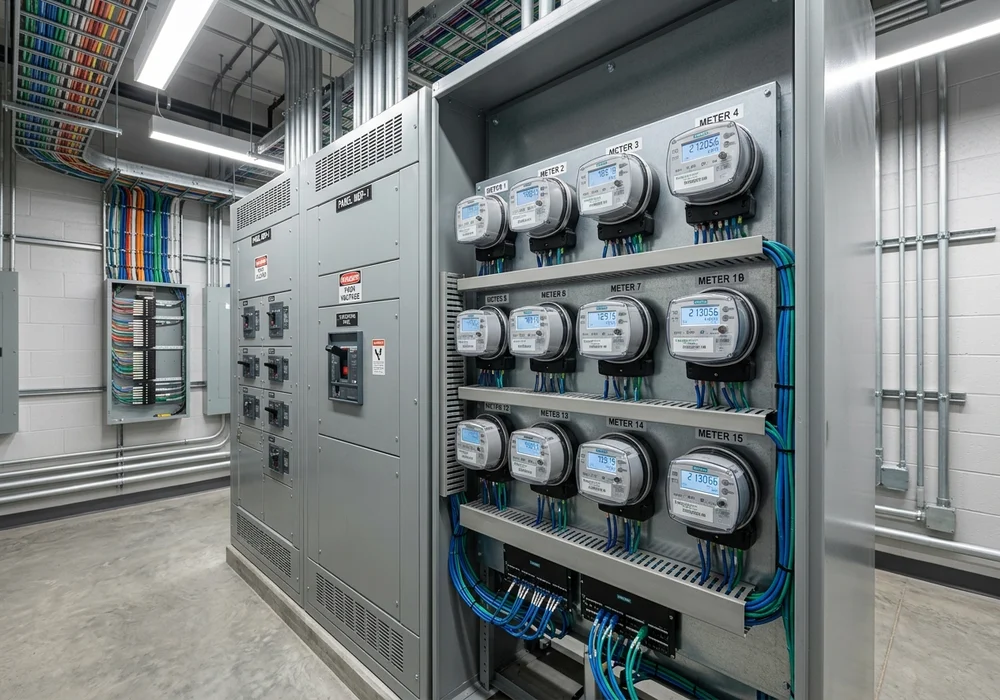
A building's main utility meter can tell an owner how much electricity the entire property consumes, but it does not always show who is using that energy or where it is being consumed.
That is where energy submetering becomes useful.
A submeter measures energy consumption for a specific area, tenant, floor, system, or piece of equipment. Instead of seeing only total building consumption, owners and managers can gain a more detailed picture of how electricity is being used.
For NYC commercial buildings, submetering also has a direct regulatory connection. Local Law 88 requires certain covered buildings to install electrical submeters for covered tenant spaces and provide monthly energy statements.
Regulatory & Operational Impact
Submetering bridges the gap between whole-building energy tracking and individual tenant responsibility. By transforming opaque utility bills into itemized, real-time consumption data, submeters empower property teams to comply with NYC LL88, eliminate tenant billing disputes, and systematically uncover hidden operational waste.
What Is Energy Submetering?
A submeter is a measurement device installed downstream of a building's primary utility meter within its internal electrical distribution panels.
While the main utility meter records aggregate property power:
Entire building
Total utility electricity consumption
Submeters provide granular, isolated consumption data:
Tenant A: 20,000 kWh/mo
Tenant B: 8,000 kWh/mo
Tenant C: 35,000 kWh/mo
Depending on the system design, submeters can also measure electricity used by specific building systems, equipment banks, or dedicated end uses. This creates a much more detailed picture of energy consumption throughout the facility.
Main Utility Meter vs. Submeter
Understanding the operational division between primary utility meters and internal submeters is foundational for energy management.
| Feature | Main Utility Meter | Energy Submeter |
|---|---|---|
| Measurement Scope | Measures overall whole-building consumption | Measures a defined tenant space, floor, or equipment load |
| Ownership & Service | Owned or governed by the utility (e.g., Con Edison) | Owned by property, installed in building switchgear |
| Data Granularity | Provides macro whole-facility kWh and peak kW | Provides interval data by tenant, circuit, or system |
| Tenant Insights | No visibility into individual tenant behaviors | Precisely allocates usage to individual tenant spaces |
| Primary Function | Utility billing, overall benchmarking, grid connection | Cost allocation, LL88 compliance, energy accountability |
Neither meter replaces the other. The main meter provides the property's overall consumption baseline, while submeters add the crucial layer of diagnostic granularity.
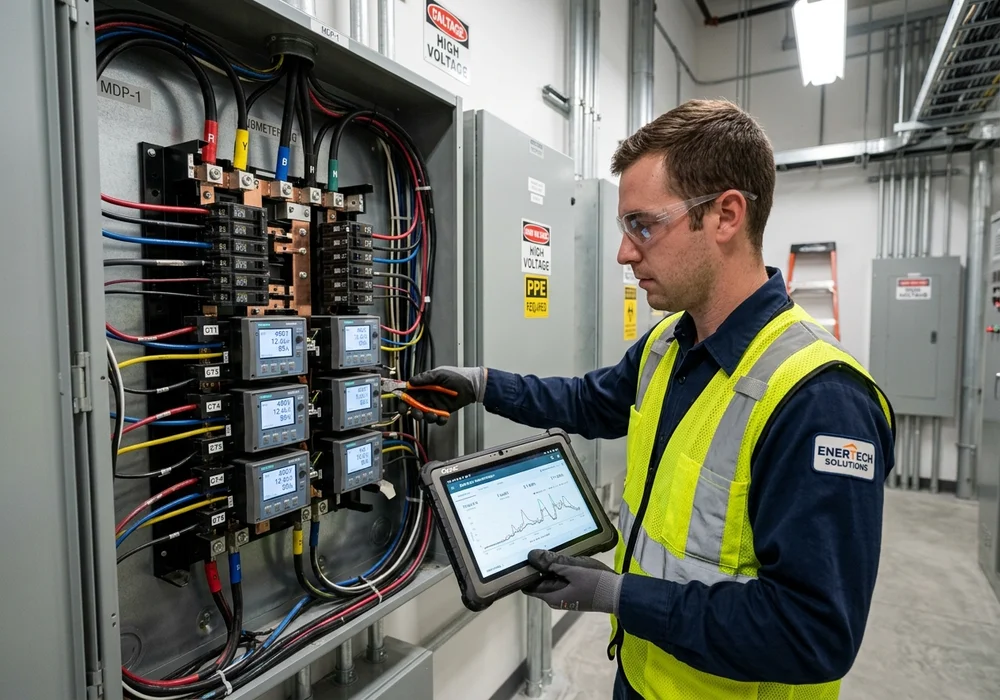
Why Submetering Improves Energy Accountability
One major problem in multi-tenant buildings is that occupants may not directly see how much energy they consume. In unmetered commercial leases, electricity is often billed on a flat square-footage basis (prorated rent), meaning tenants who waste energy bear no direct financial penalty, while conservative tenants subsidize wasteful neighbors.
Consider three commercial tenants occupying identical floor plates:
- Tenant A (Professional Services): 20,000 kWh/month — standard office schedule
- Tenant B (Consulting Firm): 8,000 kWh/month — hybrid workforce, efficient controls
- Tenant C (Media / Trading Firm): 35,000 kWh/month — high server density, 24/7 operations
Without individual measurement, the owner sees only a lump-sum monthly total. With submetering, unusually high consumption becomes transparent immediately. This creates true energy accountability because tenants pay for what they actually use and can monitor their own consumption trends.
NYC regulatory studies have specifically demonstrated that receiving regular energy statements encourages non-residential commercial tenants to curtail unnecessary after-hours loads and reduce electricity use by 10% to 20%.
How Submetering Supports Tenant Energy Statements
Under NYC's LL88 mandates, covered tenant spaces must have electrical submetering installed, and building owners must provide monthly statements to each tenant or subtenant detailing measured electricity and applicable charges.
A simplified monthly tenant statement includes:
| Statement Component | Reported Data (Example) |
|---|---|
| Billing Period | August 1 – August 31 (31 Days) |
| Active Energy Measured | 18,500 kWh |
| Peak Demand Recorded | 62.4 kW |
| Applicable Utility Energy Rate | $0.185 per kWh |
| Total Electricity Charge Due | $3,422.50 |
The exact format and billing methodology must comply with New York Public Service Commission (PSC) regulations and lease agreements.
Which NYC Buildings Are Covered by LL88?
NYC Department of Buildings (DOB) guidance identifies covered buildings under Local Law 88 (incorporated into NYC Administrative Code § 28-311) as:
- A single commercial building exceeding 25,000 gross square feet
- Two or more commercial buildings on the same tax lot that together exceed 100,000 gross square feet
- Two or more commercial condominium buildings governed by the same board that together exceed 100,000 gross square feet
Tenant Space Size Threshold
Within a covered building, a covered tenant space is defined as a space leased to a commercial tenant that exceeds 5,000 gross square feet, or an entire floor leased to a tenant regardless of square footage. Spaces served by dedicated direct utility meters that exclusively serve that space are exempt from installing additional submeters.
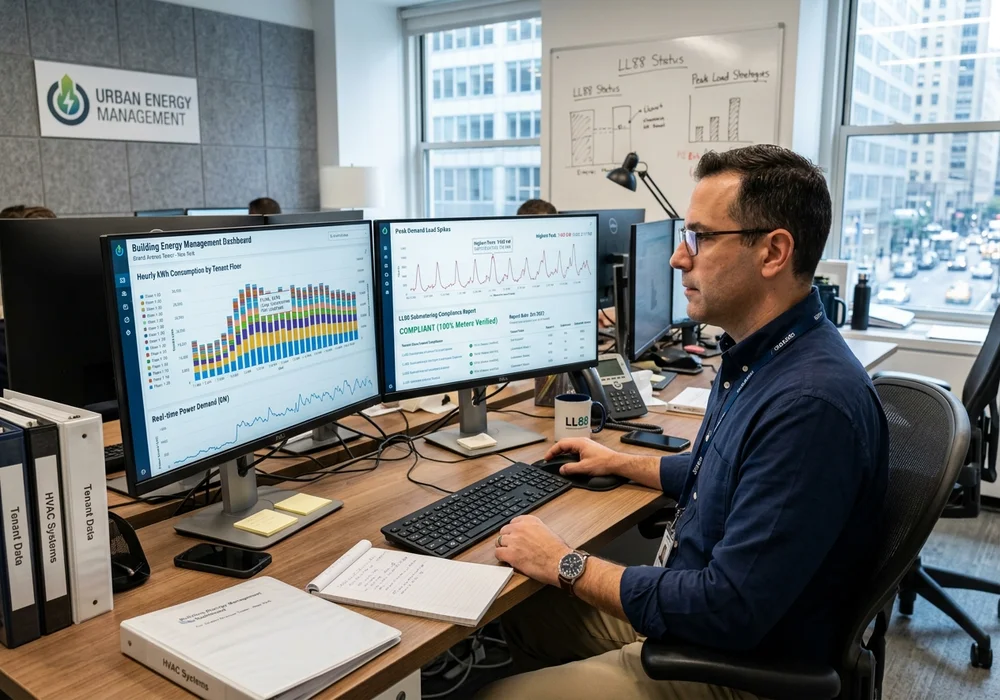
How Submetering Helps Find Energy Waste
Submetering is indispensable because total consumption does not explain the cause of consumption.
Suppose a building's overall monthly electricity bill suddenly spikes by 18%:
Whole-Building Consumption: +18%
Root Cause: Unknown
Without submeters, building engineers would spend days testing mechanical rooms. With submetering, interval data instantly pinpoints the source:
Tenant A: Normal (±1%)
Tenant B: Normal (-2%)
Tenant C: +45% Demand Spike
Facility teams can immediately inspect Tenant C's floor to identify common culprits:
- Override thermostats running supplementary DX units continuously over weekends
- Failed occupancy sensors leaving hundreds of fluorescent or LED fixtures illuminated overnight
- Unmonitored server closet supplemental cooling systems operating simultaneously
- Heavy commercial kitchen or refrigeration defrost heaters stuck on active cycle
- High plug-load anomalies from unauthorized high-draw appliances
Submetering and Energy Benchmarking (LL84 vs. LL88)
Submetering and whole-building benchmarking serve distinct but complementary roles in NYC building management:
LL84 Benchmarking
Macro-Level Performance
Answers: "How does the building perform overall compared to peer properties?" Reports annual whole-building kWh, therms, and water use to Portfolio Manager to produce an Energy Star grade.
LL88 Submetering
Micro-Level Diagnostics
Answers: "Where, when, and by whom is the energy being consumed inside the building?" Isolates tenant floors and major mechanical circuits on a monthly or 15-minute interval basis.
Combining both compliance frameworks provides building owners with the high-level compliance score and the surgical engineering data required to lower Local Law 97 carbon emissions.
Submetering Different Building MEP Loads
Submetering does not have to stop at tenant demarcations. Forward-thinking property operators instrument major mechanical, electrical, and plumbing infrastructure to monitor critical facility loads:
Total Electricity
Central HVAC & Chillers
Lighting Risers
EV Charging Stations
Elevator Banks
Breaking down consumption into operational buckets allows engineering teams to benchmark chiller efficiency (kW/ton), track common-area lighting runtimes, and prevent EV charging banks from creating unexpected peak coincident demand charges.
Submetering and Building Automation Systems (BAS)
Modern digital submeters utilize open communication protocols (such as BACnet MS/TP, BACnet IP, or Modbus) to stream real-time data directly into Building Automation Systems (BAS) or cloud energy management software.
A fully integrated submetering network enables:
Real-time telemetry
Historical load baselines
Automated peak alerts
Automated tenant billing
When an unexpected consumption anomaly occurs outside normal business hours, the system can automatically send notifications to building engineers to investigate before thousands of dollars in wasted electricity are billed.
Measurement & Verification (M&V) for Efficiency Projects
Submetering provides concrete verification when proving that an energy-efficiency capital upgrade delivered its anticipated return on investment (ROI).
Consider a floor undergoing an LED lighting and smart occupancy sensor retrofit:
- Pre-Retrofit Submetered Baseline: 25,000 kWh/month on lighting panel LP-4
- Post-Retrofit Measured Performance: 15,000 kWh/month on lighting panel LP-4
- Verified Energy Reduction: 10,000 kWh/month (40% measured savings)
Without a dedicated submeter, those lighting savings would be obscured by seasonal chiller fluctuations or tenant computer loads on the main utility bill.
Common Submetering Mistakes to Avoid
Installing Hardware Without a Data Management Strategy: Submeters that are installed but never connected to a digital reader or dashboard generate no actionable intelligence and risk non-compliance.
Ignoring Existing Direct Utility Meters: Installing submeters in spaces that already have dedicated utility meters is redundant and unnecessary under NYC DOB rules.
Incorrect CT Sizing or Orientation: Installing improperly rated Current Transformers (CTs) or reversing polarity leads to inaccurate current readings, zero-draw errors, and flawed billing.
Failing to Format Statements for Tenants: Delivering confusing raw engineering data rather than clear, formatted monthly utility statements leads to billing disputes and delayed payments.
Treating Submetering as Merely a Code Box to Check: Stopping at compliance misses the primary commercial benefit: reducing building-wide peak demand charges and supporting LL97 carbon penalty reduction.
NYC LL88 Reporting Requirements & Penalties
To demonstrate compliance with Local Law 88, covered building owners must file an official compliance report with the NYC Department of Buildings. The filing requires:
- A comprehensive list of all covered commercial tenant spaces within the property
- Professional attestation (stamped by a Registered Architect or Professional Engineer) certifying that the required submeters have been correctly installed and commissioned
- A sample monthly electricity statement meeting NYC Administrative Code standards
DOB Penalty Structure
Failure to file an initial or annual LL88 submetering compliance report carries a $1,500 annual fine from the DOB. In addition, failure to install submeters for covered tenant spaces can result in additional violations and ongoing penalties per non-compliant tenant space.
Energy Accountability & Submetering Checklist
Review building square footage against LL88 thresholds (>25,000 sq. ft. single building; >100,000 sq. ft. multiple lots).
Audit all tenant spaces exceeding 5,000 gross sq. ft. or full-floor commercial occupancies.
Identify existing dedicated utility meters that qualify for NYC DOB exemptions.
Select revenue-grade, ANSI C12.20 certified digital submeters with BACnet or Modbus communications.
Coordinate electrical shutdown schedules for CT installation in distribution switchboards.
Establish an automated data collection gateway or integration with building automation systems.
Implement standardized, transparent monthly tenant billing statements.
Set automated alert thresholds for unexplained after-hours energy spikes.
Have a Registered Architect or Professional Engineer certify the submetering compliance report.
File official compliance documentation with DOB NOW to avoid the $1,500 annual penalty.
Conclusion
Energy submetering gives building owners and tenants an accurate, actionable view of electricity consumption. Instead of seeing only a single macro utility bill, owners can isolate exactly how much power individual tenant spaces, lighting risers, and central MEP systems consume.
That visibility fosters real energy accountability, eliminates cross-tenant subsidization, uncovers operational waste, and delivers verified measurement for energy retrofits.
For NYC commercial properties, submetering also satisfies compliance obligations under Local Law 88. However, the greatest long-term payoff extends beyond avoiding fines: by transforming raw power data into tenant accountability, submetering becomes an indispensable tool in decarbonizing commercial real estate and meeting Local Law 97 emissions targets.
Frequently Asked Questions
A submeter is a secondary energy meter that measures electricity consumption for a specific tenant space, area, system, or equipment load rather than the entire building.
For certain covered buildings and tenant spaces, yes. LL88 requires applicable non-residential buildings to install electrical submeters for covered tenant spaces, subject to specified requirements and exceptions.
A covered tenant space is generally a tenant space larger than 5,000 gross square feet, subject to the detailed definitions and exceptions in the law.
Submetering itself does not reduce electricity use. It provides information that can help owners and tenants identify waste and make operational or efficiency improvements.
Yes. Many modern metering systems can transmit consumption data to energy-management or building automation platforms, allowing operators to track trends and identify unusual usage.
LL84 focuses on annual whole-building energy and water benchmarking through ENERGY STAR Portfolio Manager. Submetering provides more granular consumption information for individual tenant spaces or systems.