Discover how simulation models help building owners optimize energy performance and control costs.
BY NYC Energy Code Team
ON
17 August 2026
Retro-Commissioning vs Retrofitting: What's the Difference?
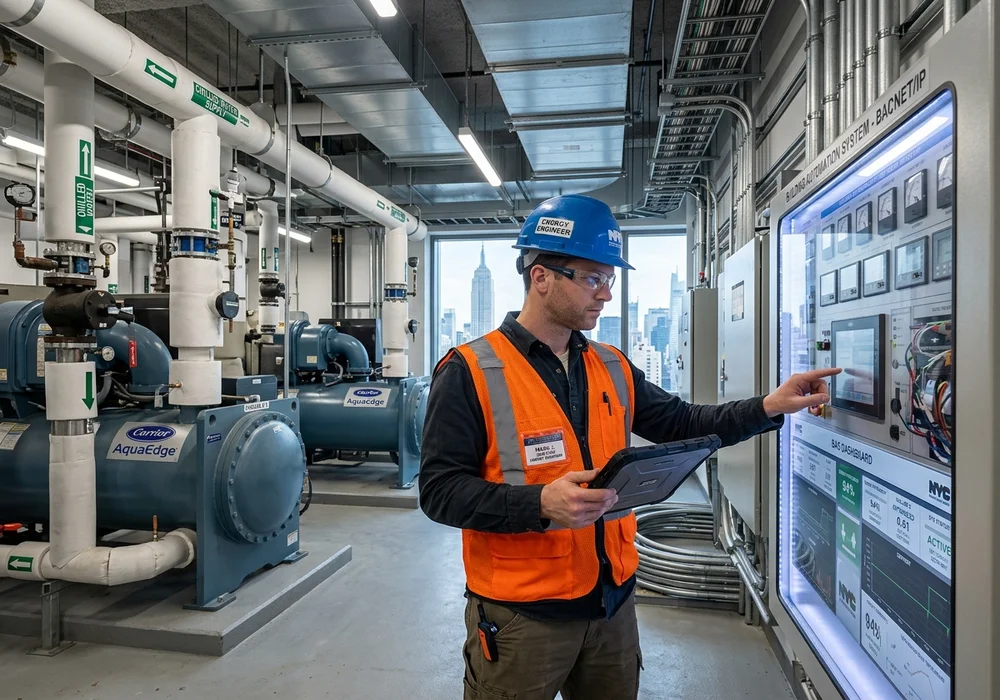
The words retro-commissioning and retrofitting sound similar, but they describe two very different approaches to improving an existing building.
A retrofit usually means changing or replacing equipment or building components. Retro-commissioning is more about making existing systems work properly and efficiently.
That distinction matters for NYC building owners. Sometimes a building doesn't need expensive new equipment. The HVAC system may simply be poorly scheduled, badly controlled, or operating differently from the way it was intended.
Other times, the equipment really is too old or inefficient and needs to be replaced.
What Is Retro-Commissioning?
Retro-commissioning, often called RCx, is a systematic process for checking whether an existing building's energy systems are operating as intended and according to the owner's current needs.
Under NYC Local Law 87, retro-commissioning is part of the required process for covered buildings. The NYC Department of Buildings describes it as ensuring that existing energy systems function properly, are tested, and can be operated and maintained according to the owner's operational needs.
The focus is usually on existing base-building systems such as:
HVAC Systems
Air handlers, chillers, cooling towers, ventilation fans, dampers, and variable air volume (VAV) boxes.
Domestic Hot Water
Water heaters, recirculation pumps, storage tanks, and temperature mixing valves.
Lighting Controls
Occupancy sensors, daylight harvesting systems, astronomical timeclocks, and scheduled relays.
Building Automation & Controls
Thermostat calibrations, setpoint deadbands, economizer controls, and sensor calibration.
Electrical Systems
Motors, variable frequency drives (VFDs), power distribution, and load scheduling.
Base-Building Systems
Exhaust systems, pressure balancing, envelope penetrations, and interlocked mechanical equipment.
The goal of retro-commissioning is to find operational problems that may be wasting energy, causing tenant discomfort, or driving up utility bills unnecessarily.
What Is Retrofitting?
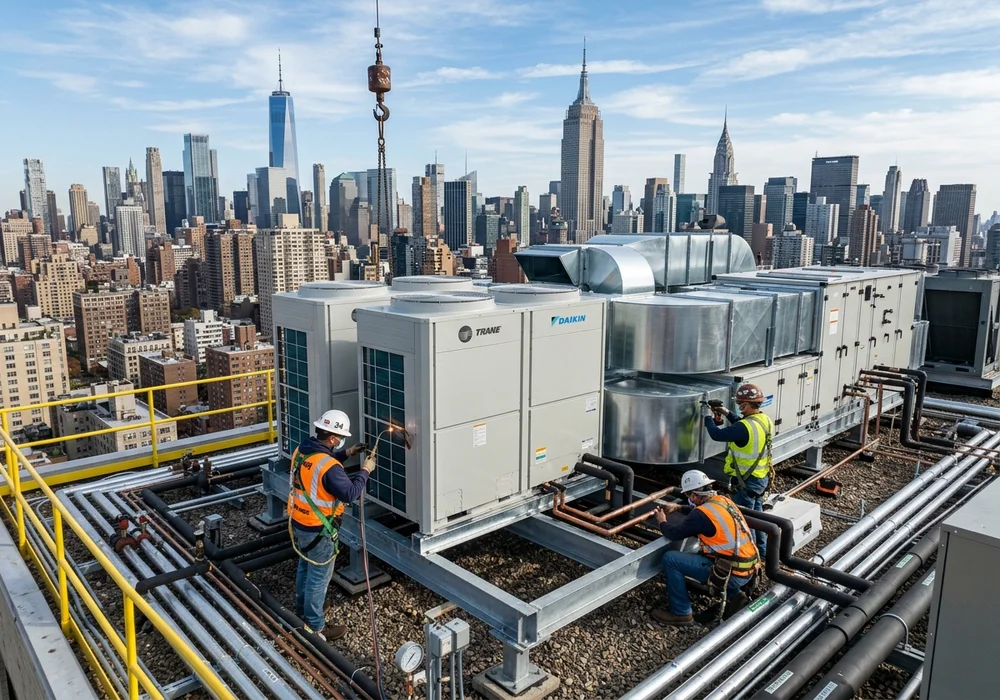
A retrofit involves physically upgrading or replacing part of an existing building with new, higher-performing components or modern machinery.
Examples of typical commercial and residential building retrofits include:
- Replacing an old boiler: Converting aging atmospheric steam boilers to modular condensing hydronic units.
- Installing high-efficiency HVAC equipment: Upgrading legacy rooftop units (RTUs) or water-source heat pumps.
- Upgrading lighting to LED: Replacing fluorescent fixtures with intelligent, dimmable LED arrays.
- Replacing inefficient pumps: Installing modern electronically commutated motors (ECM) and variable flow pumping systems.
- Adding building automation controls: Installing a modern direct digital control (DDC) Building Management System (BMS).
- Improving insulation: Upgrading pipe insulation, roof thermal barriers, and air sealing building facades.
- Installing heat pumps: Electrifying heating and cooling systems to reduce fossil fuel use under Local Law 97.
A retrofit usually involves capital spending, design engineering, equipment procurement, and contractor construction work.
Retro-Commissioning
"Is the equipment we already have working correctly?"
Focuses on fine-tuning operating sequences, calibrating sensors, correcting runtime schedules, and ensuring systems perform as originally intended without buying new hardware.
Retrofitting
"Should we replace or upgrade the equipment we already have?"
Focuses on physical hardware replacements, equipment modernization, electrification, and capital investments to elevate building capability beyond original design limits.
The Difference in Plain English
Think of it this way: retro-commissioning tunes up the engine you already have, while retrofitting installs a brand-new hybrid motor. A building may need one, the other, or both depending on its age, equipment condition, and decarbonization roadmap.
| Retro-Commissioning (RCx) | Retrofitting |
|---|---|
| Optimizes existing systems already installed in the building | Replaces or upgrades systems with new equipment |
| Focuses on operation and controls, scheduling, and sensor accuracy | Focuses on physical improvements and hardware installation |
| Often identifies low-cost fixes with rapid financial payback | Usually requires capital investment and formal budgeting |
| Tests system performance through functional testing | Installs new equipment or components via contractors |
| Commonly supports LL87 compliance on a 10-year cycle | May support broader energy goals & LL97 emissions caps |
When Does Retro-Commissioning Make Sense?
Retro-commissioning is particularly useful when equipment appears functional and mechanically intact, but the building still consumes significantly more energy than expected or receives persistent occupant complaints.
Common warning signs that indicate retro-commissioning is needed include:
Key Warning Signs for RCx
- HVAC schedules don't match occupancy: Heating or air conditioning runs at full blast during nights and weekends when spaces are vacant.
- Equipment runs when spaces are empty: Exhaust fans, pumps, and air units continue uninterrupted 24/7.
- Temperature controls are inconsistent: Tenants experience hot and cold spots across different floors and zones.
- Sensors are inaccurate: Drifted temperature, humidity, and static pressure sensors feed bad data to automation controllers.
- Simultaneous heating and cooling occurs: Reheat coils fight active chiller loops, wasting thousands of therms and kilowatt-hours.
- Building automation settings are outdated: Seasonal setbacks and economizer modes have been overridden or disabled by operators.
These problems don't necessarily require new equipment. A qualified professional engineer or commissioning agent can often correct the problem through controls tuning, schedule corrections, damper calibration, or minor sequence modifications.
When Does Retrofitting Make More Sense?
Retrofitting becomes the superior option when equipment is genuinely outdated, near the end of its useful life, or incapable of meeting modern efficiency standards regardless of how well it is controlled.
For example, if a boiler is 35 years old, heavily scaled, and requires frequent emergency maintenance calls, continuing to spend resources fine-tuning it yields diminishing returns.
A well-planned physical equipment replacement provides:
- Substantially higher energy efficiency: Modern equipment utilizes inverter-driven compressors, condensing heat exchangers, and EC motors.
- Lower recurring maintenance: New systems come with warranties and require fewer emergency repairs.
- Better operational reliability: Reduces risk of catastrophic mid-winter heating failures or mid-summer cooling outages.
- Improved occupant comfort & IAQ: Advanced modulation prevents temperature swings and improves indoor air quality.
- Lower greenhouse gas emissions: Directly helps buildings avoid steep carbon penalties under NYC Local Law 97.
Why NYC Owners Should Know the Difference
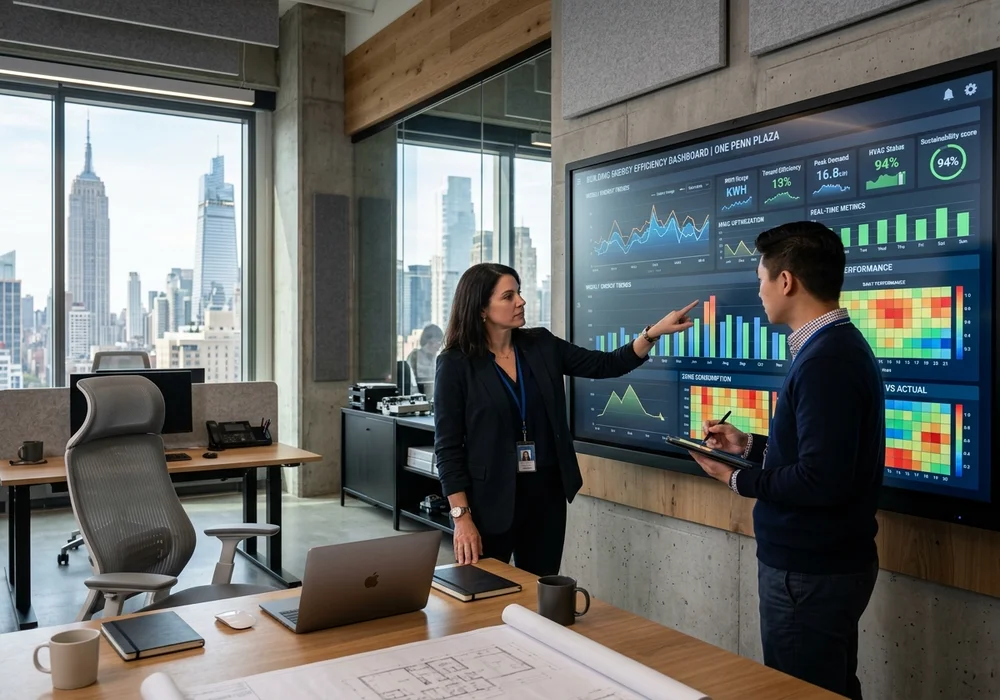
For covered properties in NYC (generally buildings over 50,000 square feet or groups of buildings on a tax lot exceeding 100,000 square feet), Local Law 87 mandates both an ASHRAE Level II energy audit and a comprehensive retro-commissioning study every ten years.
The resulting Energy Efficiency Report (EER) submitted to the NYC Department of Buildings summarizes both operational findings and capital upgrade recommendations.
That doesn't mean every recommendation automatically requires a six-figure retrofit. An RCx process frequently reveals that a property can eliminate 5% to 15% of total building energy waste through low-cost operational improvements. In other cases, the engineering data will clearly justify major capital equipment replacement.
Understanding the distinction protects owners from spending limited capital on equipment when a low-cost control adjustment could solve the problem—or wasting time tuning obsolete hardware that truly needs replacement.
A Smart Approach: Start With the Existing Building
Before ordering expensive major equipment replacements, property owners and asset managers should establish an accurate diagnostic baseline. A practical, cost-effective sequence looks like this:
1 Review Utility Consumption
Analyze 24 to 36 months of electric, gas, and steam consumption data alongside NYC Local Law 84 benchmarking records.
2 Inspect Existing Equipment
Conduct thorough mechanical room walkthroughs, noting equipment age, nameplate data, maintenance logs, and physical condition.
3 Perform an Energy Audit
Execute an ASHRAE Level II audit to evaluate thermal loads, system efficiencies, and cost-benefit ratios of various measures.
4 Retro-Commission Existing Systems
Perform functional performance testing on existing chillers, boilers, pumps, and air handling controls.
5 Identify & Implement Operational Improvements
Correct sensor errors, restore night setback schedules, balance airflows, and fix damper linkages first.
6 Evaluate Equipment That Genuinely Needs Replacement
Identify legacy assets that remain inefficient or unreliable despite operational optimization.
7 Develop a Targeted Retrofit Budget
Create capital expenditure projections, calculate ROI, and secure applicable NYSERDA and Con Edison utility incentives.
8 Measure Performance After the Work
Monitor post-implementation energy consumption to verify sustained energy reductions and carbon compliance.
This structured approach clearly separates operational problems from equipment problems, ensuring every dollar invested achieves maximum impact.
Scenario A: RCx Can Come First
Suppose a midtown commercial office building faces unusually high winter heating costs. The owner might consider immediately replacing the boilers. However, a retro-commissioning investigation reveals the boiler controls are operating on an outdated 24-hour schedule, overheating unoccupied floors at 3:00 AM. Reprogramming the sequence fixes the problem at a fraction of the cost.
Scenario B: Retrofitting Is Necessary
Conversely, a residential high-rise may have perfectly tuned temperature setpoints, yet its 30-year-old atmospheric boilers still operate at only 68% seasonal efficiency. No amount of controls tuning can alter the basic thermodynamics of the obsolete burners. In this case, retrofitting with high-efficiency condensing units or heat pumps is the right solution.
Bottom Line
Retro-commissioning and retrofitting are not competing strategies—they solve different problems.
Retro-commissioning improves how existing systems operate. Retrofitting improves the systems themselves.
For NYC property owners and managers, the most effective strategy is always to understand the existing building first, resolve operational defects through RCx, and then invest in capital equipment upgrades where they deliver tangible financial and environmental returns.
Frequently Asked Questions
No. Retro-commissioning focuses on optimizing and tuning existing equipment and controls so they work as intended. Retrofitting involves physically replacing, upgrading, or installing new building components and mechanical systems.
Yes. Under NYC Local Law 87 (LL87), covered buildings must complete both an energy audit and a retro-commissioning study once every ten years, submitting an Energy Efficiency Report (EER) to the NYC Department of Buildings in their assigned compliance year.
Yes. Adjusting schedules, calibrating temperature and pressure sensors, correcting economizer dampers, and eliminating simultaneous heating and cooling often reduces building energy bills by 5% to 15% without capital hardware expenditures.
Not automatically. It is generally smarter to perform retro-commissioning and an energy audit first. Understanding actual operational deficiencies prevents over-sizing new equipment and ensures you only replace assets that truly require capital replacement.
Yes. Many NYC buildings benefit from immediate low-cost operational fixes through retro-commissioning while concurrently engineering longer-term capital retrofits, such as heat pump conversions or chiller replacements for Local Law 97 emissions compliance.
Covered NYC buildings must file an Energy Efficiency Report every 10 years. The specific filing year corresponds to the last digit of the property's NYC borough, block, and lot (BBL) tax number.