BY NYC Energy Code Team
ON 16 Jul 2026
NYC Local Law 152
Missed LL84 Benchmarking in NYC: Why One Missed Filing Can Create Bigger Compliance Problems

Missed LL84 Benchmarking NYC: Why One Missed Filing Can Echo Beyond a Single Deadline
For many New York City building owners, Local Law 84 (LL84) Benchmarking feels like one of the more routine compliance requirements. Compared to facade inspections, gas piping inspections, boiler filings, or major renovation permits, benchmarking may appear to be little more than an annual reporting task.
That assumption often leads to problems.
LL84 benchmarking is much more than submitting utility information once a year. It forms the foundation of several other building compliance programs and contributes to how a property's energy performance is measured, reported, and displayed.
When benchmarking is missed, the consequences may extend beyond one late filing. Depending on the circumstances, owners may face public reporting issues, penalties, inaccurate building records, and complications during refinancing, property sales, or due diligence.
Understanding missed LL84 benchmarking NYC requirements helps owners identify what needs to be corrected and why timely reporting matters.
What Is Local Law 84 Benchmarking?
Local Law 84 requires certain covered buildings in New York City to annually measure and report energy and water consumption. The reporting process is commonly referred to as benchmarking.
Most benchmarking submissions are completed using the ENERGY STAR Portfolio Manager, where owners or their representatives enter building characteristics, occupancy information, and utility data before submitting the report to the city.
The purpose is to:
- Measure building performance.
- Track annual energy use.
- Improve transparency.
- Support citywide sustainability goals.
- Create consistent building performance records.
Although the process is administrative, the information it generates supports several other NYC compliance programs.
Why Benchmarking Is the Base Layer
Many owners think of benchmarking as an isolated requirement.
In reality, it often becomes the starting point for discussions involving:
- Building Energy Grades
- Energy performance
- Sustainability planning
- Capital improvements
- Building operations
- Long-term maintenance strategies
Without accurate benchmarking data, many of these conversations become less reliable.
That is why LL84 is often described as the foundation of building energy reporting.
Why Missing LL84 Benchmarking Matters
A missed benchmarking submission may affect more than the current reporting year.
Public Compliance Records
Building Energy Grades
Administrative Penalties
Delayed Corrections
Due Diligence Questions
Management Concerns
Rather than viewing benchmarking as routine paperwork, owners should recognize it as an important annual building record.
Building Energy Grades Depend on Benchmarking
One of the clearest examples of benchmarking's importance is its relationship with the NYC Building Energy Efficiency Rating.
Energy grades are calculated using information generated through benchmarking and related reporting processes.
If benchmarking is not completed correctly, owners may encounter issues involving public energy grades or related compliance records.
This connection is one reason benchmarking deserves careful attention every year.
Benchmarking Supports Building Credibility
Organized benchmarking records demonstrate that a building's management has maintained consistent compliance practices.
When buyers, lenders, consultants, or board members request documentation, benchmarking history often becomes part of the discussion.
Complete records help demonstrate:
- Consistent reporting.
- Organized management.
- Long-term operational oversight.
- Compliance awareness.
Missing records may create unnecessary questions during property transactions.
Common Reasons Owners Miss Benchmarking Deadlines
Many missed filings occur because of ordinary administrative problems rather than intentional neglect.
Some of the most common examples include:
Utility Data Was Not Ready
Owners sometimes wait for utility information that arrives later than expected. Without complete utility data, benchmarking cannot be finalized accurately.
Portfolio Manager Access Was Lost
A previous employee, consultant, or property manager may have created the Portfolio Manager account. When personnel change, login credentials are occasionally lost.
Property Ownership Changed
Buildings that recently changed ownership often experience temporary administrative disruptions. Benchmarking responsibilities may not transfer immediately.
Managing Agents Changed
A new management company may not receive complete historical records. This can delay preparation of the next benchmarking report.
Consultants Stopped Responding
Some owners rely entirely on outside consultants. If communication stops unexpectedly, reporting deadlines may be missed.
Building Information Was Incorrect
Errors involving property type, gross floor area, occupancy, or building characteristics can delay accurate benchmarking submissions.
Important: Although these situations are common, they generally do not remove the owner's reporting obligation.
Confirm Whether Your Building Is Covered
Before assuming a filing was required, verify that the property falls within the applicable LL84 benchmarking requirements.
Questions include:
- Is the building covered?
- Was benchmarking required this year?
- Were reporting obligations applicable?
Beginning with these questions avoids unnecessary confusion.
Gather Utility Information
If a filing has been missed, collect:
- Electric utility information
- Natural gas usage
- Water consumption
- Other applicable utility records
Complete utility data supports accurate reporting and future corrections.
Review ENERGY STAR Portfolio Manager
Portfolio Manager serves as the primary reporting platform for LL84 benchmarking.
Owners should verify:
- Account access
- Building information
- Historical reports
- Shared access permissions
- Contact information
Maintaining secure access reduces future administrative problems.
Review Previous Benchmarking Reports
Historical submissions provide valuable context. Review:
- Previous benchmarking reports
- Annual submissions
- Building characteristics
- Utility history
- Reporting trends
Comparing previous years helps identify inconsistencies.
Verify Property Information
Incorrect property information may affect reporting accuracy. Owners should review:
- Building address
- Property type
- Gross floor area
- Occupancy characteristics
- Building use details
Accurate building information supports accurate benchmarking.
Keep Proof of Submission
Once benchmarking has been submitted, retain:
- Submission confirmations
- Portfolio Manager reports
- Utility documentation
- Confirmation emails
- Filing records
These records become valuable during future reporting cycles.

Why Due Diligence Reviews Benchmarking
Prospective buyers often request:
- Benchmarking reports
- Utility history
- Energy records
- Building Energy Grades
- Sustainability documentation
Incomplete benchmarking history may generate additional questions during due diligence.
Maintaining organized records simplifies these reviews.
Why Property Managers Should Create Annual Calendars
Many benchmarking problems occur because reporting depends on individual memory.
Instead, property managers should include LL84 within their annual compliance calendar.
Suggested reminders include:
- Utility data collection
- Portfolio Manager review
- Building information verification
- Submission deadline
- Confirmation review
- Documentation storage
Repeating this process annually improves consistency.
Why Digital Records Matter
Benchmarking documentation should be stored electronically. Recommended files include:
- Portfolio Manager exports
- Utility invoices
- Submission confirmations
- Previous reports
- Correspondence
- Energy calculations
Digital backups reduce the risk of losing important information during management transitions.
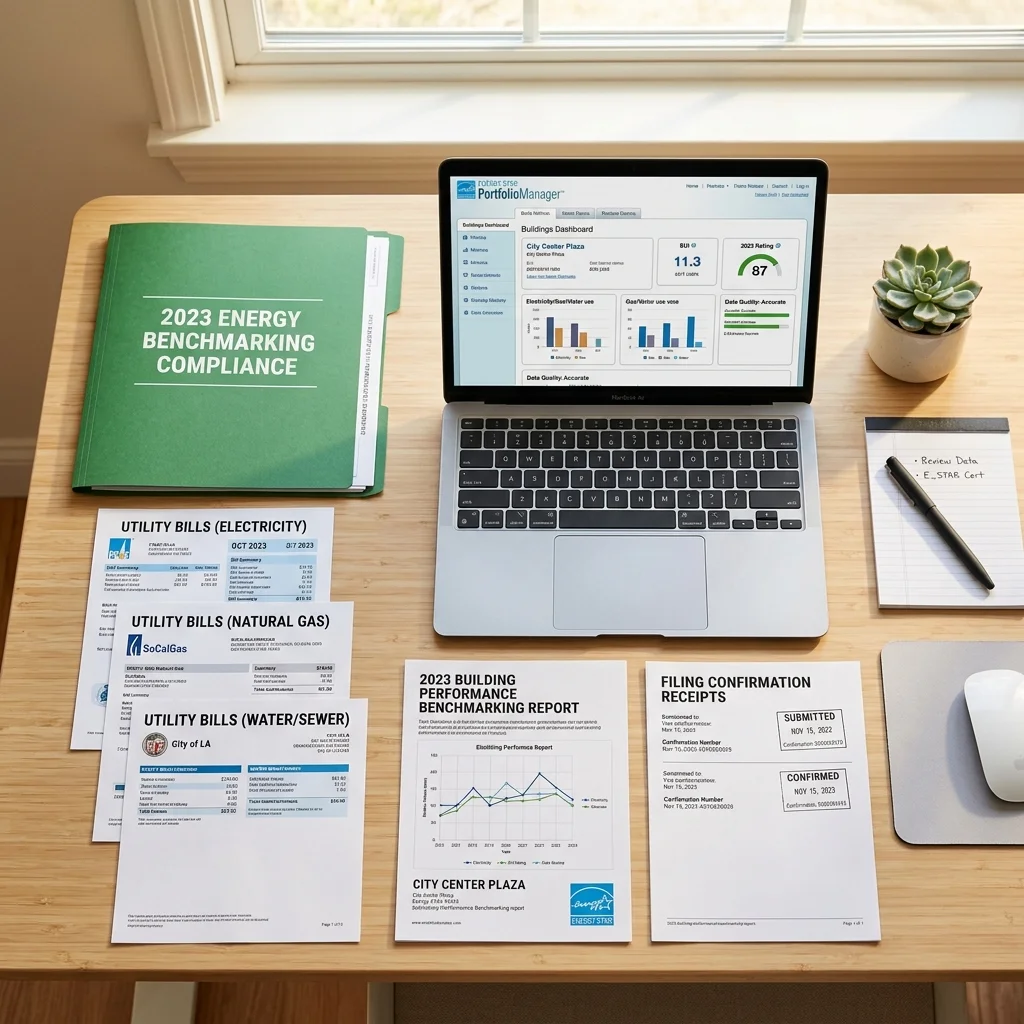
Organize an LL84 Benchmarking Folder
Every covered property should maintain a dedicated benchmarking file. Include:
- Previous submissions
- Current reports
- Utility records
- Portfolio Manager documentation
- Confirmation receipts
- Owner contact information
- Property characteristics
- Compliance correspondence
A complete file makes future reporting significantly easier.
Common Mistakes Owners Make
Several administrative mistakes appear repeatedly.
These include:
- Assuming benchmarking is optional.
- Waiting until the filing deadline.
- Losing Portfolio Manager access.
- Forgetting to update ownership information.
- Ignoring utility data problems.
- Failing to save submission confirmations.
- Not reviewing previous reports.
Most of these issues can be avoided with better organization.
Best Practices for Annual Benchmarking
Owners should consider adopting the following routine every year:
- Confirm the building remains covered.
- Review Portfolio Manager access.
- Gather utility information early.
- Verify property characteristics.
- Submit reports before the deadline.
- Save confirmation receipts.
- Maintain organized digital records.
- Review Building Energy Grade information after reporting.
These habits reduce administrative pressure and improve long-term compliance.
LL84 Benchmarking Recovery Checklist
If your building missed the benchmarking deadline, work through the following checklist:
- Confirm the building is covered under LL84.
- Verify reporting requirements.
- Recover Portfolio Manager access.
- Gather all required utility data.
- Review previous benchmarking reports.
- Confirm property information is accurate.
- Submit or correct the benchmarking report if permitted.
- Save all confirmation receipts.
- Organize documentation.
- Add the next reporting deadline to your compliance calendar.
This structured approach helps owners recover from missed filings more efficiently.
Practical Takeaway
LL84 benchmarking is not simply another sustainability requirement.
It serves as one of the primary building records supporting energy reporting throughout New York City.
Missing a benchmarking filing may affect public records, Building Energy Grades, due diligence reviews, and long-term building management.
The best approach is straightforward: Treat benchmarking as an annual compliance responsibility rather than a one-time administrative task. Organized documentation, timely submissions, and consistent recordkeeping help reduce future compliance problems.
Conclusion
Understanding missed LL84 benchmarking NYC requirements allows building owners to appreciate why one missed filing can have consequences that extend well beyond a single reporting deadline.
Benchmarking serves as the foundation for New York City's energy reporting framework, supporting Building Energy Grades, public transparency, and long-term performance tracking. When submissions are missed or incomplete, owners may encounter administrative issues, penalties, public record concerns, and additional questions during refinancing or property transactions.
By confirming whether a building is covered, maintaining access to ENERGY STAR Portfolio Manager, collecting utility information early, preserving submission confirmations, and organizing benchmarking records every year, owners can build a reliable compliance process that supports both regulatory obligations and effective property management.
Frequently Asked Questions
Why is LL84 benchmarking important?
LL84 benchmarking creates the annual energy and water reporting record for covered buildings. It also supports Building Energy Grades and broader building energy compliance programs.
What happens if I miss the benchmarking deadline?
A missed filing may affect public records, energy grades, compliance status, and may result in penalties depending on the circumstances. Owners should determine whether late submission or correction is still available and act promptly.
What is the most common reason owners miss benchmarking?
Common causes include missing utility data, lost Portfolio Manager access, ownership changes, management transitions, incorrect property information, or communication problems with consultants.
What documents should I gather after missing a filing?
Collect utility records, Portfolio Manager access information, previous benchmarking reports, submission confirmations, property information, and any correspondence related to prior filings.
Should I keep proof of submission?
Yes. Owners should retain confirmation receipts, Portfolio Manager reports, utility documentation, and copies of all submitted benchmarking reports for future reference.
Where can I review benchmarking and compliance information?
Owners should begin with ENERGY STAR Portfolio Manager for benchmarking records and use the DOB NOW Public Portal, Building Information System (BIS), and NYC Open Data where applicable to review related building compliance information.
You may also like