BY NYC Energy Code Team
ON
29 October 2026
Low-Cost vs Capital Measures: How Auditors Rank Energy Saving Opportunities

An energy audit identifies several ways to improve a building's performance. One recommendation might involve adjusting HVAC schedules at minimal cost. Another might involve replacing an aging chiller, upgrading the building management system, or adding insulation across thousands of square feet.
Both projects could save energy, but they require very different levels of investment, planning, and operational disruption.
For property owners, the challenge is deciding what should happen first. Should the building begin with inexpensive operational improvements, invest immediately in equipment replacement, or combine smaller measures with a larger retrofit?
Energy auditors help answer that question by evaluating the expected savings, implementation costs, technical feasibility, operating risks, and financial return of each measure. The goal is not simply to find the cheapest project or the one with the largest theoretical savings. It is to identify the measures that deliver the greatest practical value for the building.
Low-cost measures often provide a sensible starting point, while capital measures address deeper inefficiencies that smaller adjustments cannot solve. The strongest energy-saving strategy usually combines both categories in a coordinated implementation plan.
The Strategic Balance: Quick Wins vs. Deep Upgrades
Low-cost operational measures eliminate immediate energy waste and generate immediate cash flow. Capital retrofits modernize end-of-life physical assets and dramatically lower building emissions for long-term compliance under NYC Local Law 97.
What Is the Difference Between Low-Cost and Capital Energy Measures?
Low-cost measures generally involve operational changes, routine maintenance, minor repairs, or relatively inexpensive controls adjustments. They often require less design work and can be implemented quickly.
Capital measures involve investment in equipment, systems, or building components. They may deliver larger or longer-lasting improvements, but they often require procurement, engineering, construction, permits, and commissioning.
There is no universal dollar threshold separating the two categories. The cost of a measure depends on the building's size, existing equipment, installation complexity, and local labor and material costs.
| Characteristic | Low-cost or no-cost measures | Capital measures |
|---|---|---|
| Typical scope | Scheduling, calibration, adjustments, maintenance, minor repairs | Equipment replacement, major controls upgrades, envelope improvements |
| Initial investment | Usually lower | Usually higher |
| Implementation time | Often short | May require design, procurement, and construction |
| Potential savings | Often modest individually, but may accumulate across many measures | Can be substantial, depending on the project |
| Main dependencies | Staff availability, maintenance quality, access to controls | Capital budget, engineering, installation, commissioning |
| Common financial test | Simple payback and implementation feasibility | Lifecycle cost, net present value, payback, operational risk |
| Typical example | Correcting an HVAC schedule | Replacing an inefficient chiller |
The categories are not fixed labels. Replacing lighting across a small office might be a relatively minor project, while a building-wide lighting and controls retrofit could require a significant capital budget.
1. How Auditors Rank Low-Cost Energy-Saving Measures
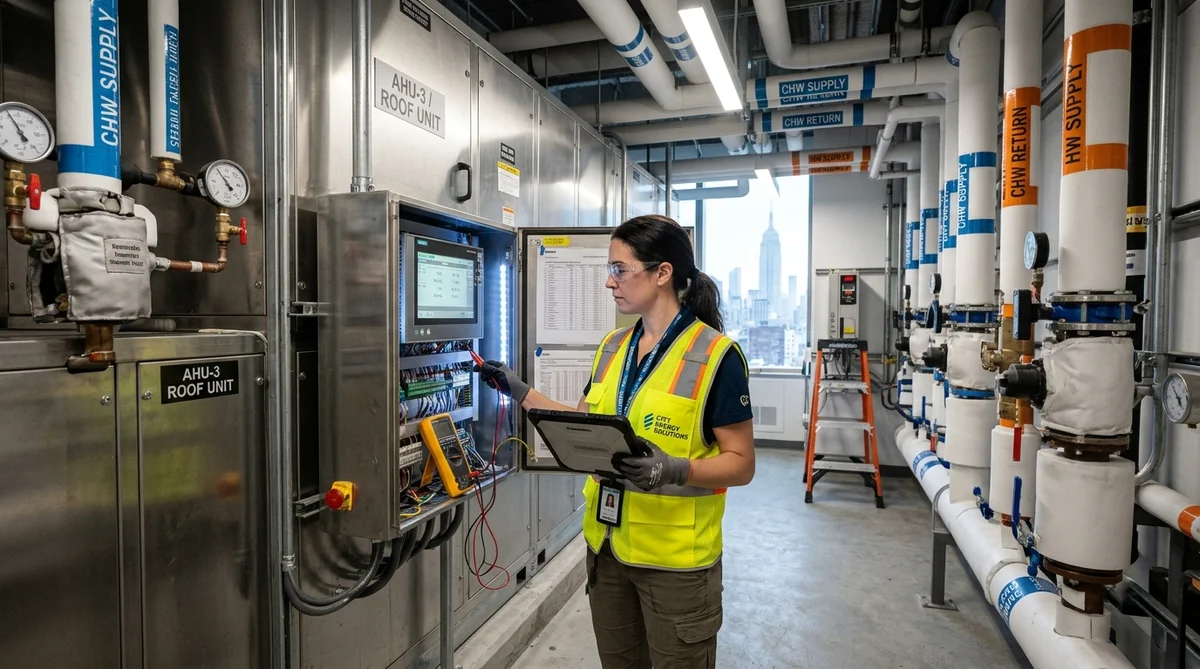
Auditors often investigate operational and maintenance opportunities early because these can address energy waste without requiring a major equipment replacement.
Examples include adjusting HVAC schedules, calibrating sensors, repairing steam traps, replacing clogged filters, correcting control sequences, and repairing damaged pipe or duct insulation.
These measures can be especially attractive when equipment is fundamentally sound but operates incorrectly.
NYC's Local Law 87 retro-commissioning framework specifically addresses efficient operation, including appropriate HVAC setpoints and schedules, properly calibrated sensors, functional controls, balanced air and water distribution, suitable ventilation rates, and the correction of equipment deficiencies. Source: NYC Administrative Code § 28-308.3.
An auditor may rank a low-cost measure highly when it has a clear operational benefit, a relatively small implementation cost, and little disruption.
Consider an office building where HVAC equipment runs several hours after occupants leave. Correcting the schedules may reduce unnecessary operation without changing the equipment itself.
However, not every adjustment automatically saves energy. Reducing ventilation below required levels or changing temperature settings without considering humidity and occupant comfort can create new problems. Recommended changes must remain consistent with the building's operational requirements and applicable safety provisions.
2. How Auditors Evaluate Capital Energy Measures
Capital measures address inefficiencies that cannot be corrected adequately through simple operational changes.
Examples include replacing an aging chiller, upgrading boiler equipment, installing variable frequency drives (VFDs), adding heat recovery, improving the building envelope, or modernizing HVAC controls.
Auditors evaluate these measures by estimating their installed costs, expected energy savings, maintenance implications, and effect on building operation.
A capital project may receive a lower immediate priority because it requires more investment or has a longer payback. But it may still be the better long-term choice when the existing equipment is unreliable, nearing the end of its useful life, or unable to meet current requirements.
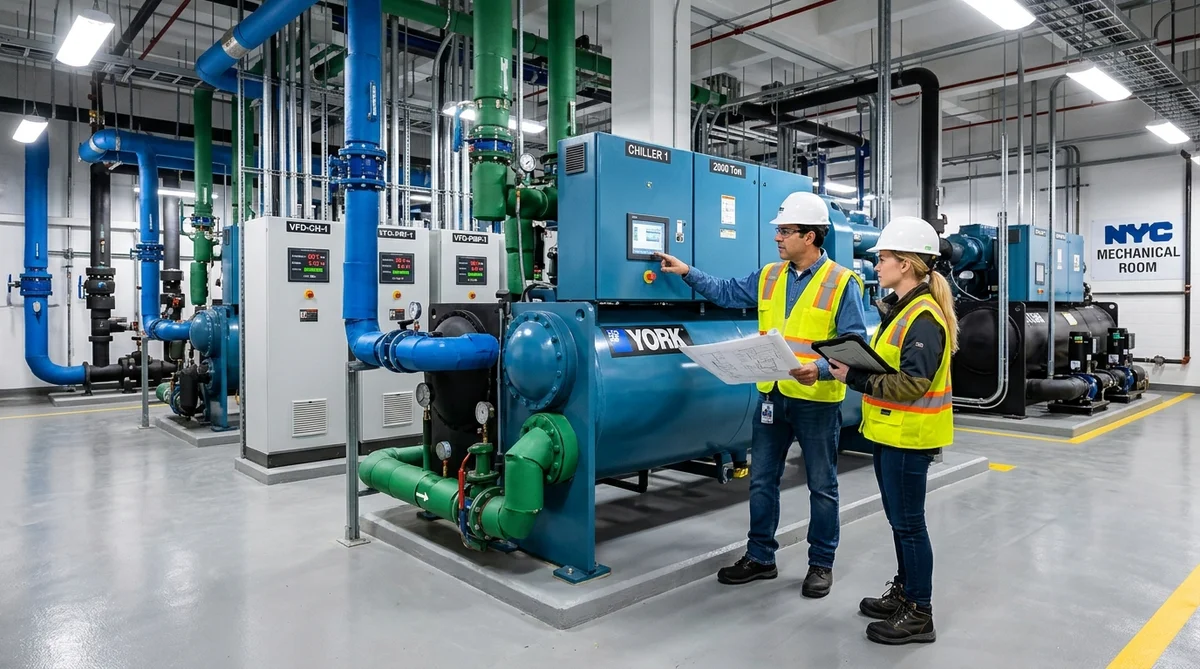
For example, an older chiller may consume excessive electricity and require repeated repairs. Replacing it could reduce energy use while improving reliability. The financial assessment should include those operational benefits alongside the projected electricity savings.
A large project should not be rejected simply because a smaller measure has a faster payback. The auditor and owner need to compare the full benefits, costs, timing, and risks.
3. The Financial Metrics Behind an Auditor's Ranking
Auditors generally need to establish whether an energy-saving measure is technically feasible and financially worthwhile. Different metrics answer different questions.
Simple Payback Period
Simple payback estimates how long it takes for cumulative annual savings to equal the initial investment:
Simple Payback = Initial Project Cost / Annual Net Savings
For example, a $6,000 controls adjustment and minor retrofit package that saves an estimated $3,000 annually has a simple payback of:
$6,000 / $3,000 = 2 years
This makes the project financially attractive under those assumptions, though the estimate still needs to be validated.
Annual Energy and Cost Savings
The auditor estimates how much electricity, gas, steam, fuel, or other energy the measure is expected to save. The consumption estimate is then translated into financial savings using applicable utility prices and billing structures.
Energy savings and cost savings are related but not identical. Demand charges, changing rates, and different fuel prices can affect the financial outcome.
Lifecycle Cost and Net Present Value
For larger projects, the analysis should consider costs and benefits over the expected life of the equipment or improvement. Depending on the method, this may include maintenance, replacement, financing, disposal, and future energy costs.
Net present value (NPV) compares the present value of expected future benefits with the initial and ongoing costs, accounting for a selected discount rate.
The U.S. Department of Energy recommends prioritizing opportunities using consistent criteria such as implementation feasibility, investment cost, and energy-performance impact, while also considering legal obligations, equipment age, and supplier constraints. Source: DOE — Prioritizing Energy Opportunities.
4. A Practical Example: Ranking Energy Measures in an NYC Office Building
Imagine a hypothetical 100,000-square-foot office building that has completed an energy audit. The auditor identifies four potential measures.
The following figures are illustrative estimates, not typical prices or guaranteed savings for NYC properties.
| Recommended measure | Initial cost | Estimated annual net savings | Simple payback |
|---|---|---|---|
| Correct HVAC schedules and control settings | $4,000 | $4,000 | 1 year |
| Repair insulation and steam-trap deficiencies | $12,000 | $4,000 | 3 years |
| Upgrade lighting and occupancy controls | $45,000 | $9,000 | 5 years |
| Replace an inefficient chiller | $180,000 | $24,000 | 7.5 years |
At first glance, the HVAC scheduling correction appears to be the obvious first choice. It has the shortest payback, requires the least capital, and is relatively straightforward to implement.
The lighting project also appears attractive, while the chiller replacement has the largest annual savings but requires a much greater investment.
A responsible ranking would not rely exclusively on these payback figures.
The auditor should confirm that the operating adjustments are safe and appropriate, examine whether the steam-trap and insulation repairs can be coordinated with existing maintenance, and evaluate whether the chiller's age and reliability justify replacement despite its longer payback.
If the chiller is failing repeatedly, delaying replacement solely because another project has a faster payback could expose the building to greater emergency repair costs and disruption.
The best sequence might therefore be to implement the scheduling correction immediately, complete the repair package next, coordinate lighting upgrades with planned tenant improvements, and develop a capital plan for the chiller.
The ranking reflects both financial return and the building's operational priorities.
5. Why Auditors Consider More Than Payback
Simple payback is useful, but it leaves out many factors that can change the decision.
A measure with a short payback may produce limited total savings. Conversely, a longer-payback project may provide substantial savings over a long service life.
Auditors also consider whether a project improves system reliability, reduces maintenance requirements, supports occupant comfort, or addresses regulatory obligations. They may evaluate the risk that predicted savings will not materialize and whether the required technology and service support are available.
The impact on building operations matters as well. Replacing a central boiler or chiller may require shutdowns, temporary equipment, coordination with tenants, and commissioning. Those costs and risks need to be included in the project assessment.
ASHRAE's energy-management guidance identifies return on investment, total savings, initial cost, non-energy benefits, liabilities, and failure risk as relevant considerations when evaluating energy-efficiency measures. Source: ASHRAE Handbook — Energy and Water Use Management.
This is why two projects with identical simple payback periods may receive different rankings.
6. How Auditors Group Measures Into an Implementation Plan
Energy-saving measures do not always need to be implemented individually.
A building might combine several controls adjustments with a lighting retrofit or coordinate chiller replacement with upgrades to pumps and system controls. Bundling projects can reduce repeated labor, simplify access, and allow complementary improvements to work together.
However, bundling needs careful financial analysis. A low-cost measure's savings should not be counted twice when its effect is already included in a larger project's estimate.
A useful implementation plan divides measures into practical phases:
1
Phase 1: Correct Avoidable Operational Waste
Address appropriate schedules, faulty sensors, unnecessary overrides, leaks, and maintenance deficiencies immediately.
2
Phase 2: Complete Practical Repairs and Short-Payback Improvements
Prioritize repairs and smaller retrofits that have clear savings and can be implemented without major operational disruption.
3
Phase 3: Plan Capital Projects
Develop specifications, budgets, procurement schedules, and installation plans for major equipment systems or building envelope improvements.
4
Phase 4: Verify Results
Compare post-implementation performance with a documented baseline and investigate material differences between projected and actual savings.
This approach keeps the owner's focus on action rather than allowing the audit report to become a list of recommendations that are never implemented.
7. What NYC Building Owners Should Know About Local Law 87
NYC's Local Law 87 requires covered buildings to complete an energy audit and retro-commissioning, generally on a ten-year cycle, and submit an Energy Efficiency Report (EER). The applicable covered-building criteria and filing year should be confirmed using the current DOB guidance and covered-building list.
For the audit, measures are categorized and documented so the owner can understand existing conditions, recommended improvements, costs, projected savings, and operational implications.
Retro-commissioning measures are particularly important: under NYC Administrative Code § 28-308.3, covered-building owners must complete the required retro-commissioning of base-building systems before filing the EER, subject to the applicable statutory exceptions. This is not the same as implementing every capital recommendation in the audit.
The often-discussed seven-year simple-payback requirement needs careful interpretation. NYC Charter § 224.2 expressly imposes a capital-improvement implementation requirement on City buildings. It should not be treated as a blanket rule requiring every private LL87-covered building to install every capital measure with a seven-year payback.
Private building owners should verify the duties applicable to their own property and filing. Reference: NYC DOB — LL87 Energy Audits and Retro-Commissioning and NYC Charter § 224.2.
Understanding this distinction helps owners separate the measures required for LL87 compliance from optional or strategically desirable capital investments.
8. How Building Owners Can Challenge or Improve an Audit Ranking
An audit recommendation is most useful when it reflects the building's actual operating conditions and constraints.
If the projected savings look unusually high, ask the auditor to explain the assumptions behind them. Confirm whether the estimate accounts for operating hours, occupancy, equipment condition, utility rates, and relevant control sequences.
If a major project appears too expensive, ask whether alternatives exist, whether the work can be phased, or whether equipment replacement can be coordinated with an already planned capital project.
Where a proposal has non-energy benefits—such as reducing failure risk or improving occupant comfort—ask how those benefits were considered. They may not all translate directly into utility savings, but they can still influence the owner's decision.
Finally, make sure every approved measure has a responsible party, estimated budget, target completion period, and method for verifying performance. Without those assignments, even good audit recommendations can remain unresolved for years.
Conclusion
Energy auditors rank low-cost and capital measures by looking at more than the size of the upfront investment. Implementation difficulty, projected savings, payback, equipment condition, technical risk, maintenance, and building requirements all affect the recommendation.
Low-cost operational corrections often provide quick opportunities to eliminate waste. Capital improvements address larger or persistent inefficiencies and may deliver significant benefits over the equipment's life.
For NYC building owners, the strongest approach is to turn the audit into a phased plan: correct avoidable operational problems, complete justified repairs, prioritize capital work using a lifecycle perspective, and measure the results.
The most effective project is not always the one with the shortest payback. It is the one that delivers reliable, measurable value while meeting the building's operational needs and applicable requirements.
Frequently Asked Questions
Low-cost measures generally involve operational adjustments, routine maintenance, or minor repairs. Capital measures involve larger investments such as HVAC replacements, controls upgrades, or building-envelope improvements. The distinction depends on project scale and cost, not a universal price threshold.
Auditors assess estimated savings, implementation cost, simple payback, technical feasibility, risk, equipment age, maintenance needs, and non-energy benefits. The ranking should reflect both financial performance and the building's operational priorities.
There is no universal threshold for every building or project. A short payback may make a measure attractive, while a longer-payback project can still be worthwhile if it delivers sustained savings, improves reliability, or supports other objectives.
Not always. Low-cost measures often make sense early, but an urgent equipment failure, safety issue, required compliance work, or major planned renovation can justify prioritizing a capital project first.
Examples include correcting HVAC schedules, calibrating sensors, repairing steam traps, maintaining filters and coils, removing unnecessary lighting operation, and fixing damaged insulation. Each measure should be verified for technical suitability and expected savings.
Common examples include chiller or boiler replacement, lighting retrofits, building management system upgrades, heat recovery, variable frequency drives, and roof or wall insulation improvements. Costs and savings depend on the property and the scope of work.
The seven-year capital-improvement rule cited in NYC Charter § 224.2 applies to City buildings. Private LL87-covered owners have separate requirements, including completing required retro-commissioning before filing the EER, subject to applicable exceptions. Owners should confirm their specific obligations with the current DOB rules.
Establish a baseline before implementation, document the approved changes, and compare post-project energy use and operating performance against the baseline. Account for weather, occupancy, operating hours, and other material changes when evaluating the results.
You may also like