BY NYC Energy Code Team
ON 20 Jul 2026
NYC Local Law 152
LL87 Due in 2026 NYC: Why Your Tax Block Number Matters

LL87 Due in 2026 NYC: Why Your Tax Block Number Matters
Many New York City building owners carefully track inspections, permits, benchmarking deadlines, and Local Law requirements. However, one compliance rule that often catches owners by surprise is Local Law 87 (LL87).
Unlike many other compliance programs, LL87 deadlines are not based on when you purchased the building, completed renovations, or upgraded equipment. Instead, the filing schedule is determined by something many owners rarely think about—the last digit of the property's tax block number.
If your building falls into the 2026 filing cycle, waiting until the end of the year can create unnecessary pressure. Energy audits and retro-commissioning require planning, inspections, document reviews, and professional reporting. They are far more involved than simply submitting an online form.
Understanding LL87 due 2026 NYC requirements now gives owners enough time to prepare, schedule qualified professionals, and complete the process without unnecessary stress.
What Is Local Law 87?
Local Law 87 is part of New York City's Greener, Greater Buildings Plan. The law requires certain covered buildings to complete:
- An Energy Audit
- Retro-Commissioning (RCx)
- An Energy Efficiency Report (EER)
These requirements generally apply every 10 years for covered buildings.
The purpose is to improve building efficiency by identifying energy-saving opportunities and ensuring existing building systems operate as intended.
Why Your Tax Block Number Determines the Deadline
One of the most misunderstood parts of LL87 is the filing schedule.
Many owners assume deadlines are based on:
- Purchase date
- Construction year
- Previous renovations
- HVAC replacement
- Boiler upgrades
None of these determine your LL87 cycle.
Instead, the due year depends on the last digit of your property's tax block number.
For buildings assigned to the 2026 cycle, preparation should begin well before the filing deadline.
Why Owners Are Often Surprised
Many buildings operate for years without needing LL87 compliance.
When the due year finally arrives, owners may realize:
Records Are Incomplete
Without ongoing compliance tracking, documentation of previous energy audits, system upgrades, and renovations is often lost or scattered across different departments.
Building Equipment Has Changed
Physical changes to the building envelope, mechanical systems, or lighting over the past decade may not be documented accurately in existing drawings.
Utility Information Is Scattered
Collecting 12 months of complete, continuous utility data for electricity, gas, steam, and water can take significant time, especially if account access is lost.
Previous Reports Cannot Be Located
If the property changed hands or management companies in the last 10 years, tracking down the previous Energy Efficiency Report (EER) is often difficult.
Contractors Are Fully Booked
Waiting until the last minute means competing with thousands of other building owners in the same cycle for a limited number of qualified energy professionals.
Warning: These delays can cause owners to miss the filing deadline, leading to severe penalties and public building grade reductions.
What Does an Energy Audit Include?
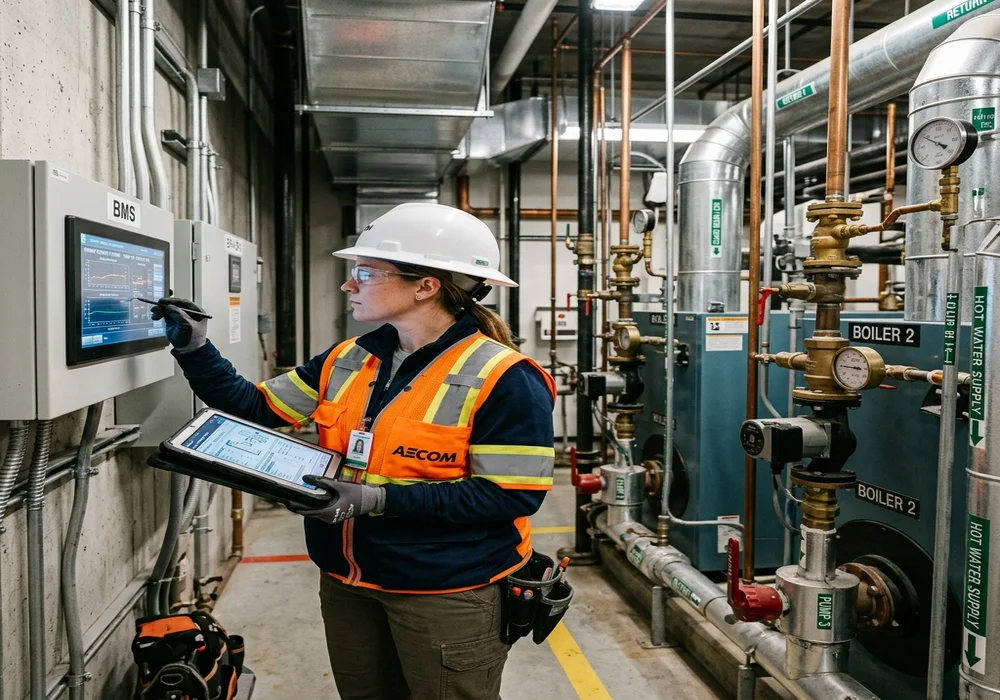
An energy audit examines how the building uses energy and identifies opportunities to improve efficiency.
The review typically includes:
- Lighting systems
- HVAC equipment
- Boilers
- Chillers
- Pumps
- Ventilation
- Controls
- Building envelope
- Domestic hot water systems
The goal is to identify practical improvements that can reduce energy consumption and operating costs.
What Is Retro-Commissioning?
Retro-commissioning focuses on optimizing existing building systems rather than replacing them.
Professionals evaluate whether equipment operates as originally intended and identify adjustments that may improve performance.
Examples include:
- HVAC scheduling
- Temperature controls
- Sensor calibration
- Airflow balancing
- Equipment sequencing
Even older buildings often benefit from operational improvements without requiring major capital investments.
Why LL87 Is More Than a Filing Requirement
Some owners think LL87 ends once the report is submitted.
In reality, the process often provides valuable insight into:
- Equipment condition
- Energy waste
- Maintenance priorities
- Future capital planning
- Operational efficiency
Many recommendations identified during an audit can reduce long-term operating expenses.
Why Starting Early Matters
Energy audits require coordination among several parties.
The project may involve:
- Engineers
- Building staff
- Property managers
- Utility providers
- Maintenance contractors
Scheduling inspections near the deadline can become difficult because many buildings are trying to complete compliance work at the same time.
Starting early provides flexibility and reduces last-minute pressure.
What Owners Should Review Before 2026
Preparation begins with confirming whether the building is covered under LL87.
Owners should then review:
- Tax block number
- Previous LL87 reports
- Utility records
- Equipment inventory
- Mechanical drawings
- Maintenance history
Having these records available makes the audit process smoother.
Gather Building Information
Before the audit begins, organize documents such as:
- Utility bills
- Equipment schedules
- Building plans
- Previous renovations
- HVAC records
- Boiler information
- Lighting layouts
Well-organized documentation reduces delays during fieldwork.
Connect LL87 With Other Local Laws
LL87 does not exist in isolation.
Many buildings are also subject to:
- Local Law 84 Benchmarking
- Local Law 88
- Local Law 97
- Building Energy Grades
Information collected during an LL87 audit can support planning for these additional compliance requirements.
Looking at the building as a whole often produces better long-term results than addressing each law separately.
Common Mistakes Building Owners Make
Several mistakes appear repeatedly during LL87 cycles:
- Waiting until the filing year to begin.
- Assuming the tax block number does not matter.
- Losing previous audit reports.
- Failing to organize utility records.
- Waiting too long to hire professionals.
- Ignoring operational recommendations after filing.
Most of these problems are preventable with early planning.
Best Practices for LL87 Compliance
Owners can improve the process by:
- Confirming the due year early.
- Reviewing the property's tax block number.
- Gathering utility information in advance.
- Organizing building documentation.
- Scheduling qualified professionals early.
- Keeping copies of all submitted reports.
- Reviewing audit recommendations with management.
These simple habits make future compliance much easier.
LL87 Preparation Checklist
Before beginning the project, confirm the following:
- Building is covered under LL87
- Tax block number verified
- Due year confirmed
- Previous reports collected
- Utility data organized
- Equipment records available
- Qualified professional selected
- Site access arranged
- Documentation stored digitally
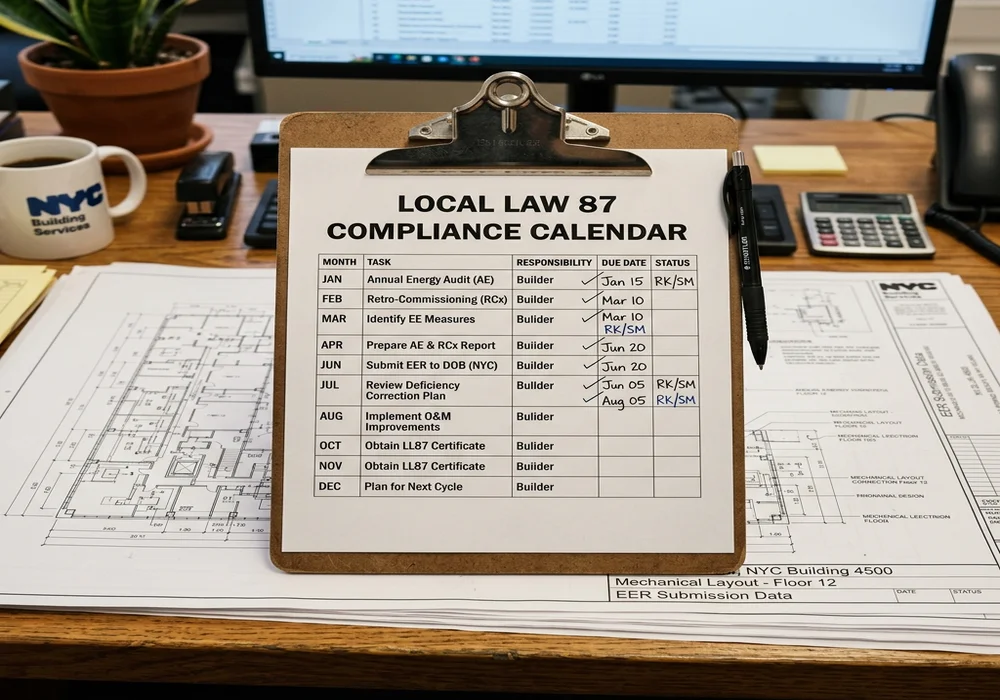
- Compliance calendar updated
Practical Takeaway
Local Law 87 is much more than another filing deadline.
The law encourages owners to understand how their building operates and where meaningful efficiency improvements can be made.
The best approach is straightforward: Because filing cycles are determined by the property's tax block number—not ownership history or equipment upgrades—owners should verify their due year early and begin preparing well before the deadline. Early planning reduces stress, improves report quality, and creates opportunities for long-term operational improvements.
Conclusion
If your property falls under the LL87 due 2026 NYC cycle, now is the time to begin preparing. Energy audits and retro-commissioning projects require more than paperwork—they involve reviewing building systems, collecting utility data, coordinating inspections, and preparing detailed reports.
By understanding how the tax block number determines your filing year and by organizing records early, you can avoid last-minute compliance challenges and gain valuable insights into your building's energy performance. Treat LL87 as an opportunity to improve operations, reduce future costs, and strengthen your overall compliance strategy.
Frequently Asked Questions
What is Local Law 87?
Local Law 87 requires certain covered NYC buildings to complete an energy audit, retro-commissioning process, and Energy Efficiency Report every ten years.
How is the LL87 due year determined?
The filing cycle is based on the last digit of the building's tax block number, not the purchase date or renovation history.
Why should owners start preparing early?
Energy audits require planning, building inspections, utility data collection, equipment reviews, and professional reporting. Beginning early reduces scheduling pressure and allows time to resolve unexpected issues.
What documents should I gather?
Owners should organize utility bills, equipment records, previous LL87 reports, building plans, maintenance history, and other relevant building documentation.
Does LL87 relate to other Local Laws?
Yes. Information collected during LL87 projects often supports compliance planning for Local Laws 84, 88, 97, and Building Energy Grades.
What is the biggest mistake owners make?
The most common mistake is waiting until the filing deadline approaches. Early planning gives owners enough time to complete audits, review findings, and prepare accurate reports.
You may also like