Understand the NYC building energy code and zoning rules for EV charger installations.
BY NYC Energy Code Team
ON 13 August 2026
EV Charging Incentives in NYC: What Rebates Are Building Owners Missing?
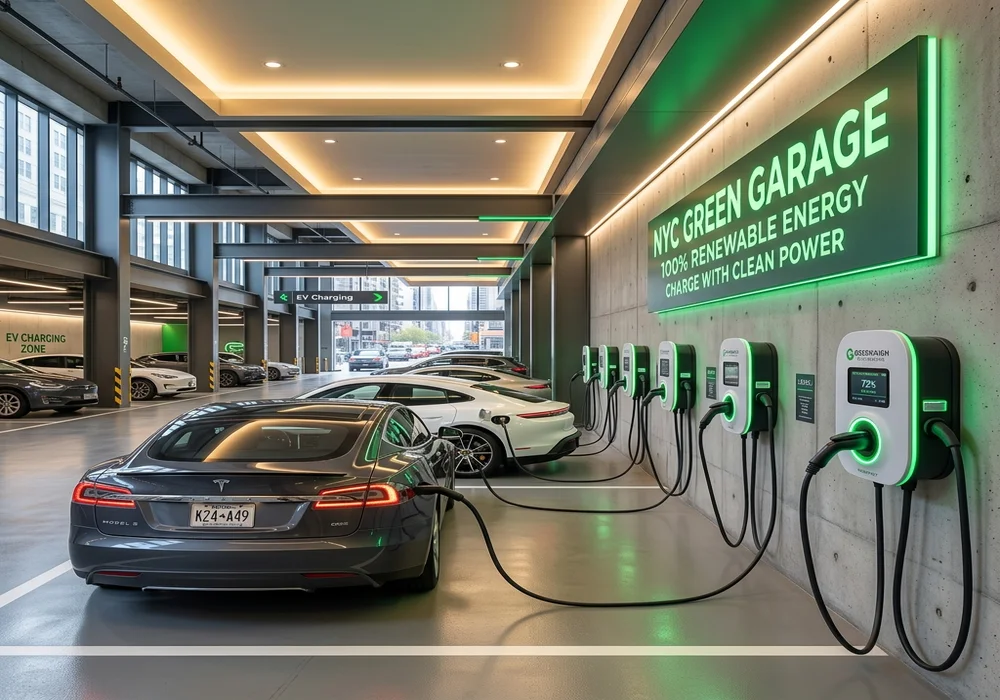
Electric vehicles are becoming a bigger part of New York City's transportation system, and that creates a practical question for building owners:
Who is going to pay for all the charging infrastructure?
Installing EV chargers isn't just about buying the charger itself. There can be electrical upgrades, conduit, wiring, permits, labor, networking equipment, parking modifications, and utility-related costs.
The good news is that building owners don't necessarily have to absorb the entire cost themselves.
New York State and utility programs offer incentives that can reduce the cost of eligible EV charging projects. One of the most important programs for NYC multifamily properties, workplaces, and hotels is NYSERDA's Charge Ready NY 2.0. As of 2026, the program offers up to $3,000 per eligible charging port for qualifying workplace, multifamily, and hotel properties, with an additional $1,000 per port for eligible locations in Disadvantaged Communities.
Critical Note: Not every charger, building, parking space, or project automatically qualifies. Starting construction before checking incentive rules is where building owners stand to lose thousands of dollars in potential rebates.
What Is Charge Ready NY 2.0?
Charge Ready NY 2.0 is a New York State incentive program administered by NYSERDA.
Its purpose is straightforward: make it less expensive to install eligible Level 2 EV charging stations at qualifying locations.
The program currently covers eligible installations at:
- Multifamily properties
- Workplaces
- Hotels and motels
- Certain public locations
For qualifying workplace, multifamily, and hotel properties, the current standard incentive is $3,000 per charging port.
Eligible properties located in a Disadvantaged Community (DAC) can receive an additional $1,000 per port, bringing the incentive to $4,000 per port.
Sample Incentive Calculation (10-Port Project):
| Location Type | Per-Port Rebate | Total 10-Port Potential Incentive |
|---|---|---|
| Standard Location | $3,000 / port | 10 × $3,000 = $30,000 |
| Disadvantaged Community (DAC) | $4,000 / port | 10 × $4,000 = $40,000 |
*These are illustrative calculations based on current per-port incentives. Actual eligibility and payment depend on program rules and approved project documentation.
The First Mistake: Assuming Every Charger Qualifies
One of the easiest mistakes is buying equipment first and checking incentives afterward.
Charge Ready NY 2.0 is designed around eligible Level 2 charging equipment and network providers. NYSERDA maintains lists of eligible equipment and networks, and those lists are updated as additional products are approved.
That means the cheapest charger you find online isn't necessarily the charger you should install.
Before purchasing equipment, verify:
- Charger model eligibility
- Network-provider eligibility
- Port configuration
- Installation requirements
- Program timing
- Property eligibility
- Required documentation
NYSERDA also recommends getting estimates from multiple vendors and installers rather than assuming the first quote is competitive.
What Counts as a Level 2 Charger?
Level 2 charging generally uses 208–240V AC power and is substantially faster than basic Level 1 charging.
For properties where vehicles remain parked for several hours, Level 2 charging can make practical sense. That's one reason multifamily buildings and workplaces are natural targets.
- A resident may park overnight.
- An employee may park for eight hours.
- A hotel guest may leave a vehicle parked for several hours.
A Level 2 charger fits these use cases better than a basic household outlet. However, Level 1 charging stations are not eligible for the Charge Ready NY 2.0 incentive.
Multifamily Building Owners Should Pay Attention
Multifamily properties are one of the clearest opportunities. EV adoption creates a new amenity question for apartment and condominium buildings: Does the property have charging available for residents?
Installing chargers can potentially help with:
- Tenant retention
- Property competitiveness
- EV adoption
- Parking revenue
- Long-term building planning
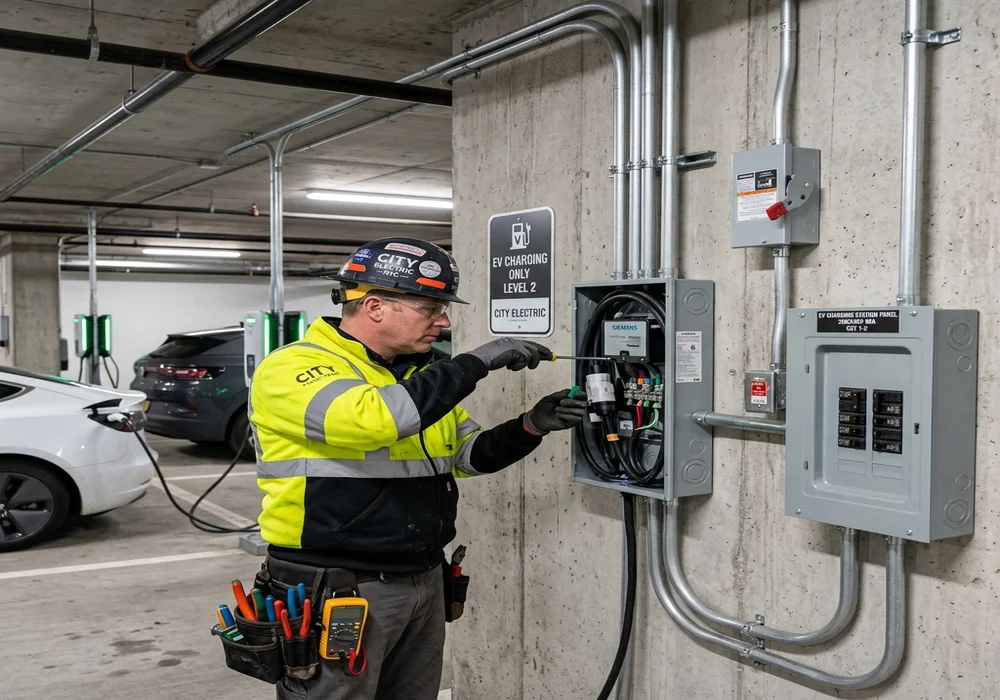
But owners need to think beyond the charger. An EV charging project can affect electrical capacity, parking allocation, garage layout, conduit routes, metering, load management, tenant billing, and network management.
The incentive can reduce part of the cost, but it doesn't eliminate the engineering and operational work.
Don't Forget the Disadvantaged Community Bonus
Location matters. A qualifying project located within a designated Disadvantaged Community can receive an additional incentive under Charge Ready NY 2.0.
The current standard incentive is $3,000 per port, while eligible DAC locations can receive $4,000 per port. This is one of the easiest things for an owner to overlook because the property owner may know the neighborhood but not know whether the specific project location qualifies under the program's definition.
Don't guess. Check the program's current eligibility information before budgeting the project.
There May Be Additional Bonus Incentives
Charge Ready NY 2.0 also has a Bonus Program for qualifying workplace and multifamily installations.
The current bonus structure includes:
- $4,000 for small installations
- $10,000 for large installations
These are site-level bonus incentives and come with additional requirements. For example, bonus participation can involve actions such as promoting EV adoption or offering free charging to employees or tenants for at least one year.
That means owners shouldn't look only at the basic per-port rebate. The better question is: What is the total incentive package available for this specific project?
Free Charging Can Be Part of the Bonus Strategy
One of the current bonus requirements involves providing free charging to employees or tenants for at least one year. That can sound attractive, but owners need to calculate the operating cost before committing.
Free charging doesn't mean zero cost. The owner may still have:
- Electricity costs
- Network costs
- Maintenance costs
- Equipment repairs
- Administrative work
So don't treat the bonus as automatically profitable. Calculate the value of the incentive against the operating commitment.
What About New York State Tax Credits?
Charge Ready NY 2.0 isn't the only incentive worth checking.
NYSERDA also identifies a New York State tax credit for public and workplace EV charging, with tax credits of up to $5,000 or 50% of the cost for qualifying businesses that install public or workplace charging equipment.
Tax-credit eligibility is different from a rebate. A rebate generally reduces project cost through the incentive program, while a tax credit affects tax liability and comes with its own eligibility rules.
Because tax treatment depends on the owner and project structure, building owners should confirm eligibility with a qualified tax professional rather than assuming the maximum credit applies.
Utility Incentives Can Be Even More Important
This is where owners should slow down. The charger itself isn't always the most expensive part—the electrical infrastructure can be.
Depending on the site, a project may require:
- New electrical equipment
- Service upgrades
- Distribution equipment
- Conduit & wiring
- Transformers & trenching
- Panel upgrades
- Load-management equipment
NYSERDA points owners toward EV Make-Ready Programs, which can provide incentives to offset a significant portion of infrastructure costs, depending on the utility and project.
Important Utility Program Update: Utility programs change over time. For example, Con Edison's PowerReady Light-Duty Vehicle program states that as of April 22, 2026, it stopped accepting new Level 2 applications and paused new DC Fast Charging applications. Existing projects on its waitlist remain in queue. Never build your project budget around an old incentive sheet!
Why Timing Matters
Charge Ready NY 2.0 uses an application process that can involve pre-installation approval.
For a pre-installation application, NYSERDA says applicants must submit the required initial documentation. After approval, funds are reserved and the applicant has 180 days to complete the installation and submit final documentation.
Simple Planning Rule: Check incentives before installation, not after installation. If you install first and discover later that your equipment or project wasn't eligible, the financial damage may be permanent.
What Building Owners Should Budget
A realistic EV charging budget should include more than the charger. Consider these key cost categories:
Equipment
The charging hardware itself.
Electrical Work
Panels, wiring, conduit, transformers, disconnects, and electrical infrastructure.
Installation
Electrician labor and physical installation.
Permitting
Required DOB permits and inspections.
Networking
Network subscriptions or management services for smart chargers.
Parking Work
Signage, striping, wheel stops, access control, and garage modifications.
Utility Work
Potential service upgrades or infrastructure requirements.
Maintenance & Admin
Repairs, software, ongoing support, and incentive application administration.
The incentive reduces eligible costs. It doesn't make the entire project free.
The Second Mistake: Choosing the Charger Before Designing the Electrical Plan
An owner thinks: "We need ten EV chargers." So they order ten chargers. Only afterward does someone ask: Can the building actually support ten chargers at the required load?
That is backwards. The recommended sequence is:
Step 1: Evaluate Electrical System
Evaluate the existing electrical service capacity and panel space.
Step 2: Estimate EV Demand
Assess immediate resident, employee, or visitor charging needs.
Step 3: Determine Port Count
Determine how many charging ports are actually needed today.
Step 4: Evaluate Load Management
Incorporate smart load management to avoid costly service upgrades.
Step 5: Design Electrical Infrastructure
Prepare engineering designs, conduit paths, and electrical layouts.
Step 6: Select Eligible Equipment
Cross-reference equipment with NYSERDA's approved product lists.
Step 7: Check Incentives
Confirm active state, utility, and municipal incentive programs.
Step 8: Pre-Apply for Funding
Submit incentive applications before construction where required.
Step 9: Install Chargers
Execute installation via qualified licensed electrical contractors.
Step 10: Submit Final Documentation
Submit final invoices, photos, and serial numbers for rebate payout.
What About DC Fast Chargers?
DC Fast Charging, or DCFC, is a different category from typical Level 2 building charging. DCFC requires significantly greater electrical capacity and is more appropriate for locations where drivers need to charge quickly rather than park for several hours.
For a typical apartment building, Level 2 may be more practical. For a commercial fleet operation or high-turnover public charging location, DCFC may make more sense.
Don't choose technology based purely on charging speed. Choose based on parking duration, electrical capacity, user demand, utility infrastructure, project cost, available incentives, and operating model.
Can Building Owners Combine Incentives?
Potentially, but do not assume every incentive can be stacked. Charge Ready NY 2.0 specifically identifies certain other funding sources that make equipment ineligible, including certain federal and state programs and other NYSERDA initiatives.
Before committing financial resources, ask:
- Which program is funding the equipment?
- Can the incentives be combined?
- Is the same cost being claimed twice?
- Does another grant make the project ineligible?
- Does the tax treatment differ from the rebate treatment?

A Simple EV Incentive Checklist
Before installing EV chargers, building owners should verify:
- Is the property eligible under Charge Ready NY 2.0 rules?
- Is the charger Level 2 if applying for Charge Ready NY 2.0?
- Is the exact charger model listed on the approved equipment list?
- Is the network provider eligible?
- Is the property located in a designated Disadvantaged Community (DAC)?
- How many charging ports are actually needed based on load and demand?
- Does the building's electrical system support the proposed installation?
- Are utility Make-Ready incentives currently accepting new applications?
- Is a New York State tax credit available for this project structure?
- Does the project qualify for the Charge Ready NY 2.0 Bonus Program?
- Has the incentive application been submitted before installation where required?
- Are invoices, photos, serial numbers, and required documents saved?
The Biggest Rebate Mistake Is Starting Too Early
The temptation is understandable. You want chargers. You call an installer. The installer gives you a quote. You approve it. The chargers are installed. Then someone asks: "Did you apply for the rebate?"
That's the wrong order. For incentive-driven projects, compliance paperwork should be part of the project plan from the beginning.
Building owners should know upfront: What qualifies? How much is available? What equipment can be used? When must the application be submitted? What documentation is required? What costs are actually eligible?
Final Takeaway
NYC building owners considering EV charging have more options than simply paying the full installation cost themselves.
The most important current opportunity for qualifying multifamily properties, workplaces, and hotels is Charge Ready NY 2.0, which currently offers $3,000 per eligible Level 2 charging port, with an additional $1,000 per port for eligible Disadvantaged Community locations. Additional bonus incentives may also be available for qualifying workplace and multifamily projects.
There are also New York State tax credits and utility-related programs worth investigating, although availability and eligibility can change.
The important part isn't simply finding a rebate. It's designing the project around the incentive requirements before money is spent. Review property eligibility, electrical capacity, charger eligibility, utility programs, tax treatment, and application timing before signing off on installation.
Frequently Asked Questions
What is the main EV charging rebate for NYC building owners?
One major program is NYSERDA's Charge Ready NY 2.0. It provides incentives for eligible Level 2 charging stations at qualifying workplaces, multifamily properties, hotels, and other eligible locations.
How much does Charge Ready NY 2.0 pay per charger?
The current standard incentive for qualifying workplace, multifamily, and hotel properties is $3,000 per charging port. Eligible properties in Disadvantaged Communities can receive an additional $1,000 per port.
Does Charge Ready NY 2.0 cover Level 1 chargers?
No. NYSERDA states that the Charge Ready NY 2.0 incentive cannot be applied to Level 1 charging stations.
Can multifamily buildings qualify for EV charging rebates?
Yes. Qualifying multifamily properties are among the primary property types supported by Charge Ready NY 2.0. However, the property and installation must satisfy the program's eligibility requirements.
Are there extra incentives for buildings in disadvantaged communities?
Yes. Charge Ready NY 2.0 currently provides an additional $1,000 per eligible charging port for qualifying properties located in a Disadvantaged Community.
Are there bonus incentives beyond the per-port rebate?
Yes. Qualifying workplace and multifamily projects can potentially receive additional site-level bonus incentives. Current bonus amounts are $4,000 for small installations and $10,000 for large installations, subject to program requirements.
Should I install the chargers before applying for the rebate?
Don't assume that is safe. Charge Ready NY 2.0 offers a pre-installation application process, and approved applicants can have funds reserved before installation. Review the current program requirements before starting construction.
Can I combine Charge Ready NY 2.0 with other incentives?
Not necessarily. Some projects receiving funding from specified federal, state, or other NYSERDA programs are ineligible for Charge Ready NY 2.0. Check the current program rules before combining funding sources.
Are utility EV charging incentives still available in NYC?
Utility programs change over time. For example, Con Edison currently states that its PowerReady Light-Duty program stopped accepting new Level 2 applications on April 22, 2026, while DCFC applications were paused. Owners should check their utility's current program status before including a utility incentive in the project budget.
What should a building owner do before buying EV chargers?
First determine the property's eligibility, electrical capacity, charger requirements, available incentives, equipment eligibility, application timing, and documentation requirements. Buying equipment before completing that review can eliminate potential incentives.