Understand essential NYC energy and ESG vocabulary from EUI and decarbonization to benchmarking.
BY NYC Energy Code Team
ON
25 August 2026
GRESB vs LEED vs ENERGY STAR: Comparing Sustainability Rating Systems

If you've been evaluating commercial building sustainability or ESG reporting, you've likely encountered three major acronyms: GRESB, LEED, and ENERGY STAR.
At first glance, they can sound like competing versions of the same concept. They aren't.
Each framework operates at a different scale and answers a fundamentally different question:
- ENERGY STAR: "How efficiently is this physical building operating compared to peers nationwide?"
- LEED: "How sustainable is this building across comprehensive holistic design, construction, and operational metrics?"
- GRESB: "How effectively is an entire real estate company, fund, or institutional portfolio managing ESG performance and transition risks?"
Why the Distinction Matters
Choosing the wrong framework can lead to significant expenditures of time and capital collecting data that fails to satisfy your investors, tenants, or regulatory compliance mandates. Real estate leaders must align the rating system with their specific business objectives.
GRESB vs LEED vs ENERGY STAR: Quick Comparison
| Dimension | GRESB | LEED (USGBC) | ENERGY STAR (EPA) |
|---|---|---|---|
| Primary Focus | Organizational & fund ESG performance | Holistic green building design & operation | Measured operational energy & water efficiency |
| Target Audience | Institutional investors, lenders, REITs | Owners, architects, developers, tenants | Facility managers, engineers, regulators |
| Evaluation Scope | Portfolio, fund, developer, entity | Individual asset or interior fit-out | Individual property meter data |
| Primary Output | GRESB Score (0–100) & 1–5 Green Stars | Certified, Silver, Gold, Platinum plaque | 1–100 percentile score & Annual Certification |
| Energy Specificity | Part of aggregate environmental score | Key credit category among many | Core primary metric |
| NYC Regulatory Role | Voluntary capital market reporting | Permit incentive & market differentiation | Mandatory engine for LL84 |
What Is GRESB?
Originally established as the Global Real Estate Sustainability Benchmark, GRESB is an investor-driven global sustainability reporting framework for listed property companies, private equity real estate funds, developers, and institutional asset managers.
Crucially, GRESB is not a building-level plaque. It is an organizational assessment that aggregates environmental, social, and governance metrics across hundreds of assets into a single portfolio rating.
Management Component
Evaluates corporate governance, executive compensation links, sustainability policies, climate risk mitigation (TCFD), and stakeholder engagement.
Performance Component
Collects asset-level utility data across Scope 1, Scope 2, and tenant Scope 3 emissions, tracking year-over-year reductions in energy, water, and waste.
What Is LEED?
Developed by the U.S. Green Building Council (USGBC), LEED (Leadership in Energy and Environmental Design) is the world's most widely recognized green building rating system.
Unlike ENERGY STAR—which measures how a building runs month to month—LEED evaluates how well a property is designed, constructed, and maintained across a multi-dimensional sustainability framework.
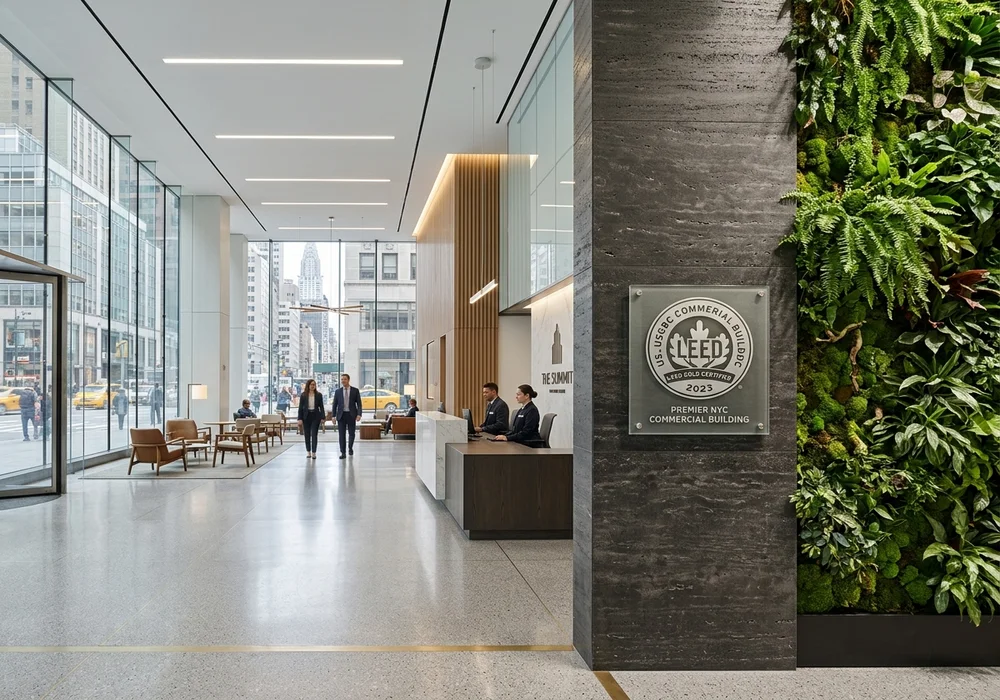
Projects earn points across credit categories (Location & Transportation, Sustainable Sites, Water Efficiency, Energy & Atmosphere, Materials & Resources, and Indoor Environmental Quality) to achieve four distinct tiers:
- LEED Certified: 40–49 points earned
- LEED Silver: 50–59 points earned
- LEED Gold: 60–79 points earned
- LEED Platinum: 80+ points earned
What Is ENERGY STAR?
Managed by the U.S. Environmental Protection Agency (EPA), ENERGY STAR is a data-driven benchmarking and certification platform focused on actual, operational utility consumption.
Using the free online tool ENERGY STAR Portfolio Manager, building owners track monthly electric, gas, steam, and water consumption. For eligible building types, the platform normalizes for weather, operating hours, occupant density, and square footage to produce an ENERGY STAR Score (1–100):
Median Benchmark (50)
A score of 50 indicates the property performs at the national median for its building category.
Certification Threshold (75+)
Buildings scoring 75 or higher represent the top 25% of energy efficiency nationwide and can earn annual verified certification.

Direct Comparisons: Understanding the Overlaps
1. GRESB vs. LEED: Portfolio vs. Asset
LEED rates an individual asset or interior space. GRESB evaluates the investment management entity that owns those assets. A real estate fund can submit to GRESB and earn higher points if a significant percentage of its square footage holds LEED certifications.
2. LEED vs. ENERGY STAR: Design vs. Metered Energy
A building can achieve LEED Gold certification based on sustainable construction, indoor air filtration, and daylighting, yet still operate with a mediocre ENERGY STAR score if tenants consume high plug-load electricity. Conversely, an older building with no architectural green features can achieve an ENERGY STAR score of 90 through optimized boiler controls and LED lighting.
3. ENERGY STAR vs. GRESB: The Data Feed
ENERGY STAR Portfolio Manager is the underlying data engine that feeds utility metrics directly into GRESB via automated API integration. GRESB utilizes that building-level consumption data to evaluate fund-level carbon intensity.
Can a Building (or Portfolio) Leverage All Three?
Yes. In fact, leading institutional real estate firms combine all three frameworks into an integrated sustainability strategy:
Step 1: ENERGY STAR
Tracks monthly utility data, benchmark EUIs, and ensures NYC Local Law 84 regulatory compliance.
Step 2: LEED
Certifies building-level wellness, materials, and sustainable construction for commercial tenant leasing.
Step 3: GRESB
Aggregates all building data and certifications to report fund-level ESG performance to institutional investors.
Which Rating System Matters Most for NYC Building Owners?
In New York City's regulatory landscape, the priorities are clear:
- ENERGY STAR is Mandatory: Under Local Law 84 (LL84), properties over 25,000 sq ft must report annual energy and water usage via Portfolio Manager by May 1. Under Local Law 33/95, this score determines the building's posted Building Energy Efficiency Rating (A–F grade letter).
- LEED Unlocks Commercial Premiums: Class A office tenants increasingly require LEED Silver or Gold space to meet corporate Scope 3 decarbonization commitments.
- GRESB Unlocks Institutional Capital: REITs, fund managers, and joint-venture developers reporting to global pension funds rely on annual GRESB benchmark rankings to secure capital.
Common Pitfalls to Avoid
Mistake 1: Treating GRESB as a Building Certificate
You cannot hang a "GRESB Plaque" in a lobby. GRESB evaluates organizational entities, portfolios, and investment vehicles.
Mistake 2: Assuming LEED Guarantees Low Utility Bills
A building can achieve LEED certification for recycled materials and indoor air quality while operating with suboptimal mechanical controls. Ongoing energy benchmarking is still necessary.
Mistake 3: Confusing an ENERGY STAR Score with LL97 Compliance
An ENERGY STAR score compares your energy use to peers, while NYC Local Law 97 enforces strict absolute carbon emissions limits per square foot with heavy financial penalties.
Final Takeaway
GRESB, LEED, and ENERGY STAR are complementary tools built for distinct dimensions of real estate sustainability.
ENERGY STAR benchmarks day-to-day operational efficiency. LEED validates holistic physical design and environmental quality. GRESB measures portfolio-level ESG governance and investment resilience.
Rather than choosing one at random, clarify your business objective—whether that's NYC municipal compliance, tenant leasing differentiation, or institutional investor reporting—and select the system engineered for that exact purpose.
Frequently Asked Questions
No. LEED is a green-building rating and certification system for individual physical assets, while GRESB is an investor-driven sustainability assessment and benchmark for entire real estate organizations, funds, and portfolios.
It can be both. Eligible buildings can receive a 1–100 ENERGY STAR score comparing energy use nationally, and properties scoring 75 or higher can apply for verified annual ENERGY STAR certification.
Neither is universally better. ENERGY STAR is specifically focused on measured operational energy performance, while LEED evaluates broader sustainability categories including water, materials, wellness, and design.
Yes. A building can earn LEED certification for sustainable design and construction while separately tracking energy to earn an ENERGY STAR certification based on ongoing operational utility data.
GRESB is generally the most relevant to institutional real estate investors, private equity funds, and REITs because its annual assessment evaluates organizational ESG performance, climate risk, and governance.
GRESB assessments are submitted at the entity or portfolio level by real estate managers, though individual asset data (energy, water, waste, certifications) rolls up to calculate the overall portfolio benchmark score.
For eligible property types, a score of 75 indicates the property performs in the top 25th percentile of energy efficiency compared to similar buildings nationwide, qualifying it for certification.
Yes. Energy and Atmosphere is one of the heaviest weighted categories in LEED, alongside water efficiency, materials and resources, indoor environmental quality, and sustainable sites.
Start with your primary objective. For NYC regulatory compliance (LL84/LL97) and operational tracking, start with ENERGY STAR Portfolio Manager. For green marketability and fit-outs, pursue LEED. For portfolio-level investor capital, report through GRESB.