Learn strategies to sequence multiple NYC Local Law compliance projects to minimize capital spend and tenant disruption.
BY NYC Energy Code Team
ON
20 September 2026
Capital Reserve Planning for Long-Term Energy Retrofit Costs
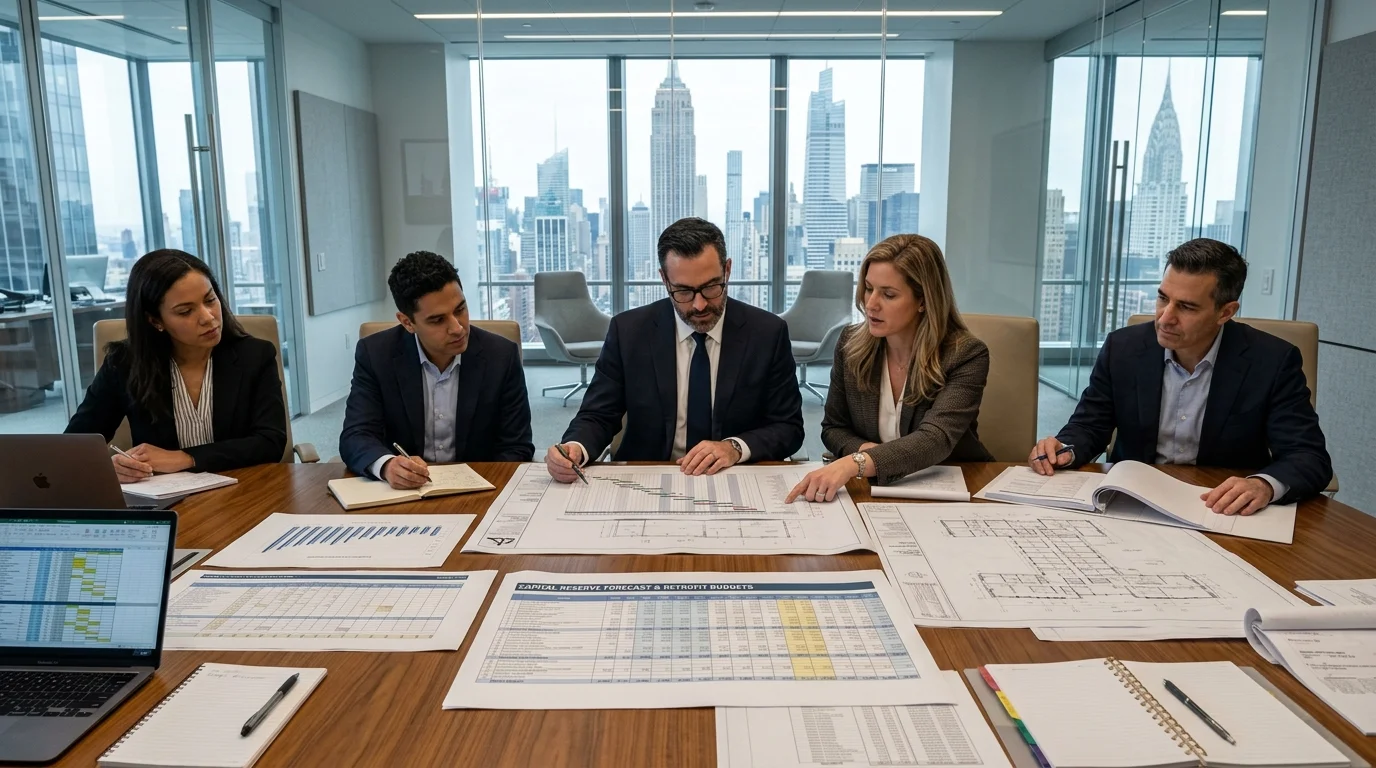
Energy-efficient buildings require more than one-time upgrades. HVAC systems eventually need replacement, roofs deteriorate, electrical infrastructure may need additional capacity, and building owners may need to make improvements to meet changing energy and emissions requirements.
For commercial and multifamily properties, capital reserve planning provides a way to prepare financially for these long-term investments.
Instead of waiting for an expensive system failure or an approaching compliance deadline, owners can forecast major retrofit expenses, build reserves gradually, and coordinate capital projects with the building's broader maintenance and energy strategy.
What Is Capital Reserve Planning?
Capital reserve planning is the process of estimating future major building expenses and setting aside funds to pay for them.
Unlike routine operating expenses, capital projects generally involve longer-lived assets and significant investments.
Examples include:
- HVAC replacement
- Roof replacement
- Window upgrades
- Electrical infrastructure
- Building automation systems
- Boiler replacement
- Heat-pump installations
- Lighting retrofits
- Building-envelope improvements
- Solar installations
- EV charging infrastructure
A capital reserve plan attempts to answer:
- What will the building need?
- When will it need it?
- How much could it cost?
- How should the owner prepare financially?
Why Energy Retrofits Belong in a Capital Plan
Energy projects are often treated as optional improvements until a deadline, equipment failure, or rising utility cost makes them urgent.
That approach can create financial pressure.
Consider an aging HVAC system that is already approaching the end of its useful life.
An owner could:
Wait → equipment fails → emergency replacement
or:
Plan ahead → reserve funds → evaluate efficiency options → design → procure → replace strategically
The second approach provides more time to evaluate whether the replacement should simply replicate the existing system or become part of a broader energy retrofit.
Step 1: Create an Asset Inventory
Start by documenting the major energy-related assets in the building.
A basic inventory might include:
| Asset | Condition | Estimated Remaining Life | Potential Future Project |
|---|---|---|---|
| Boiler | Fair | 5 years | Heating replacement |
| Chiller | Good | 10 years | Future replacement |
| Roof | Fair | 7 years | Roof retrofit |
| Windows | Poor | 8 years | Window upgrade |
| Lighting | Mixed | 3–6 years | LED retrofit |
| Controls | Outdated | 2–4 years | Building automation upgrade |
The exact lifespan of an asset depends on equipment type, maintenance, operating conditions, and manufacturer specifications.
The purpose of the inventory is to identify what could require significant capital investment and roughly when.
Step 2: Separate Maintenance From Major Capital Work
Not every building expense should come from the same reserve.
Routine maintenance may include:
- Filter replacement
- Minor repairs
- Preventive maintenance
- Routine inspections
Capital projects may include:
- Major equipment replacement
- Roof replacement
- Electrical upgrades
- Large facade projects
- Building automation replacement
Keeping the categories separate makes long-term financial planning easier.
Step 3: Identify Energy and Compliance Drivers
Energy retrofit planning should not happen independently from the building's compliance obligations.
Owners may need to consider requirements related to:
- Energy benchmarking
- Energy audits
- Building emissions
- Lighting
- Electrification
- Gas systems
- Facades
- Energy codes
- Other applicable local requirements
The Key Planning Question:
Which future compliance obligations could require capital investment?
For example, a building may discover through energy planning that a future HVAC replacement should include electrification or better controls rather than simply replacing an aging fossil-fuel system with another similar unit.
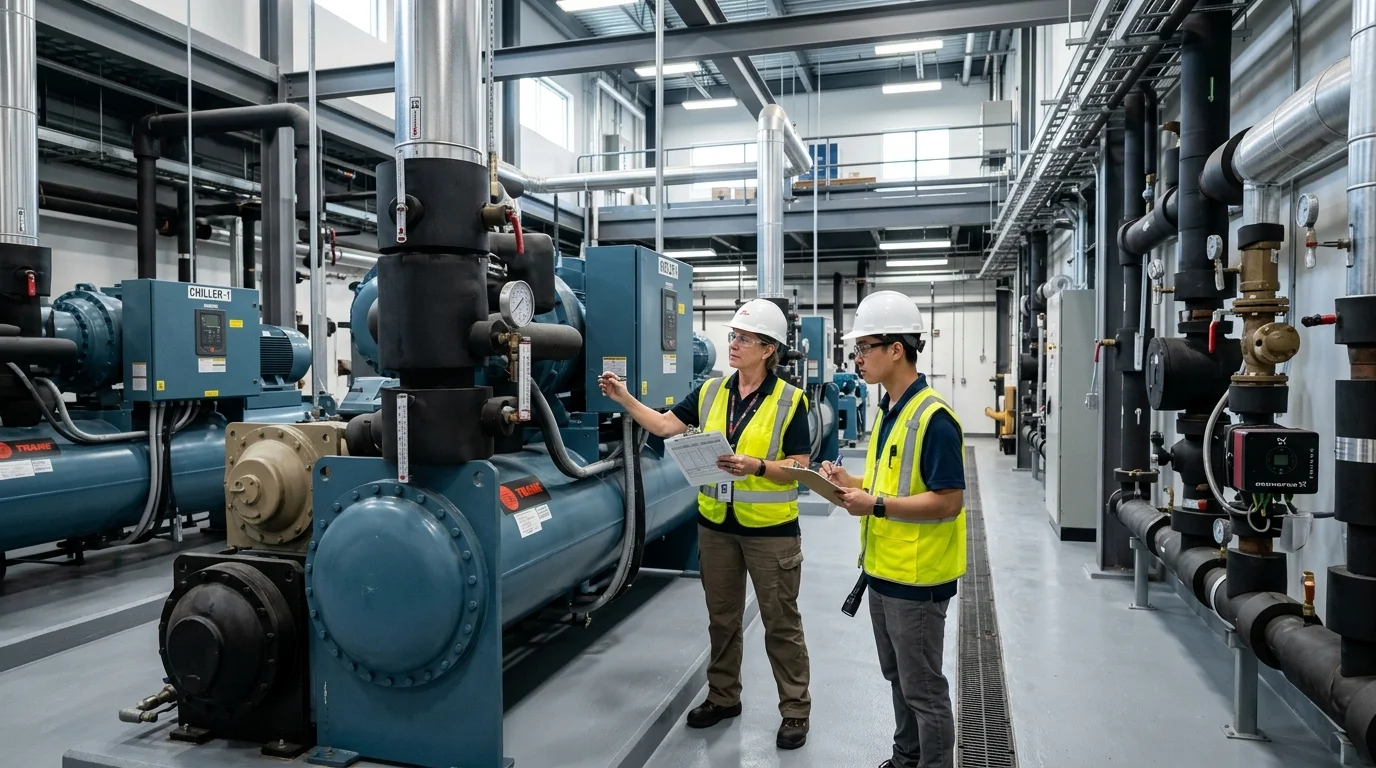
Step 4: Build a 5-, 10-, and 20-Year Forecast
A long-term capital plan becomes more useful when projects are mapped across multiple time horizons.
1
1–5 Years
Focus on projects likely to require attention soon: failed equipment, major controls upgrades, lighting, roof repairs, and immediate energy-efficiency improvements.
2
5–10 Years
Plan for assets approaching the end of their expected service life: major HVAC replacement, windows, electrical infrastructure, and large-scale envelope work.
3
10–20 Years
Look at larger strategic investments: deep energy retrofits, major electrification, central plant replacement, building-wide automation modernization, and large facade or roof programs.
The exact schedule should be based on actual asset conditions rather than an arbitrary replacement calendar.
Step 5: Estimate Future Costs
Once projects are identified, estimate the potential cost of each project.
Project Budget Formula:
Equipment + labor + engineering + permitting + construction + contingency
For example:
| Project | Estimated Future Cost |
|---|---|
| LED retrofit | $75,000 |
| Controls upgrade | $125,000 |
| HVAC replacement | $650,000 |
| Roof replacement | $400,000 |
| Electrical infrastructure | $300,000 |
These figures are illustrative only. Actual project costs can vary significantly depending on building size, location, accessibility, equipment selection, labor, design complexity, and market conditions.
Step 6: Account for Inflation
A project expected to cost $500,000 today may cost substantially more several years from now.
Capital reserve plans should therefore include an assumption for future construction-cost escalation.
Future Cost Calculation:
Future Cost = Current Cost × (1 + Annual Escalation Rate)Years
For example, a hypothetical $500,000 project with 3% annual escalation over 8 years would be: $500,000 × (1.03)8 ≈ $633,000
This is an illustration rather than a forecast of actual construction inflation. The appropriate escalation assumption should be reviewed periodically.
Step 7: Consider Energy Savings and Incentives
Capital planning does not have to look only at expenses. Some retrofit projects may reduce operating costs after installation.
For example:
HVAC upgrade → lower energy use → lower utility costs
or:
LED retrofit → lower electricity use + lower maintenance → ongoing savings
Applicable incentives can also reduce the owner's net investment.
Net Investment Equation:
Gross project cost − Incentives − Financing or other contributions = Net owner investment
The owner can then compare that investment with expected operating savings and the remaining useful life of the existing equipment.
Step 8: Coordinate Projects
One of the biggest opportunities in long-term planning is avoiding unnecessary duplication.
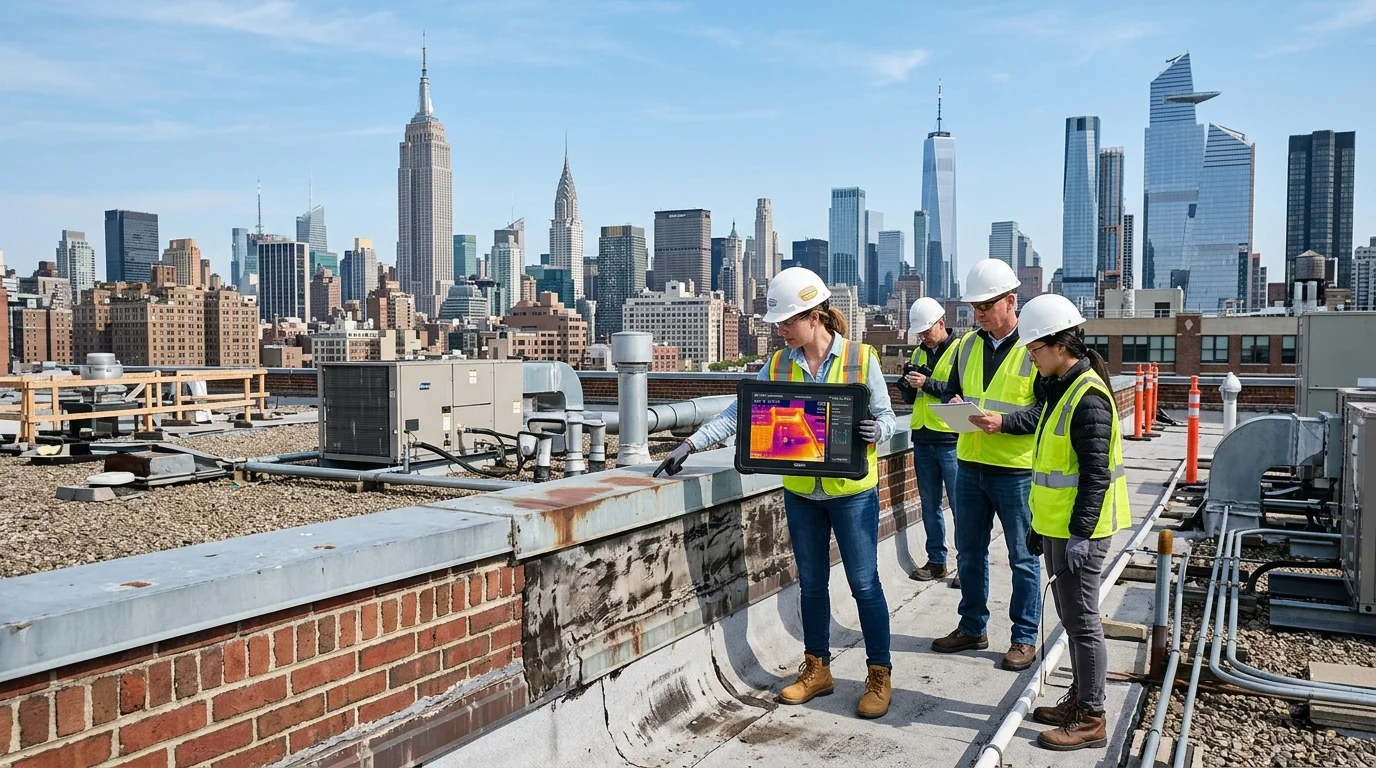
Suppose a roof needs replacement in three years and solar is being considered. It may be more economical to coordinate:
Roof replacement + solar planning
rather than replacing the roof and installing solar as completely separate projects.
Similarly:
- Window replacement + facade work
- HVAC replacement + electrical upgrades + controls
may provide opportunities to coordinate design, procurement, access, and construction.
Create a Capital Reserve Schedule
A simple reserve schedule could look like this:
| Year | Project | Estimated Cost | Reserve Strategy |
|---|---|---|---|
| Year 1 | LED retrofit | $75,000 | Current capital |
| Year 3 | Roof replacement | $450,000 | Build reserve |
| Year 5 | Controls upgrade | $150,000 | Annual contributions |
| Year 7 | HVAC replacement | $700,000 | Long-term funding |
| Year 10 | Electrical upgrade | $400,000 | Major reserve |
The values are examples. A real plan should be based on engineering assessments and project-specific cost estimates.
How Much Should an Owner Reserve?
There is no universal reserve amount that works for every property.
A suitable reserve contribution depends on:
- Building size
- Age
- Asset condition
- Existing reserves
- Capital-project schedule
- Debt obligations
- Expected energy upgrades
- Compliance exposure
- Property cash flow
- Ownership structure
The key is to calculate the funding requirement from the actual capital forecast, rather than selecting an arbitrary annual amount.
A Better Way to Prioritize Projects
Not every future retrofit needs the same priority.
Prioritization Framework:
Condition → deadline → risk → energy impact → cost → dependency
For example, an aging boiler approaching failure may require more immediate attention than a discretionary lighting improvement.
On the other hand, if the lighting project is inexpensive and produces strong savings, completing it earlier may improve cash flow that can later support larger capital projects.
Avoiding Emergency Retrofit Costs
Poor capital planning can create a chain reaction:
No reserve → equipment failure → emergency project → limited contractor selection → expedited procurement → higher cost
Long-term planning provides more time for:
- Competitive bidding
- Engineering
- Design
- Permitting
- Equipment selection
- Incentive applications
- Tenant coordination
- Construction scheduling
This is particularly valuable for major mechanical and electrical projects where procurement lead times can be significant.
Capital Reserves and Energy Modeling
Energy modeling can support capital planning when owners are evaluating multiple replacement strategies.
For example, an aging heating system could potentially be replaced with:
- Option A: Conventional replacement
- Option B: High-efficiency equipment
- Option C: Electrification or heat-pump system
The model can help compare projected energy performance, while the capital plan evaluates construction cost, replacement timing, and long-term financial implications.
Informed Decision Model:
Capital cost + operating cost + asset life + energy performance
rather than focusing only on the initial purchase price.
Capital Reserve Planning Checklist
- Inventory major building assets
- Document equipment condition
- Estimate remaining useful life
- Identify likely energy retrofit projects
- Identify applicable compliance-driven capital needs
- Build a 5-, 10-, and 20-year project schedule
- Estimate project costs
- Include design and permitting costs
- Include contingency
- Account for future cost escalation
- Review potential incentives
- Estimate operating-cost savings
- Coordinate projects with shared construction needs
- Establish annual reserve contributions
- Update the plan regularly
Common Capital Planning Mistakes
Planning Only for Equipment Failure
An asset can reach the end of its useful life without physically failing. Waiting for failure can eliminate opportunities for strategic replacement.
Ignoring Compliance-Driven Work
A building may have future regulatory obligations that require significant investment. These should be incorporated into long-term planning.
Using Today's Construction Cost Forever
Future projects should account for reasonable cost escalation rather than assuming today's price will remain unchanged.
Forgetting Soft Costs
Engineering, design, permitting, project management, testing, and other costs can materially affect the final budget.
Planning Each Project Independently
Coordinating related projects can reduce duplicated engineering, mobilization, and construction costs.
Conclusion
Capital reserve planning for energy retrofits gives building owners a structured way to prepare for major future investments instead of reacting to equipment failures or approaching deadlines.
The process starts with an asset inventory, then maps expected replacement needs, compliance requirements, energy opportunities, estimated costs, and funding requirements across multiple years.
For NYC property owners, long-term planning can be particularly valuable because building performance and compliance projects often overlap. HVAC, electrical, facade, lighting, envelope, electrification, and other improvements can sometimes be coordinated into a broader capital strategy.
The goal is not to predict every expense perfectly. It is to create a living financial roadmap that is updated as building conditions, project costs, energy requirements, and priorities change.
A well-maintained capital reserve plan gives owners more time, more options, and greater control over major energy retrofit investments.
Frequently Asked Questions
A capital reserve is money set aside to pay for significant future building expenses such as major equipment replacement, roof work, electrical upgrades, or energy-efficiency projects.
Many energy improvements involve significant upfront investment. Including them in the capital plan allows owners to prepare financially instead of relying on emergency funding when a system needs replacement.
A multi-year approach is useful. Many owners can benefit from maintaining at least a 5- to 10-year capital forecast, while larger properties may also benefit from a longer 15- to 20-year strategic outlook.
Yes. Future construction and equipment costs may be higher than current estimates, so long-term plans should include an appropriate cost-escalation assumption.
Potentially. Energy savings from earlier projects can improve operating cash flow, which may help support future capital investments.
It should be reviewed periodically and updated when major equipment conditions change, project costs are revised, new compliance requirements emerge, or significant retrofit opportunities are identified.