Learn how LL97 penalties work, what happens if your NYC building exceeds emissions limits...
BY NYC Energy Code Team
ON
15 August 2026
Building Emissions Limits 2024 vs 2030: What Changes for NYC Owners
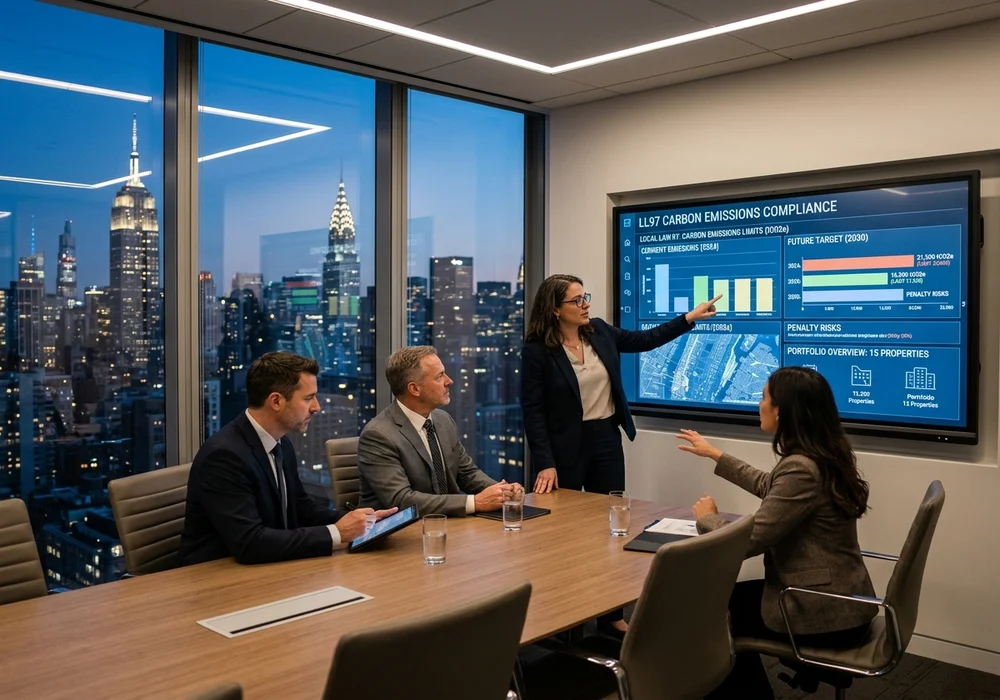
If your building is subject to Local Law 97, one of the most important dates on your compliance calendar isn't just today.
It's 2030.
That's because the emissions limits applying during the first LL97 compliance period—2024 through 2029—become significantly more stringent for the 2030–2034 period.
A building that is comfortably under its current limit can still face a compliance problem in 2030 if its energy use doesn't change.
NYC's Department of Buildings (DOB) has established emissions limits for 2024–2029 and separate limits for 2030–2034, using Energy Star Portfolio Manager property types as part of the revised calculation framework.
So the practical question for owners isn't simply:
"Am I compliant today?"
It's:
"Will my building still be compliant when the 2030 limits apply?"
What Are the LL97 Compliance Periods?
Local Law 97 establishes annual greenhouse gas emissions limits for covered buildings over 25,000 gross square feet.
The major statutory compliance periods are:
- 2024–2029: First emissions-limit period (targeting roughly the top 20% highest-emitting buildings).
- 2030–2034: Second, much more stringent emissions-limit period (affecting approximately 75% of covered buildings).
- 2035 onward: Subsequent compliance periods continuing the long-term path toward deep citywide decarbonization.
The City's overarching mandate is a 40% reduction in aggregate greenhouse gas emissions from covered buildings by 2030 and net zero by 2050. That explains why the 2030 limits become dramatically tighter.
Why 2030 Is Different
The biggest issue is that the emissions limits don't stay where they were in 2024. A building may currently meet its 2024–2029 limit and still require substantial engineering and capital work before 2030.
DOB Compliance Warning
DOB itself warns that some buildings currently estimated to comply with the 2024–2029 limits may fall out of compliance under the more stringent 2030–2034 limits if their energy patterns don't change. Waiting until 2029 is a risky strategy because major HVAC replacements, electrification, electrical service upgrades, and DOB permitting can take years.
How the Limits Are Determined
LL97 doesn't assign the same flat emissions limit to every building. The applicable limit depends on key factors including:
- Building use and occupancy classification
- ENERGY STAR Portfolio Manager property type
- Gross floor area (square footage)
- Applicable emissions intensity coefficient
- Specific compliance pathway (e.g., Article 320 standard, Article 321 prescriptive, affordable housing)
DOB has revised the emissions-limit framework to use ENERGY STAR Portfolio Manager property types, which better reflect actual differences in building energy use. This means building owners should never copy an emissions number from a neighboring property and assume it applies to their own.
2024–2029 vs. 2030–2034 at a Glance
| Period | What Owners Should Expect |
|---|---|
| 2024–2029 | First LL97 emissions limits apply. Focuses primarily on high-emitting buildings and establishing reporting baselines. |
| 2030–2034 | Significantly more stringent emissions limits apply across almost all property types. Steep reductions required. |
| 2035 onward | Long-term emissions reduction requirements become even more demanding, heading toward 80% reduction by 2050. |
A Building Can Be Compliant Today and Still Have a Problem
This is the critical factor that owners often overlook. Imagine a building currently produces emissions below its 2024–2029 limit. That sounds good on paper today.
But if the building:
- Uses an aging natural gas or fuel oil boiler
- Has inefficient legacy HVAC equipment
- Has outdated or bypassed building controls
- Has high tenant plug loads and energy intensity
- Has limited electrical service capacity for electrification
...then that same operating pattern will result in severe non-compliance under the 2030–2034 limits. Current compliance is not proof of future compliance.
What Owners Should Do Before 2030
The first step is to determine your building's actual emissions trajectory. Start by gathering and evaluating:
- Current annual greenhouse gas emissions calculations
- Historical Local Law 84 benchmarking data
- 24 to 36 months of utility consumption records
- Correct property type classification under Portfolio Manager
- Existing HVAC mechanical systems, heating fuel types, and age
- Electrical service entrance capacity (amps/volts)
- Prior Local Law 87 energy audits and RCx reports
- Planned 5-to-10 year capital improvement projects
This diagnostic baseline will tell you whether your building is comfortably below the 2030 limit or sitting right on the edge of compliance.
Energy Efficiency Should Come Before Emergency Work
Owners should not assume that full electrification is the only immediate path. Depending on the building, effective energy measures include:
Operational & Controls
HVAC scheduling, setpoint setback, variable frequency drives (VFDs), and smart building automation.
Envelope & Lighting
Comprehensive LED retrofits, daylight harvesting, air sealing, and facade/roof insulation improvements.
Mechanical Optimization
Condensing boiler retrofits, burner tuning, steam trap maintenance, and energy recovery ventilators (ERVs).
Electrification & Heat Pumps
Air-source and water-source heat pumps, electric domestic hot water (DHW), and thermal storage systems.
The purpose of planning early is to test and implement low-cost efficiency measures first, shrinking total energy load before sizing expensive new equipment.
Why LL87 Audits and Retro-Commissioning Matter
For buildings subject to Local Law 87, the mandatory 10-year energy audit and retro-commissioning study provide invaluable engineering intelligence.
While an LL87 Energy Efficiency Report is not an LL97 compliance filing, the findings reveal exactly where energy is being wasted. Retro-commissioning can correct faulty damper linkages, drifted sensors, and simultaneous heating/cooling without major construction—delivering immediate emissions reductions toward 2030 goals.
Why Electrification May Become Part of the Plan
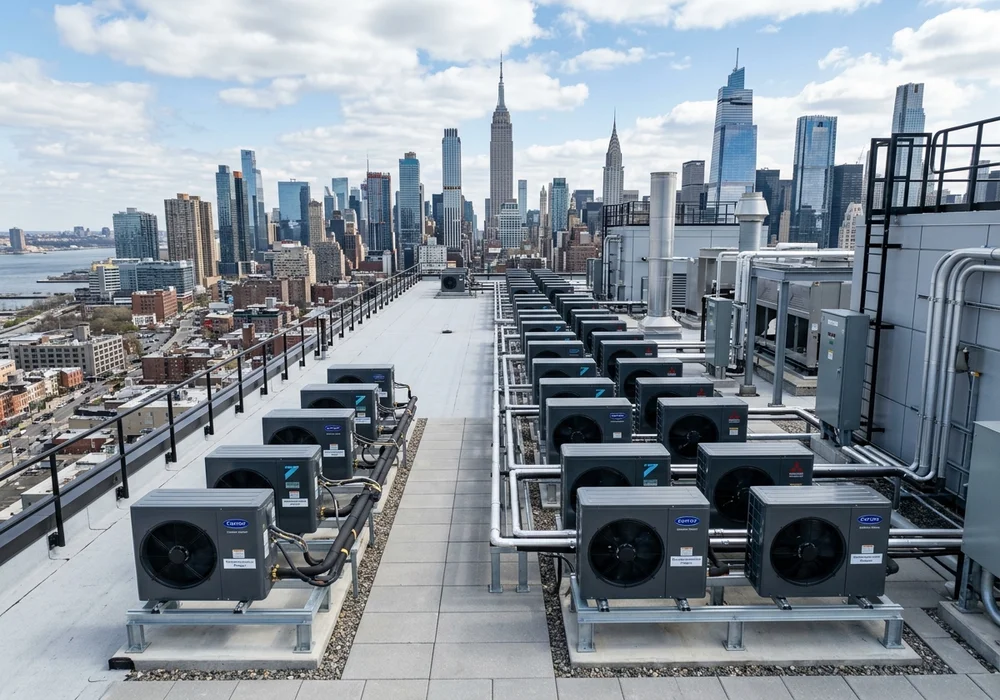
For buildings that rely heavily on on-site fossil-fuel combustion (gas or oil boilers), efficiency alone may not be enough to satisfy 2030–2034 caps. Electrification through heat pumps will often become necessary.
Because heat pump conversions involve Con Edison utility coordination, electrical riser upgrades, structural roof assessments, and DOB permitting, these projects require substantial lead time. DOB emphasizes that good-faith planning for the 2030 limits must start now.
Don't Ignore Penalties and Financial Capital Planning
Owners should treat the 2030 limits as a core capital budgeting priority. Potential costs include engineering design, electrical infrastructure, equipment procurement, permitting, and commissioning.
In contrast, ignoring the mandate results in steep annual civil penalties: $268 for every metric ton of CO2 equivalent emitted above your building's cap, year after year. Calculating your building's future exposure today is the only way to make informed capital decisions.
The 2030 LL97 Planning Checklist
Before assuming your building is secure for LL97, run through this practical checklist:
Annual Emissions Calculation: Do you know your building's exact current annual metric tons of CO2e?
DOB Property Classification: Has your building been correctly classified using Energy Star Portfolio Manager types?
2024–2029 Limit vs. 2030–2034 Limit: Have you calculated both thresholds side by side?
Emissions Margin Analysis: Is your building comfortably under the 2030 cap, or will it incur penalties without intervention?
Primary Fuel Drivers: What proportion of emissions comes from natural gas, fuel oil, steam, and electricity?
Operational & RCx Opportunities: Can controls tuning and scheduling shave off 5%–15% of energy demand?
Electrical Infrastructure Check: Does the building have sufficient ampacity to support heat pump conversions?
Multi-Year Capital Roadmap: Is there an approved budget and implementation timeline in place?
Final Takeaway
If your building is covered by Local Law 97, don't use current compliance as an excuse to stop planning.
The more useful question is: "What will my building look like under the 2030–2034 emissions limit?"
Start with current energy and emissions data, review your applicable property type limits, and identify which combination of operational improvements, retro-commissioning, energy efficiency, and equipment electrification can realistically close the gap. The 2030 deadline may sound distant, but major building projects require lead time—planning early gives you the lowest-cost options.
Frequently Asked Questions
The 2024–2029 limits apply during the first compliance period and target roughly the top 20% highest-emitting buildings. The 2030–2034 limits are significantly more stringent, requiring deeper emissions reductions across approximately 75% of covered properties.
No. Emissions limits vary depending on your building's specific ENERGY STAR Portfolio Manager property type, square footage, occupancy classification, and compliance pathway.
Yes. DOB specifically warns that many buildings that comply with 2024–2029 limits will fall out of compliance and face substantial penalties under the 2030–2034 limits if their energy and fuel consumption patterns remain unchanged.
Well before 2030. Major mechanical retrofits, electrification, electrical service upgrades, architectural design, DOB permitting, financing, and contractor execution often require 2 to 4 years of lead time.
Yes. Although Local Law 87 (energy audits and retro-commissioning) is a separate mandate, its diagnostic findings identify exact equipment inefficiencies and low-cost operational savings that directly reduce carbon emissions.
Not necessarily. The right strategy depends on property type, heating fuel, and current efficiency. Many buildings can comply through a combination of deep efficiency, building automation, and envelope tuning without immediate 100% electrification.
Comparing 2024 and 2030 limits today allows owners to proactively model future penalty exposure and incorporate necessary capital upgrades into normal budgeting cycles rather than facing emergency retrofit costs.