Learn how conducting a thorough study unlocks optimal energy yield and ROI for renewable installations.
BY NYC Energy Code Team
ON 14 August 2026
How Much Does a Solar Feasibility Study Actually Cost in NYC?
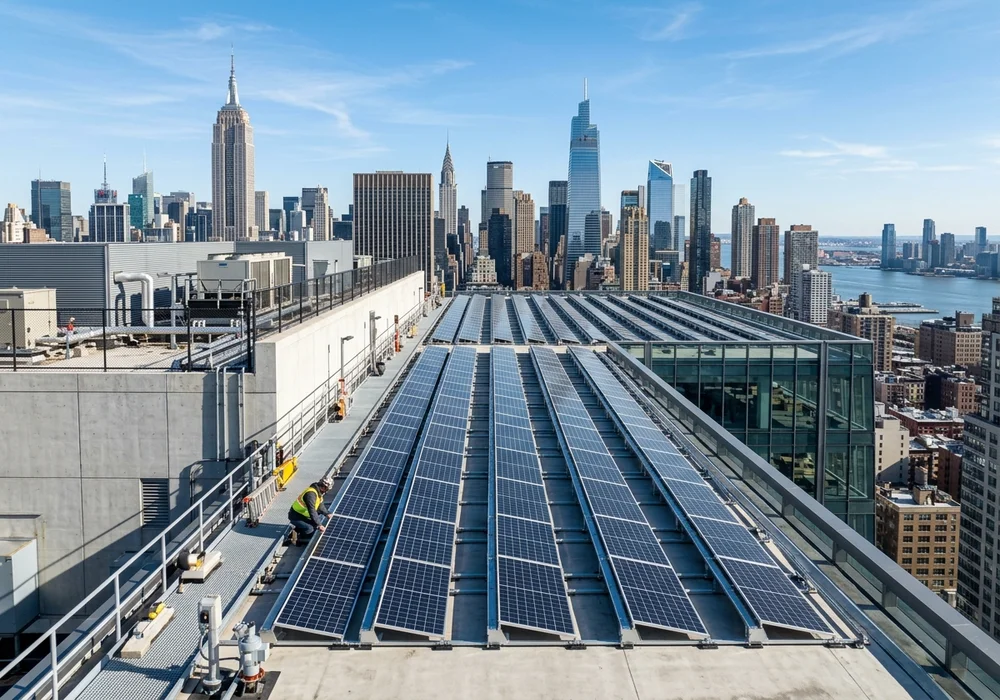
Before putting solar panels on a New York City rooftop, you need to answer a more basic question:
Does solar actually make sense for this building?
That's what a solar feasibility study is supposed to determine.
The study looks at your roof, available sunlight, structural conditions, electrical setup, potential system size, energy production, project costs, and expected financial return. In other words, it helps you avoid spending money on a solar installation that doesn't make sense.
But how much should you budget for the study itself?
There isn't one fixed NYC price. A simple desktop assessment can cost very little—or even be included in a solar company's proposal—while a detailed commercial feasibility analysis involving structural, electrical, financial, and permitting review can cost significantly more.
For NYC building owners, the right question isn't simply "How cheap can I get the study?" It's "What level of analysis do I actually need?"
What Is a Solar Feasibility Study?
A solar feasibility study evaluates whether a building is a practical candidate for solar energy installation.
A professional analysis may examine:
- Usable rooftop area
- Sun exposure and shading
- Rooftop equipment & obstructions
- Roof condition and remaining service life
- Structural considerations
- Electrical capacity and service panel layout
- Potential solar system size
- Estimated annual energy production
- Installation costs
- Available incentives (tax credits, NYSERDA, utility credits)
- Estimated energy savings
- Potential payback period & ROI
The scope varies considerably depending on the building type and the primary purpose of the study.
So, How Much Does It Cost in NYC?
There is no official NYC government price that applies to every private solar feasibility study.
For planning purposes, building owners and property managers may encounter several pricing levels:
| Study Type | Typical Planning Range |
|---|---|
| Basic desktop solar assessment | $0 – $500 |
| Preliminary site feasibility | $500 – $2,000 |
| Detailed commercial feasibility study | $2,000 – $7,500+ |
| Complex building/engineering analysis | $7,500+ |
Planning Note: These are planning ranges, not official NYC fees. Actual pricing depends heavily on building size, roof complexity, engineering requirements, and how detailed the financial analysis needs to be.
Some solar installers offer preliminary assessments at no separate charge because the study is part of their sales process.
That doesn't automatically make the study worthless. It does mean you should understand what you're actually receiving.
Why Some Studies Cost Much More Than Others
A rooftop solar assessment can be simple or highly technical.
Consider two typical NYC scenarios:
Building A
A small commercial building with:
- A simple flat roof
- Few rooftop obstructions
- Good sun exposure
- Existing electrical information available
A preliminary assessment may be relatively straightforward and low cost.
Building B
A large NYC multifamily building with:
- Multiple roof levels
- Water tanks & HVAC equipment
- Limited roof space
- Nearby high-rise shading
- Aging electrical infrastructure
- Uncertain structural capacity
Requires substantially more engineering investigation, resulting in a higher fee.
Naturally, the professional fee for complex properties will be higher to cover site visits, structural modeling, and electrical verification.
What Factors Increase the Cost?
1. Building Size
Larger buildings generally require more analysis. A 10,000-square-foot roof is a completely different scope from a 100,000-square-foot property with several interconnected roof areas and distinct utility connections.
2. Roof Complexity
A simple flat roof is far easier to evaluate than a rooftop filled with:
- HVAC units and chiller equipment
- Skylights and bulkheads
- Mechanical equipment and piping
- Water tanks and elevator shafts
- Parapets and architectural features
Every obstruction reduces the usable area available for solar panels and requires detailed set-back modeling.
3. Structural Questions
Solar equipment adds weight (dead load) and wind-lift risks (wind loads) to a building structure.
NYC Department of Buildings (DOB) guidance states that building owners must hire a Professional Engineer (PE) or Registered Architect (RA) to confirm that the building's structural system can support solar equipment before installation. Solar installations connected to buildings also require DOB permits.
A basic solar quote may not include a detailed structural investigation. That distinction matters—a preliminary energy production estimate is not the same thing as a formal structural engineering evaluation.
4. Electrical Infrastructure
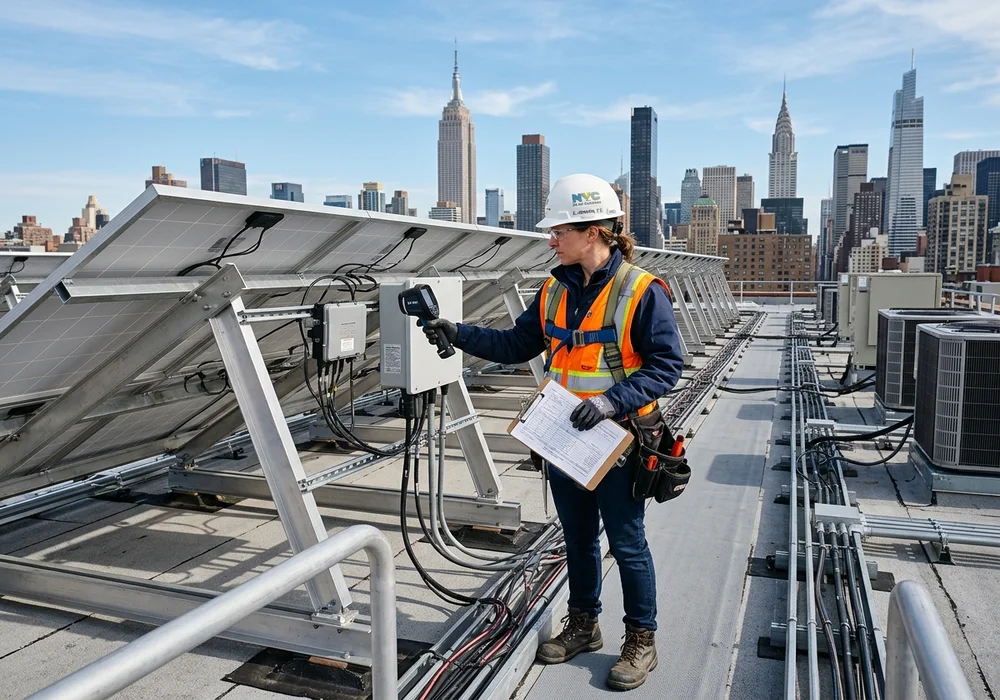
The solar array must connect directly to the building's electrical system or utility interconnect points.
Depending on the property, engineering professionals may need to review:
- Main electrical service capacity
- Distribution equipment & switchgear
- Panelboards and meter banks
- Available busbar capacity
- Utility interconnection requirements (Con Edison)
- Existing building power loads
A building with limited electrical capacity may require additional engineering designs or costly service upgrades, which increases project complexity.
What Should a Good Study Include?
Before paying for a feasibility study, ask exactly what scope of work is included in the proposal.
At minimum, a comprehensive study should address:
Roof Potential
How much usable rooftop area realistically exists after accounting for DOB set-backs, walkways, and equipment clearance?
Solar Production
How much kilowatt-hour (kWh) electricity could the proposed system generate annually based on local irradiance data?
System Size
What approximate system capacity (in kW DC/AC) makes practical sense for your building load?
Shading Analysis
Will nearby high-rise buildings, mechanical bulkheads, or rooftop structures cast significant shadows?
Structural Feasibility
Can the existing roof deck and framing support the added dead and wind loads, or is structural reinforcement required?
Electrical Feasibility
Can the building's electrical service accept the solar input, and where will inverters and disconnects be situated?
Financial Analysis
What are estimated turn-key project costs, operational savings, available incentives, net cash flow, and payback timeline?
A study that only provides a basic satellite screenshot and a generic system size quote isn't a complete feasibility analysis.
Don't Confuse a Solar Quote With a Feasibility Study
This is one of the most critical distinctions for NYC building owners.
A solar contractor might provide a sales proposal showing panel count, system capacity, estimated annual production, and project price. That is a useful initial estimate, but it is not an independent feasibility study.
A proper feasibility analysis identifies potential physical, engineering, and regulatory constraints before the owner commits to a major construction contract. For larger commercial properties, getting an independent review reduces the financial risk of accepting an overly optimistic sales estimate.
NYC-Specific Issues Can Change the Economics
New York City rooftops are vastly different from suburban roofs:
- High-rise urban density creates significant surrounding shading.
- Limited roof space restricts total system footprint.
- Older masonry and steel structures raise structural questions.
- DOB permitting and FDNY access clear pathways add administrative complexity.
NYC DOB regulations state that solar installations require permits and inspections, which can be filed separately or as part of a broader building alteration application. These requirements should be incorporated into the project budget from day one.
The Study Can Be Valuable Even If You Don't Install Solar
A feasibility study isn't wasted money if the conclusion is "solar does not make financial or physical sense for this building."
That is still a highly valuable outcome. For example, the study might uncover severe structural limitations, excessive shading, or prohibitive electrical upgrade requirements. Finding that out for $2,000–$3,000 prevents a multi-hundred-thousand-dollar capital mistake.
Affordable Housing Projects May Have Different Options
NYC's Department of Housing Preservation and Development (HPD) operates the Solar Where Feasible initiative to support solar planning across affordable-housing portfolios.
HPD provides free technical support through Solar One for eligible projects, supporting over 15 MW of cost-effective solar since 2020. Feasibility requirements differ by project type—certain rehabilitation projects require a formal Solar Feasibility Analysis, while new construction requirements were updated in 2024. Affordable-housing owners should verify program rules before hiring private consultants.
What About Solar Incentives?
A thorough feasibility study must factor in active financial incentives. Gross project cost and net project cost are rarely the same.
Net Project Cost Formula:
Gross Solar Installation Cost
− Eligible NYSERDA NY-Sun Incentives
− Federal Inflation Reduction Act (IRA) Tax Credits (30%+)
− NYC Property Tax Abatement (PTA)
= Net Project Cost
Financial modeling should be calculated based on your building's specific tax structure and utility rate schedule rather than generic internet calculators.

Should You Pay $500 or $5,000?
The right investment depends on the decision you are making:
A Basic Assessment ($0 - $500) Is Enough When:
- You are screening multiple properties
- The roof structure is simple and unobstructed
- You want an initial feasibility screening
- You are comparing general options
A Detailed Study ($2,000 - $7,500+) Is Needed When:
- The property is large or complex
- The roof contains multiple HVAC & utility units
- You are preparing a major capital improvement
- Structural or electrical upgrades are suspected
- You require investment-grade numbers for financing
10 Questions to Ask Before Hiring a Consultant
Before signing a contract for a solar feasibility study, clarify:
- What exactly is included in the scope of work?
- Will a professional physically inspect the roof and electrical room?
- Will 3D shading modeling be performed?
- Is a structural engineering review by a licensed PE/RA included?
- Is electrical panel and busbar capacity evaluated?
- Will the report provide accurate annual kWh production estimates?
- Will it model detailed project economics (NPV, IRR, Payback)?
- Are state, federal, and NYC tax incentives modeled?
- Will the final report be acceptable for lender underwriting?
- Are NYC DOB permitting and FDNY pathway considerations addressed?
How Long Does a Solar Feasibility Study Take?
A basic desktop screening can be completed in a few business days.
A detailed commercial analysis typically takes 2 to 4 weeks because engineers need to perform site visits, review structural drawings, evaluate electrical panel data, run shading models, and compile an investment-grade report.
The Bottom Line
So, how much does a solar feasibility study actually cost in NYC?
For a basic screening, you may pay little or nothing. A detailed commercial assessment will reasonably run into the thousands of dollars ($2,000 to $7,500+), particularly when structural, electrical, and detailed financial engineering are involved.
Ultimately, a good feasibility study doesn't just tell you solar is possible—it tells you whether solar is worth pursuing.
Frequently Asked Questions
How much does a solar feasibility study cost in NYC?
There is no standard NYC-wide price for private feasibility studies. Basic assessments may be free or cost a few hundred dollars, while detailed commercial studies can cost several thousand dollars depending on engineering and financial requirements.
Is a free solar assessment enough?
It may be enough for an initial screening. However, a free assessment may not include detailed structural, electrical, permitting, or independent financial analysis.
Does NYC require a solar feasibility study?
Not every private building is subject to the same feasibility-study requirement. Certain HPD affordable-housing projects have specific solar feasibility requirements, while NYC's LL92/94 and building-code requirements can affect how solar is evaluated on other projects.
Does the study include structural engineering?
Not necessarily. Ask explicitly. NYC DOB requires a Professional Engineer or Registered Architect to determine whether the building's structure can support solar equipment before installation.
What should a solar feasibility study tell me?
It should help determine available roof area, shading, potential system size, expected production, electrical and structural considerations, estimated costs, incentives, and potential financial return.
Is a solar feasibility study worth paying for?
For a large or complex building, it can be. Spending a few thousand dollars to identify a major structural, electrical, or economic problem before committing to a much larger solar project can prevent a far more expensive mistake.
How do I get the most accurate solar cost estimate?
Start with a site-specific feasibility assessment rather than relying solely on generic cost-per-watt calculators. NYC rooftop complexity, roof condition, structural requirements, electrical work, permitting, and system size can significantly affect the final project cost.