BY NYC Energy Code Team
ON 08 Aug 2026
Smart Buildings
Smart Buildings 101: How IoT Sensors Are Cutting Energy Costs in NYC
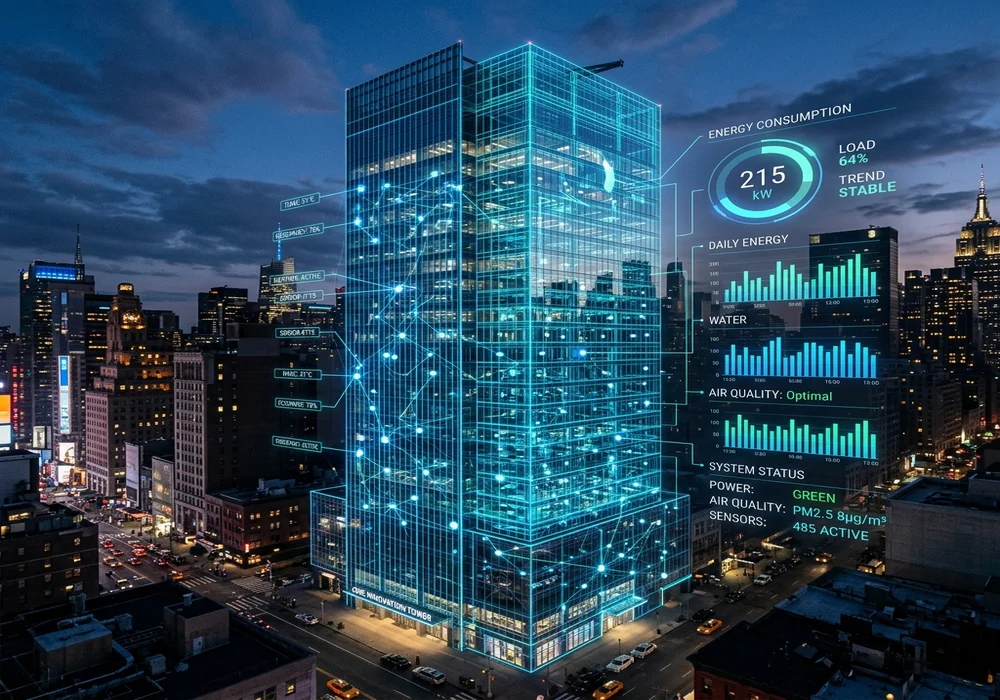
As energy costs continue to rise and building regulations become more demanding, many New York City property owners are looking for smarter ways to manage their buildings. One of the fastest-growing solutions is the use of Internet of Things (IoT) sensors.
These small, connected devices collect real-time information about how a building operates. Instead of waiting for a monthly utility bill to reveal a problem, IoT sensors provide continuous data that helps owners identify waste, improve efficiency, and lower operating costs.
Whether you're managing an office tower, apartment building, hotel, school, or mixed-use property, smart building technology is becoming an essential tool for modern property management.
What Is a Smart Building?
A smart building uses connected devices, software, and automation to monitor and manage building operations more efficiently.
Instead of relying on manual inspections or fixed schedules, smart systems automatically collect information about how the building performs.
These systems can monitor:
- Heating and cooling
- Lighting
- Electricity usage
- Water consumption
- Indoor air quality
- Occupancy levels
- Equipment performance
The result is better decision-making based on real-time data rather than assumptions.
What Are IoT Sensors?
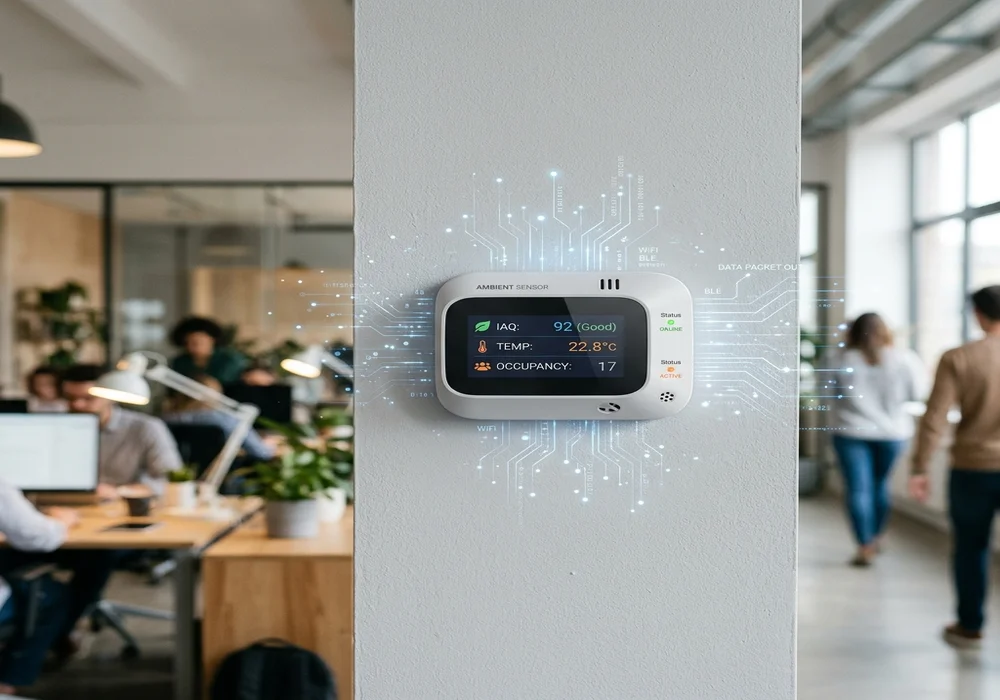
IoT (Internet of Things) sensors are small electronic devices installed throughout a building to collect operational data.
Depending on the application, sensors can monitor:
- Temperature
- Humidity
- Motion and occupancy
- Carbon dioxide (CO₂)
- Water leaks
- Energy consumption
- Equipment vibration
- Air quality
The information is sent to a central building management system, where facility managers can monitor performance and respond quickly to issues.
How IoT Sensors Reduce Energy Costs
One of the biggest advantages of smart buildings is their ability to eliminate unnecessary energy waste.
For example, IoT sensors can:
- Turn off lights in unoccupied rooms.
- Adjust HVAC systems based on occupancy.
- Detect equipment running outside scheduled hours.
- Identify unusually high energy consumption.
- Monitor indoor temperatures for optimal comfort.
- Alert staff when equipment operates inefficiently.
These small adjustments often lead to meaningful reductions in utility expenses over time.
Predictive Maintenance Saves Money
Traditional maintenance often follows one of two approaches:
- Fix equipment after it breaks.
- Service equipment on a fixed schedule.
Smart buildings introduce a third option—predictive maintenance.
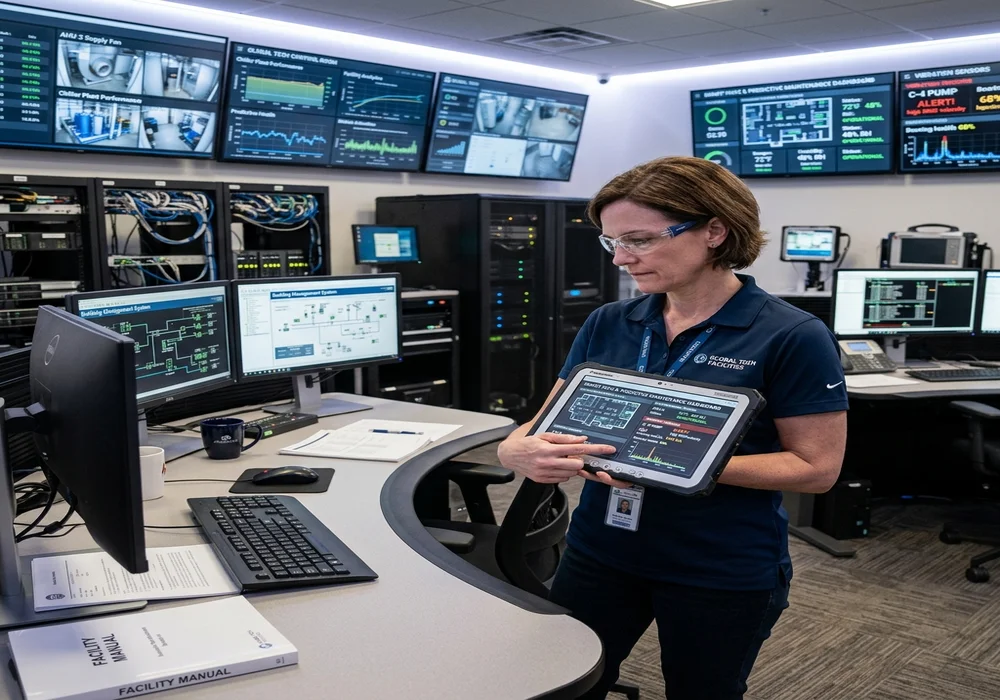
IoT sensors continuously monitor equipment performance and detect early warning signs such as:
- Excessive vibration
- Rising motor temperatures
- Abnormal operating patterns
- Increased energy consumption
This allows maintenance teams to resolve issues before equipment fails, reducing repair costs and minimizing downtime.
Better Comfort for Building Occupants
Energy efficiency shouldn't come at the expense of occupant comfort.
Smart building systems help maintain:
- Consistent indoor temperatures
- Better ventilation
- Improved indoor air quality
- Balanced humidity levels
- More responsive lighting
When occupants are comfortable, complaints decrease and overall building satisfaction often improves.
Supporting Future Energy Compliance
Many building owners are also using smart technology to support long-term compliance planning.
Accurate energy monitoring helps owners:
- Track building performance.
- Identify efficiency opportunities.
- Monitor equipment operation.
- Improve energy management.
- Prepare for evolving sustainability requirements.
Instead of gathering information only once a year, owners gain continuous insight into how the building performs.
Is It Worth the Investment?
Installing IoT sensors requires an upfront investment, but many owners find the long-term benefits outweigh the initial cost. Potential advantages include:
- Lower utility bills & reduced maintenance expenses
- Longer equipment life & faster problem detection
- Better operational efficiency & improved tenant experience
- Increased property value
Best Practices Before Going Smart
Before installing smart building technology:
- Assess your current building systems.
- Identify areas with the highest energy consumption.
- Review existing building automation systems.
- Prioritize high-impact upgrades.
- Work with experienced building technology professionals.
- Plan for future expansion as technology evolves.
Starting with a phased implementation often makes adoption easier and more cost-effective.
Conclusion
Smart buildings are changing the way properties are managed across New York City. By using IoT sensors to monitor energy use, equipment performance, occupancy, and indoor conditions in real time, building owners can make better decisions, reduce operating costs, and improve overall efficiency.
As buildings become more connected and energy expectations continue to evolve, investing in smart technology is no longer just about convenience—it's becoming an important part of long-term building management. Whether you're planning a retrofit or upgrading an existing property, IoT sensors provide the data needed to create a more efficient, reliable, and future-ready building.
Frequently Asked Questions
What is a smart building?
A smart building uses connected technology, sensors, and automation to monitor and improve building operations, energy use, and occupant comfort.
What are IoT sensors?
IoT sensors are connected devices that collect real-time data such as temperature, occupancy, humidity, energy usage, and equipment performance.
How do IoT sensors reduce energy costs?
They help optimize HVAC systems, lighting, and equipment operation by identifying waste and adjusting building systems based on actual usage.
Can IoT sensors help prevent equipment failures?
Yes. Many smart systems use predictive maintenance to detect early signs of equipment problems before breakdowns occur.
Are smart buildings only for new construction?
No. Many existing buildings can be retrofitted with IoT sensors and smart building technology without requiring major structural changes.
Why should NYC building owners invest in smart building technology?
Smart buildings can lower operating costs, improve tenant comfort, support energy management, extend equipment life, and help owners prepare for future sustainability and compliance requirements.
You may also like