
For building owners and property managers in New York City, energy compliance is no longer just about lowering utility bills. It is now directly tied to carbon emissions, financial planning, and long-term property value. One of the most important regulations driving this change is Local Law 97.
Local Law 97 introduces carbon emission limits for large buildings and imposes penalties on properties that exceed those limits. Yet many owners still find the law confusing—especially when it comes to understanding how carbon caps work and what they mean in practical terms.
This guide explains Local Law 97 carbon emission limits in plain language, helping NYC building owners understand their responsibilities, risks, and options.
Local Law 97 is part of New York City’s broader climate initiative aimed at reducing greenhouse gas emissions from buildings. Since buildings account for a large share of the city’s carbon output, the law targets energy use and fuel consumption in large properties.
Instead of focusing only on energy efficiency, Local Law 97 places a cap on how much carbon a building is allowed to emit each year. If emissions exceed that limit, fines may apply.
Local Law 97 generally applies to buildings that are:
This includes:
Smaller buildings are typically exempt, but many mid-size and large properties fall under the law.
Carbon emission limits are annual caps on how much greenhouse gas a building can produce. These limits are based on:
Each fuel type produces a different amount of carbon when consumed. Local Law 97 assigns emission factors to each energy source, converting energy use into carbon output.
The result is a total annual carbon emission number for the building.
Measure energy consumption
Electricity, gas, steam, and other fuels are tracked using utility data.
Apply emission factors
Each fuel type has a carbon value assigned to it.
Compare emissions to the building’s limit
If actual emissions exceed the allowed limit, the building is non-compliant.
The allowed emission limit is not the same for every building. It varies depending on the property’s use, such as residential, office, or assembly space.
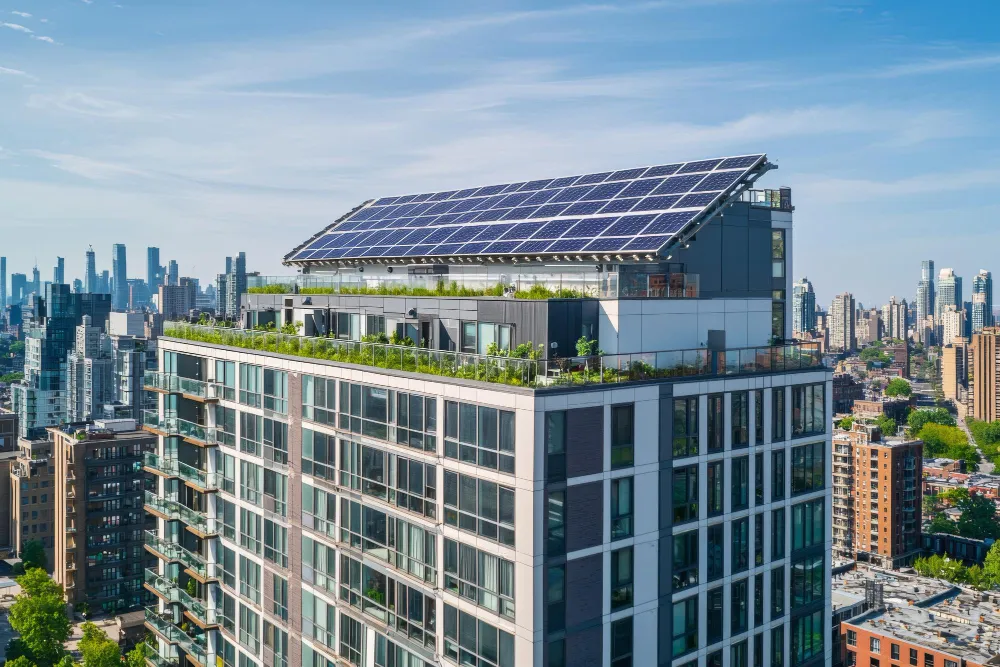
Local Law 97 is structured around compliance periods, each with stricter carbon limits over time.
Key Compliance Phases
Initial compliance period – Allows higher emissions
Future compliance periods – Gradually lower carbon caps
This phased approach gives building owners time to plan, budget, and implement upgrades instead of making sudden changes.
Q: Do renewable energy systems reduce carbon emissions under Local Law 97?
Yes. Cleaner energy sources can lower a building’s carbon footprint.
Q: Are older buildings exempt from carbon limits?
No. Many older buildings are covered and must plan upgrades.
Q: How often must emissions be reported?
Carbon performance is evaluated during each compliance period.
Q: Can professional consultants help with compliance?
Yes. Many owners work with energy and engineering professionals to plan upgrades.
Local Law 97 carbon emission limits represent a major shift in how buildings are regulated in New York City. Instead of focusing only on energy usage, the law emphasizes carbon accountability.
For building owners and property managers, understanding these limits early is critical. With proper planning, audits, and strategic upgrades, many buildings can reduce emissions, control costs, and stay compliant without disruption.
The key is to move from uncertainty to informed decision-making—and to treat carbon planning as part of long-term asset management, not just a regulatory burden.