BY NYC Energy Code Team
ON 21 July 2026
NYC Local Law Compliance
LL84 vs LL97: What's the Difference and Why Both Matter
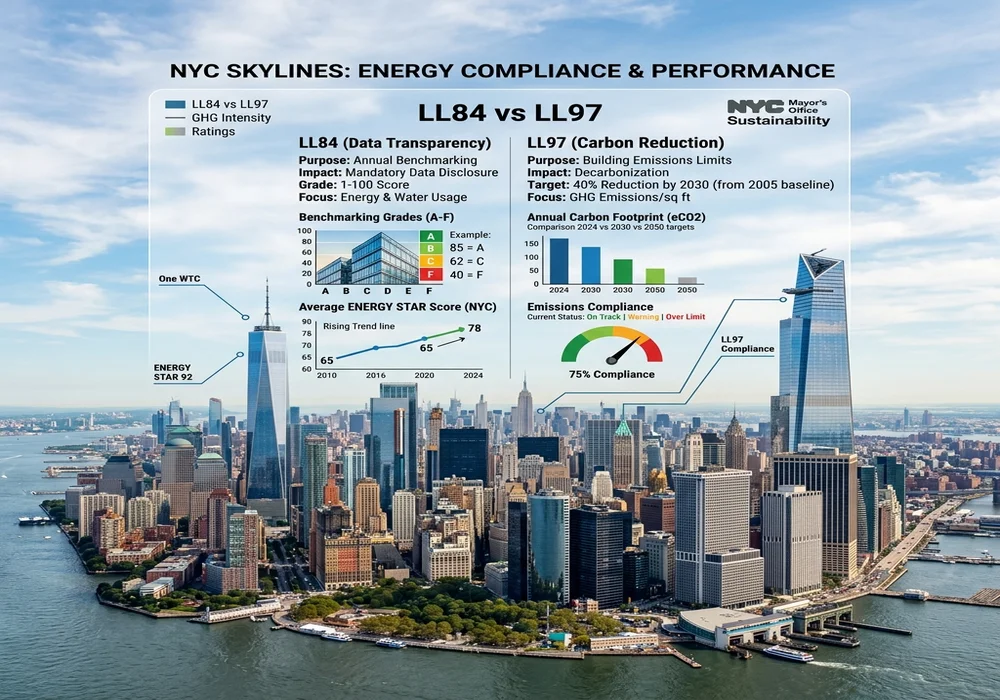
If you own a commercial or multifamily building in New York City, you've likely heard about Local Law 84 (LL84) and Local Law 97 (LL97). Since both laws focus on building energy performance, many owners assume they're the same. They're not.
While LL84 requires buildings to measure and report energy use, LL97 sets greenhouse gas emissions limits and may impose penalties if those limits are exceeded. Together, these laws help NYC reduce carbon emissions while encouraging more energy-efficient buildings.
Understanding the difference between LL84 and LL97 is essential for staying compliant, avoiding penalties, and planning future building improvements.
What Is Local Law 84?
Local Law 84 is New York City's annual energy benchmarking law. Covered buildings must track and report their yearly energy and water consumption through the EPA's ENERGY STAR Portfolio Manager.
The law doesn't require a building to be energy efficient—it simply requires owners to measure and report how much energy the building uses.
Benchmarking provides owners with valuable insights into building performance and helps identify opportunities to reduce operating costs through improved efficiency.
What Is Local Law 97?
Local Law 97 is one of the nation's most ambitious building emissions laws.
Instead of measuring energy usage alone, LL97 establishes carbon emissions limits for many large NYC buildings. Buildings that exceed their permitted emissions levels may face annual financial penalties.
Its goal is to encourage property owners to invest in energy-efficient equipment, cleaner energy sources, and long-term sustainability improvements.
LL84 vs LL97: Key Differences
The fundamental differences between these two landmark regulations can be summarized across their core features:
| Feature | LL84 | LL97 |
|---|---|---|
| Purpose | Energy benchmarking | Carbon emissions limits |
| Main Focus | Report energy & water use | Reduce greenhouse gas emissions |
| Reporting | Annual | Annual |
| Uses Portfolio Manager | Yes | Uses benchmarking data as input |
| Penalties | Missing reporting deadlines | Excess emissions and reporting violations |
| Goal | Measure performance | Improve performance |
Simply put:
- LL84 measures performance: It tracks, benchmarks, and discloses annual energy and water usage.
- LL97 regulates performance: It sets strict limits on greenhouse gas emissions and penalizes buildings that exceed them.
How LL84 and LL97 Work Together
Although they are separate laws, they're closely connected.
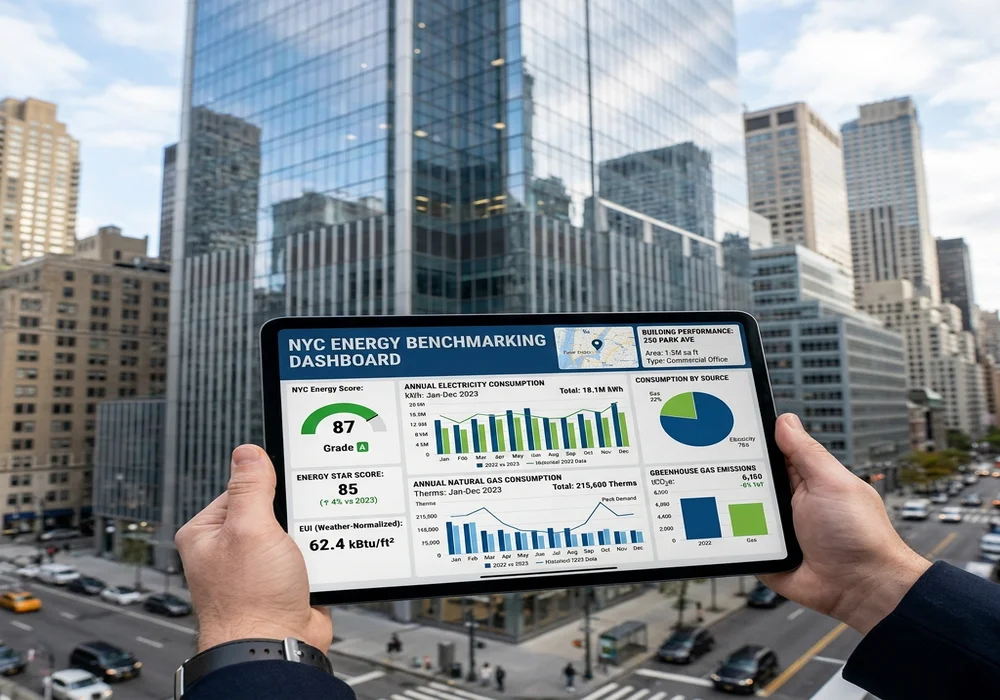
LL84 provides the energy consumption data that helps determine a building's greenhouse gas emissions under LL97.
For example, benchmarking collects critical building information such as:
- Electricity usage
- Natural gas consumption
- Steam usage
- Building size and occupancy type
- Utility data and operational hours
This information is used to estimate carbon emissions and evaluate whether a building complies with LL97.
Warning: If benchmarking data is inaccurate, emissions calculations may also be incorrect, leading to unexpected compliance violations or false penalty calculations.
Why Both Laws Matter
Some owners treat LL84 as simple paperwork and LL97 as the only law that matters. That's a mistake.
Without accurate benchmarking:
- Energy trends become extremely difficult to track.
- Building performance cannot be measured properly over time.
- Emissions calculations may be inaccurate or misleading.
- Compliance planning for carbon reductions becomes much more difficult.
Together, these laws create a complete picture of your building's energy performance. LL84 tells you where you stand today, while LL97 helps determine where you need to improve.

Common Mistakes Building Owners Make
Many compliance issues result from avoidable errors, including:
Assuming LL84 and LL97 Are the Same Law
Many owners treat them interchangeably, resulting in missing separate deadlines or ignoring emissions targets.
Waiting Until Deadlines to Gather Utility Data
Scrambling at the last minute for electricity, gas, and water data often leads to inaccurate submissions or late-filing fees.
Entering Inaccurate Benchmarking Information
Incorrect square footage or building use profiles in Portfolio Manager skew the carbon footprint metrics required by LL97.
Delaying Energy-Efficiency Upgrades
Ignoring benchmarking alerts about rising energy consumption postpones critical HVAC, LED, and control modifications.
LL84 and LL97 Compliance Checklist
Consider these best practices to ensure continuous compliance:
- Review utility bills every month for inconsistencies
- Keep ENERGY STAR Portfolio Manager updated in real-time
- Monitor and flag unusual increases in energy consumption
- Upgrade inefficient lighting and older HVAC equipment proactively
- Maintain organized, digital compliance records for at least 6 years
- Work with qualified energy consultants to verify emissions calculations
Practical Takeaway
Managing both laws in a unified strategy is key: Rather than treating them as separate compliance chores, building owners should manage both laws together. Accurate benchmarking under LL84 directly supports reliable emissions reporting under LL97. Ongoing energy improvements not only help reduce operating costs today but also prepare your building for future sustainability requirements.
Conclusion
When comparing LL84 vs LL97, it's important to remember that the two laws serve different—but complementary—purposes. LL84 focuses on measuring and reporting building annual energy and water consumption, while LL97 establishes greenhouse gas emissions limits that encourage cleaner and more efficient buildings.
A proactive approach not only simplifies compliance but also improves long-term building performance, increases asset value, and protects your real estate investment in New York City.
Frequently Asked Questions
What is the main difference between LL84 and LL97?
LL84 requires annual energy benchmarking to measure performance, while LL97 establishes strict greenhouse gas emissions limits to regulate and improve building performance.
Does LL84 automatically satisfy LL97 requirements?
No. LL84 provides the foundational energy benchmarking data, but LL97 has its own separate emissions thresholds, compliance deadlines, and penalties.
Why is LL84 important for LL97?
Because LL84 benchmarking data is used to calculate the building's greenhouse gas emissions. Inaccurate benchmarking data directly compromises LL97 emissions calculations.
Which buildings must comply with these laws?
Generally, buildings 25,000 square feet and larger are subject to both LL84 benchmarking and LL97 carbon emission limits, though certain exemptions exist.
Can energy-efficiency upgrades help with both laws?
Yes. Upgrading HVAC systems, optimizing building envelopes, and installing smart controls improve your benchmarking score under LL84 and help you stay under the LL97 emissions caps.
You may also like