Discover the technological trends driving energy innovation, electrification, and microgrids.
BY NYC Energy Code Team
ON
28 August 2026
Building Electrification: What It Means for NYC Property Owners
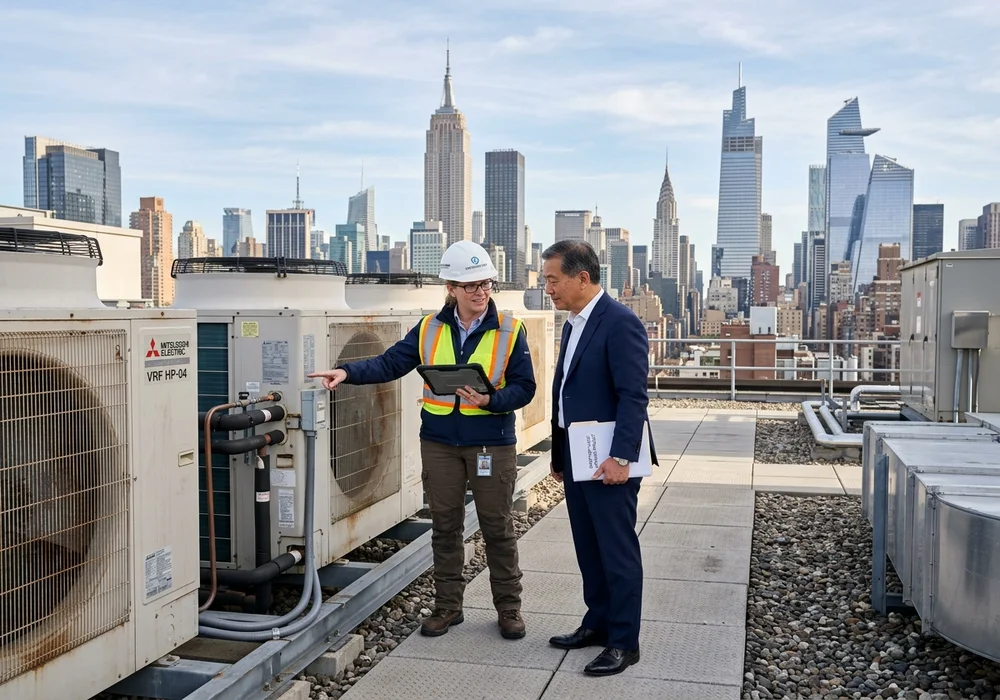
For over a century, natural gas, fuel oil, and district steam have powered New York City's built environment. Boilers heat apartments, gas piping feeds commercial ranges, and fuel-burning systems produce thousands of gallons of domestic hot water.
That era is coming to a close.
Building electrification—the systematic replacement of fossil-fuel-powered mechanical equipment with high-efficiency electric systems—is rapidly transitioning from a sustainability trend to the cornerstone of NYC building policy.
Driven by strict carbon caps under Local Law 97 and the landmark all-electric mandate of Local Law 154, property owners across the five boroughs face a critical question:
The Core Challenge
Electrification is not as simple as unplugging a gas burner and plugging in an electric unit. It demands careful evaluation of electrical service capacity, equipment sizing, building-envelope performance, domestic hot water recovery, and utility demand charges.
What Is Building Electrification?
Building electrification is the engineering process of transitioning on-site combustion systems to electric alternatives:
- Steam & Hydronic Boilers → Variable Refrigerant Flow (VRF) systems or central air-to-water heat pumps.
- Gas Domestic Hot Water (DHW) → Commercial heat-pump water heaters (HPWH).
- Gas Cooking Appliances → Commercial induction ranges and electric ovens.
- Gas Unit Heaters & Dryers → Electric resistance or heat-pump clothes dryers.
Local Law 154: The All-Electric New Construction Mandate
NYC's clearest statutory directive on electrification is Local Law 154 of 2021.
LL154 prohibits the combustion of fuels emitting more than 25 kg of CO₂ per million BTU in covered new building construction filings. The law phases in across building types:
- Initial Phase: Applies to low-rise residential (under 7 stories) and specific smaller commercial occupancies.
- July 2, 2027 Expansion: Expands to cover all new building occupancies across NYC, including commercial towers and high-rise multifamily space heating and domestic hot water.
- Affordable Housing: Subject to extended transition timelines into the 2030s.
Does LL154 Require Existing Buildings to Remove Gas?
No. LL154 applies strictly to new building construction permits and major alterations filed as new buildings. Existing property owners are not legally forced to rip out working gas boilers under LL154.
How Local Law 97 Connects to Electrification
While LL154 targets new construction, Local Law 97 governs existing buildings over 25,000 square feet by placing strict annual greenhouse gas emissions limits ($268 per metric ton over the cap).
Because heat pumps deliver 2.5 to 4 times more thermal energy than the electricity they consume (Coefficient of Performance of 2.5 to 4.0), replacing an 80%-efficient fossil fuel boiler with a heat pump slashes direct Scope 1 building emissions, dramatically lowering or eliminating LL97 penalty risk.
The #1 Hurdle: Building Electrical Service Capacity
Space heating and hot water represent up to 70% of a building's total energy consumption. Shifting that load entirely to the electrical panel can double or triple peak electrical demand.
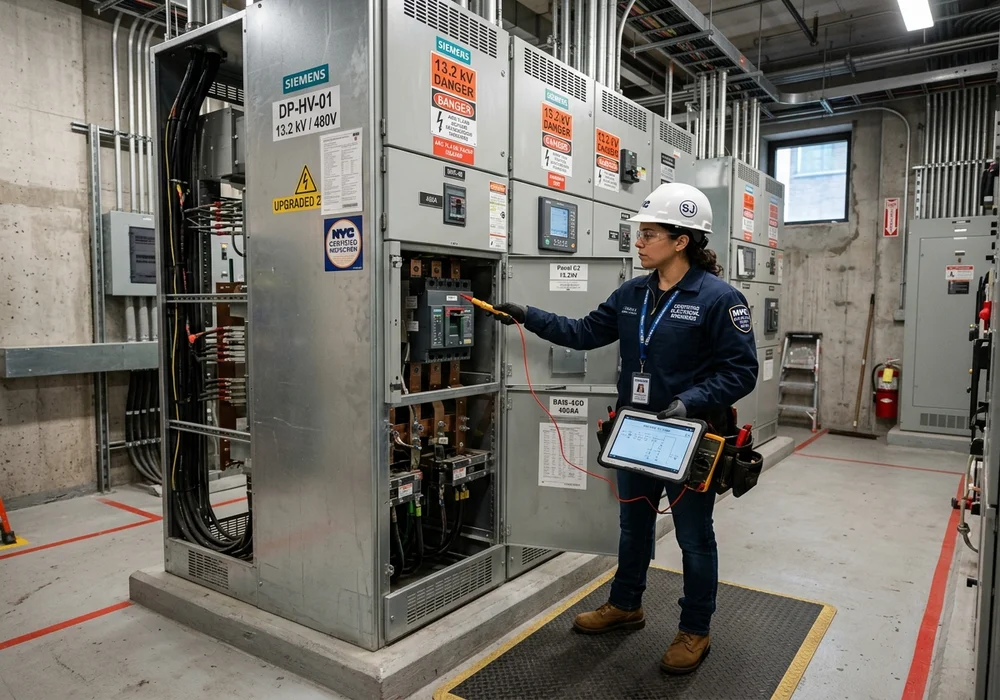
Before selecting equipment, an MEP engineer must perform an electrical load calculation to evaluate:
- Utility Service Entrance: Can Con Edison's street transformers and service drop deliver the required amperage?
- Main Switchgear & Distribution: Are the main switchboard, busbars, and distribution breakers rated for the increased load?
- Riser & Conduit Capacity: Is there physical shaft space to run larger electrical feeders to rooftop VRF chillers?
"Efficiency First, Electrification Second"
Installing heat pumps in a leaky, uninsulated building is a costly mistake. If heat escapes through drafty windows and uninsulated roofs, engineers must specify oversized heat pumps and costly electrical service upgrades.
By performing air sealing, roof insulation, and window replacements first, owners can cut design heating loads by 20%–40%, allowing smaller, less expensive heat pump installations.
Domestic Hot Water (DHW) Electrification
In multifamily residential properties, morning hot water showers create massive instantaneous demand peaks.
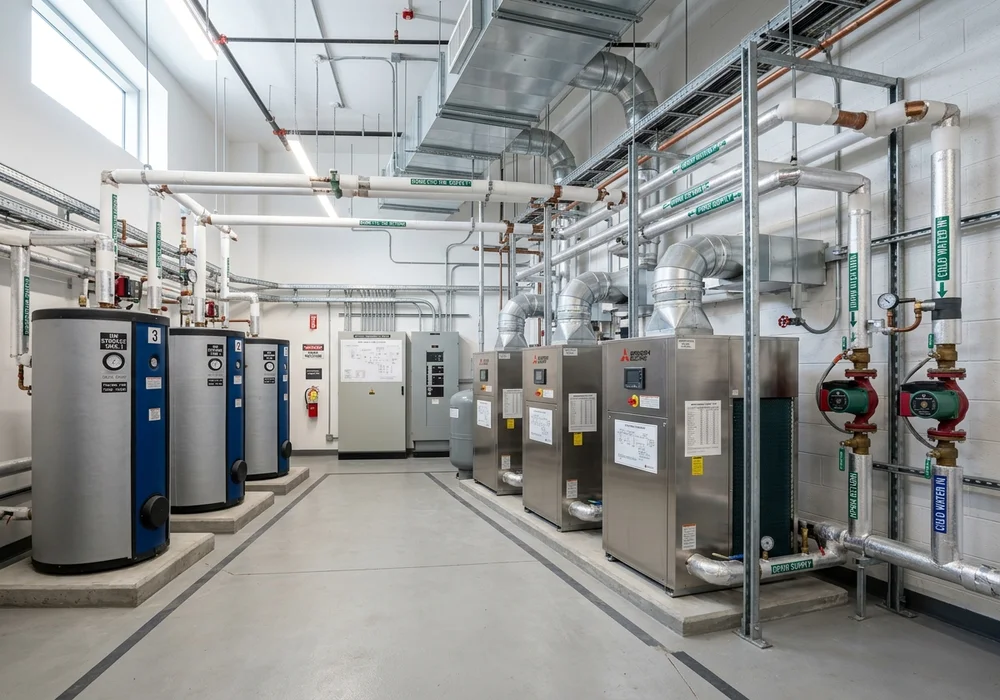
Electric heat-pump water heaters (HPWH) heat water more gradually than high-capacity gas burners. A successful design requires:
- Thermal Storage Buffering: Large, well-insulated water storage tanks that store hot water heated during off-peak hours.
- Mechanical Room Ventilation: HPWHs extract heat from surrounding ambient air, requiring dedicated supply and exhaust ductwork.
- System Redundancy: Multiple modular heat pumps to ensure continuous hot water during maintenance.
Statutory Exceptions: Commercial Kitchens & Laboratories
Both LL154 and City building codes recognize that certain specialized facilities cannot easily electrify with current technologies. Statutory exemptions exist for:
- Commercial kitchens and restaurant cooking equipment.
- Hospital, medical, and scientific research laboratories.
- Commercial laundromats and crematoria.
- Emergency life-safety backup generators.
Strategic Electrification Workflow for NYC Properties
Phase 1: Energy & Load Audit
Evaluate 8,760-hour heating load profiles, peak winter heat loss, and baseline electrical capacity.
Phase 2: Envelope Tightening
Seal thermal bypasses, upgrade roof insulation, and tune existing building management system (BMS) controls.
Phase 3: Utility Interconnection
Submit Con Edison load letters early to verify substation service capacity and avoid transformer delays.
Phase 4: Phased Installation & Commissioning
Deploy modular cold-climate heat pumps, optimize defrost cycles, and verify seasonal performance.
The NYC Owner's Electrification Checklist
LL97 Penalty Horizon: Have you modeled projected carbon emissions against your 2030 emissions limits?
Equipment Age: Is your gas boiler approaching the end of its 20–25 year useful life?
Electrical Switchgear: Does the building electrical room have spare amps, or will a service upgrade be required?
Incentive Capture: Have you applied for NYSERDA Clean Heat and Con Edison commercial heat pump incentives?
Final Takeaway
Building electrification is not about rushing to install new equipment overnight. It is about proactive capital planning.
Waiting for a 30-year-old boiler to fail in January will force an emergency, like-for-like gas replacement, locking your property into another 20 years of fossil-fuel dependence and escalating Local Law 97 fines.
Start with an engineering feasibility study today: assess your electrical capacity, reduce your building's heating loads, and design an electrification roadmap that aligns with your property's long-term financial goals.
Frequently Asked Questions
Building electrification means replacing fossil-fuel combustion equipment (such as natural gas or fuel oil boilers and water heaters) with electric alternatives, primarily high-efficiency heat pumps.
No. NYC Local Law 154 applies primarily to covered new building filings and major gut alterations. Existing buildings are governed by Local Law 97 emissions limits, which incentivize electrification but do not mandate immediate boiler removal.
By eliminating on-site fossil fuel combustion and replacing it with high-efficiency heat pumps (which operate at 250% to 400% efficiency), buildings significantly reduce their carbon emissions intensity, avoiding annual LL97 penalties.
Yes. Modern cold-climate air-source heat pumps (ccASHP) and variable refrigerant flow (VRF) systems operate reliably down to sub-zero temperatures (-15°F) with minimal loss of heating capacity.
Not automatically. Because NYC electric rates are higher per delivered BTU than natural gas, savings depend on equipment efficiency (COP), smart controls, building envelope insulation, and avoiding peak demand charges.
Frequently, yes. Electrifying central space heating and domestic hot water significantly increases building peak kilowatt demand, often requiring switchgear upgrades, transformer enhancements, and Con Edison grid coordination.
LL154 provides specific statutory exceptions for commercial cooking equipment, laboratories, laundromats, hospitals, manufacturing processes, and emergency standby generators.
Yes. Adopting an 'efficiency first, electrification second' approach reduces overall heating load, allowing owners to purchase smaller, less expensive heat pumps and avoid oversized electrical service upgrades.
No. Solar PV and electrification are distinct strategies, though pairing rooftop solar with heat pumps can help offset increased building electricity consumption.
Yes. Electrification requires engineering load studies, DOB permitting, Con Edison utility reviews, and equipment procurement. Emergency boiler failures often force like-for-like gas replacements due to lack of time.